Getting Your First Canadian PR Card. Step-by-Step Guide for New Permanent Residents

Your Canadian PR card is the main proof of permanent resident status for travel and re-entry to Canada. Although the process is straightforward, many applicants face delays because they miss key requirements after arriving in the country.
This guide explains the process of getting your PR card step by step, including the timeline for the first PR card, eligibility rules, application procedures, and photo requirements.
Table of contents
- Canadian PR Card Explained
- PR Card Eligibility and Requirements
- Who Gets a First PR Card Automatically
- Your 180-Day Window: Critical Tasks Upon Arrival in Canada
- When You Must Apply Manually for Your First PR Card
- Documents and Information You Need for an In-Person PR Card Application
- Canadian IRCC/PR Card Photo Requirements
- Get a Photo for Your PR Card/IRCC Application Online!
- Completing the First PR Card Application (Step-by-Step)
- Travel Before Your PR Card Arrives: What are Your Options?
- PR Card Validity Period and Renewal
- FAQ
Canadian PR Card Explained
A Canadian Permanent Resident (PR) card, often called the "Maple Leaf Card," serves as an identification and travel document for individuals with permanent resident status in Canada. Issued by Immigration, Refugees and Citizenship Canada (IRCC), the card includes the holder's photo, biographical information, and a unique card number, as well as advanced security features. Read on to learn how it works.
The main purpose of the PR card is to facilitate re-entry into Canada via commercial transportation, such as planes, ships, buses, or trains. Airlines and other carriers must confirm that permanent residents possess a valid PR card or a Permanent Resident Travel Document (PRTD) before allowing them to board a flight to Canada. Without one of these documents, a permanent resident may be denied boarding and will need to apply for a PRTD from abroad.
The PR card also functions as a recognized photo ID and proof of status, which can be useful when accessing healthcare, social services, and other benefits associated with permanent residency, like obtaining provincial health cards or specific licenses. Remember, the privileges of living and working anywhere in Canada, accessing healthcare, educating your children, and pursuing citizenship come from your status as a permanent resident, not just from having the PR card itself.
You don’t need to carry your PR card at all times within Canada, but it's crucial for re-entering the country via commercial transport.
PR Card Eligibility and Requirements
To be eligible for a Canadian PR card, whether it's a new card, a renewal, or a replacement, you must meet specific requirements. Here you’ll find these basic criteria:
- You must already have permanent resident status in Canada, as the card serves as documentation, not a grant of status.
- You must be physically in Canada when you apply, since PR cards are mailed only to Canadian addresses.
- You must not have lost PR status due to issues like a removal order, failing residency requirements, or becoming a Canadian citizen.
- You must not be under an enforceable removal order and must not have been convicted of misusing a PR card.
This is separate from becoming a permanent resident initially, which has its own set of eligibility criteria under pathways like Express Entry, PNP, or family sponsorship.
Residency Obligation
To get or renew a PR card, you need to fulfill the residency obligation: staying physically in Canada for at least 730 days (or 2 years) within the 5 years before your application is assessed:
- If you've been a PR for over 5 years, IRCC reviews your presence in Canada over the last 5-year period.
- If you're a PR for less than 5 years, you must demonstrate you can meet the 730-day requirement within your initial 5-year period. IRCC generally examines the actual days you have spent in Canada since landing.
Canada’s PR Card Renewal Instructions
Who Gets a First PR Card Automatically
Many new permanent residents receive their first PR card without filing a separate application after arriving in Canada. In most cases, the card is issued automatically based on the information confirmed during the immigration process.
You automatically receive your first PR card if you meet these conditions:
- You have just become a permanent resident, either through landing and receiving a Confirmation of Permanent Residence (COPR) or via an electronic COPR and virtual landing.
- Within 180 days of becoming a PR, you must provide a Canadian residential address and the required photo to IRCC, typically at the port of entry or shortly thereafter online.
- Your landing occurred on or after June 28, 2002, when PR cards became a standard part of the process.
Your 180-Day Window: Critical Tasks Upon Arrival in Canada
As a new permanent resident, you have a crucial 180-day period to provide IRCC with a valid Canadian mailing address (and updated photos if requested) to receive your first PR card without needing a separate application or fee. This requirement is mandated by Canada's Immigration and Refugee Protection Regulations. Missing the deadline cancels the automatic card production, necessitating a formal application and a processing fee of CAD 50. Here, you’ll find out which steps new permanent residents should complete within the first six months after landing.
Key actions to complete within the first 180 days:
- Provide IRCC with a valid Canadian mailing address to receive your card. Use IRCC's "Address Notification" online service dedicated to PR card processing, distinct from general address changes.
- Obtain your e-COPR (electronic Confirmation of Permanent Residence) and await your card.
- If IRCC requests new photos due to technical or quality issues, respond by the deadline to avoid delays or cancellation of card issuance.
When You Must Apply Manually for Your First PR Card
Some permanent residents do not receive a PR card automatically and must submit a separate application to IRCC. This usually happens when key information is missing, outdated, or not confirmed after arrival in Canada. Below, we explain the situations that require a manual first PR card application and how to proceed correctly.
You need to manually apply for your first Canadian PR card in these three cases:
- Missed 180-day deadline: If you didn’t provide your address or photo within 180 days of landing, the automatic card process is cancelled. You must submit a standard PR card application and pay the required fee for your "first" card.
- PR status before June 28, 2002: If you became a permanent resident before June 28, 2002, and never had a PR card, you must apply using the current PR card application process to get your initial card.
- Card usability issues: If your original card is unusable due to reasons like a name or gender marker change or an uncorrected IRCC error discovered more than 60 days after card issuance, you generally need to file a PR card application. Fees may or may not apply, depending on whether it was IRCC's error.
Documents and Information You Need for an In-Person PR Card Application
A complete PR card application depends on accurate identity details, immigration records, and supporting documents.
Core application documents:
- Completed document checklist IMM 5644.
- Permanent Resident Card application form: IMM 5444 (or IMM 5476 if using a representative).
- Fee payment receipt (available upon online payment).
- Two identical photos taken within the last six months.
- Identity documents: Current passport or the one in use upon PR status confirmation, Certificate of Identity, or travel document issued by IRCC.
- Residency requirement proof: Evidence showing meeting of Canadian residency obligations for the five years before applying.
Additional documents for specific cases:
- Name/Civil status changes: Provide original documentation like a name-change certificate, marriage certificate, divorce judgment, or court order. For changes outside Canada, include a certified translation and the original document.
- Minors (under 18): Submit the child’s birth certificate showing parent(s), any custody or guardianship orders, and additional proof of residence, like school records or report cards.
- Urgent/expedited applications: Include travel proof such as tickets or itinerary with dates and destinations, urgency proof like medical appointments, death certificates, funeral notices, employer letters, and payment proof for travel if requested by IRCC.
Be well-prepared by having the following information ready:
- Travel history for the last 5 years: List all trips taken outside of Canada. Include travel dates, destination countries, and reasons for each trip. If you have a travel log or spreadsheet, print it out and bring it with you.
- Employment and residence details: Document your employment history, including employer names, addresses, employment dates, and job titles. Also, prepare a list of all the addresses you've lived at in Canada, along with the dates you resided at each.
- Contact information: Ensure you have your current phone number and email address ready, as well as the contact details for an emergency contact in Canada.
Canadian IRCC/PR Card Photo Requirements
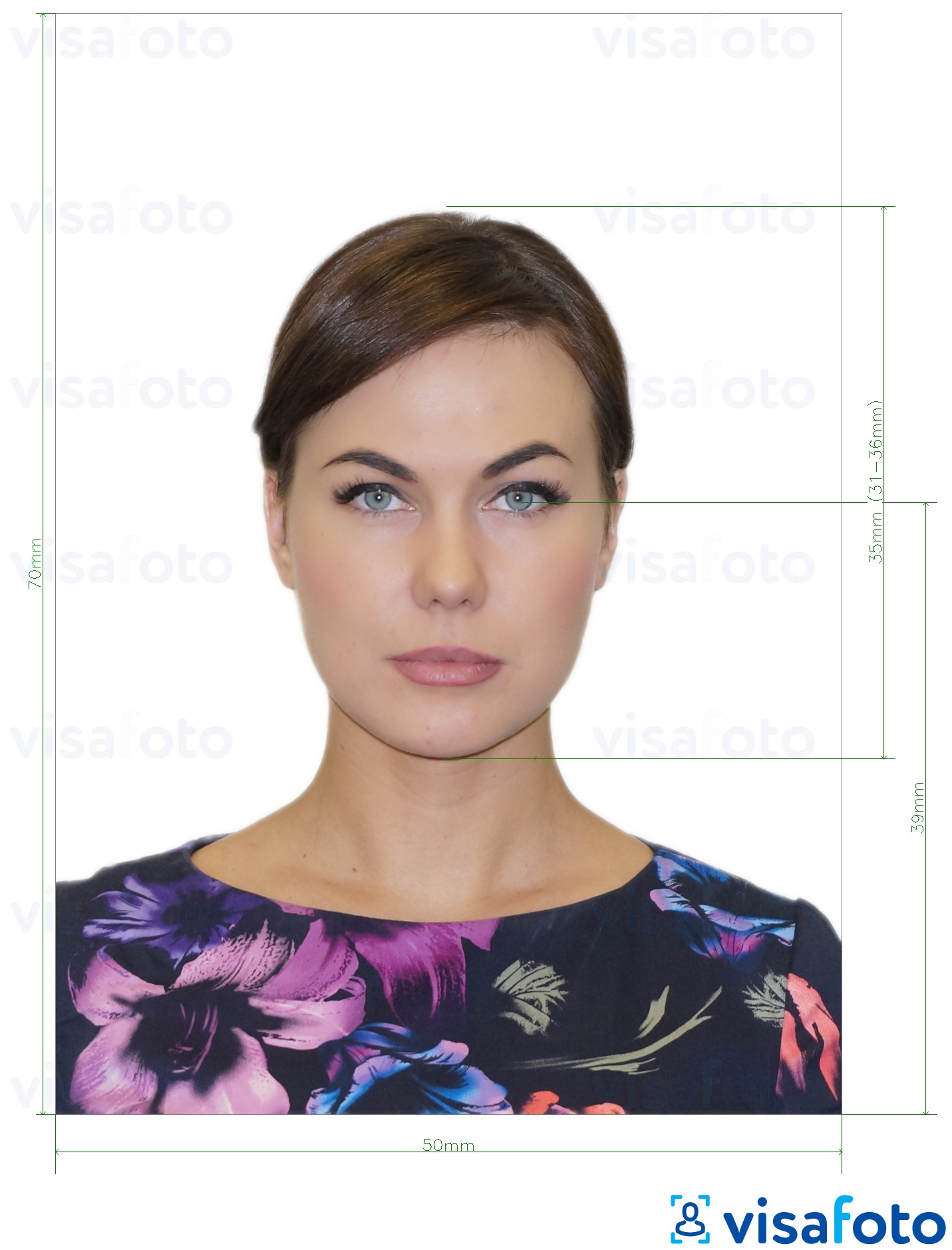
Canada has strict technical rules for PR card photos, including size, background, and facial expression.
Printed PR Card photo specifications:
- The photo size must be 5×7 cm (2 inches wide × 2 3/4 inches high).
- On the back, include:
- Your full name and date of birth.
- The studio’s name and address.
- The photo date, stamped or handwritten by the photographer.
Digital photo specifications:
- Submit in JPEG or PNG format.
- Dimensions should range from 715×1000 to 2000×2800 pixels.
- File size must be no larger than 4 MB.
- Include identification details in a separate document, endorsed by the photo studio or a guarantor.
General requirements:
- The photo must be taken within 6 months of your application.
- Face and shoulders should face the camera, centred and with a neutral expression.
- The image must be sharp and in focus with balanced lighting, avoiding harsh shadows and glare.
- The background should be plain white, contrasting with the subject’s face.
- Avoid tinted glasses; prescription glasses are allowed if eyes remain visible.
Is the PR Card photo in black-and-white? The IRCC rules state that your photo can be either in colour or black and white.
Here is a photo example:
Get a Photo for Your PR Card/IRCC Application Online!
Here you’ll learn how to create a PR Card/IRCC photo online that meets official Canadian requirements.
You no longer need to visit a photo studio to get a professional-quality immigration photo. Modern online tools make it possible to prepare a compliant PR Card/IRCC photo from home in just a few minutes. With Visafoto, the IRCC/PR photo editor, the process is quick and simple:
- Upload a clear photo taken in daylight.
- Select the country and document type (for example, Canada PR Card).
That’s all you need to do. Visafoto automatically adjusts the background, photo size, head position, and formatting to match official IRCC standards. You’ll receive a digital version suitable for online applications and a print-ready file for paper submissions.
Example of the original photo you can upload to Visafoto:

The result after Visafoto processing:
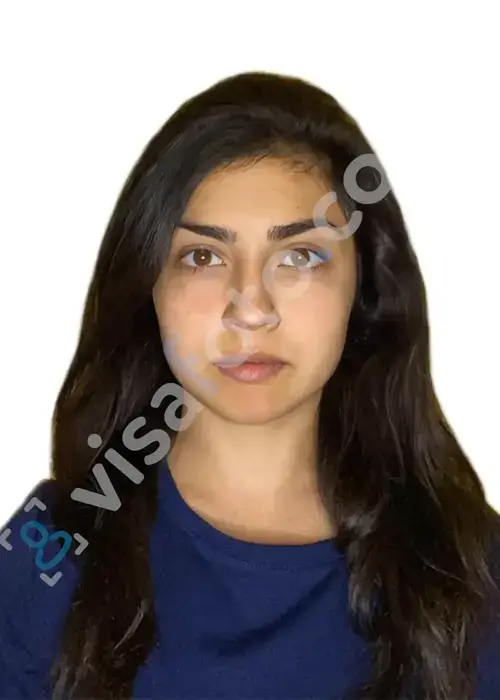

With a 99.7% acceptance rate and more than 1,000,000 approved photos, Visafoto helps applicants meet official requirements confidently. If a photo is rejected, we provide a full refund. Our tech support is available 24/7.
Completing the First PR Card Application (Step-by-Step)
You can apply for your first PR card in two ways: online via the Permanent Residence Portal (recommended) or by mail. Note that all applications must be submitted from within Canada. Here you’ll learn how to complete the first PR card application step by step.
Follow the steps below if you missed the 180-day address submission deadline or became a permanent resident before June 28, 2002.
Applying Online through the Permanent Residence Portal:
- Create or log in to your PR Portal account.
- Select “Get, renew, or replace a PR card.”
- Upload the following:
- Completed IMM 5444 form (include IMM 5644 checklist and IMM 5476 if using a representative).
- All necessary identity and residency documents.
- A digital photo, along with a separate document for "back" identification details.
- Your fee payment receipt.
- Review the declarations, type your full legal name as your electronic signature, and click "Submit documents" (note that edits cannot be made after submission).
Applying by Mail:
- Print and sign the IMM 5444 form and any additional forms in ink.
- Collect all forms, copies of supporting documents, your fee receipt, and the photo in an envelope.
- Mail your completed application package to the Case Processing Centre – PR Card in Sydney, NS.
After submission, remain in Canada until you receive your PR card. Exiting without this document can complicate your return. Stay alert for any IRCC requests for updated photos, additional documents, or a possible in-person pickup for security or identity verification. Be prepared to bring original documents if required.
Travel Before Your PR Card Arrives: What are Your Options?
New permanent residents sometimes need to leave Canada before receiving their first PR card. In that situation, your return options depend on how you travel and what documents you carry. Here, you’ll find out what to do if you must travel before your PR card arrives and how to return to Canada legally.
If you need to travel before your PR card arrives, you have three main options based on your destination and travel method. Here's what to consider:
Option 1: Drive from the United States
Using a private vehicle to cross from the U.S. into Canada is the quickest method. You can fly to or travel within the U.S., then enter Canada at a land border using a personal vehicle (not a commercial bus). Present these documents at the border:
- passport;
- Confirmation of Permanent Residence (COPR/e-COPR);
- any additional proof of PR status.
Airlines do not require a Canadian PR card for flights to the U.S.; they only need documents for U.S. entry.
Canada Border Services Agency officers can verify your PR status at the border with alternate documents. While verification is not guaranteed, proper documentation and answering residency questions typically suffice.
Option 2: Get a Permanent Resident Travel Document (PRTD) from Outside Canada
If abroad without a PR card or if yours has expired, you need a PRTD to return to Canada via commercial travel modes (airplane, train, bus, boat). Conditions include:
- You are a permanent resident.
- You lack a valid PR card.
- You are outside Canada.
- You'll return by air, boat, bus, or train.
The PRTD is typically a single-entry document issued after a visa office confirms your PR status and residency requirement, if relevant. It's suitable for new PRs with limited travel history, but may be delayed for those with extensive travel.
Option 3: Apply for Urgent PR Card Processing (Remain in Canada)
If you're still in Canada and your travel is at least three weeks away, you may request expedited PR card processing for the following:
- Job offers requiring international travel.
- Work-related travel.
- Serious personal illness.
- Family illness or death.
- Other compassionate reasons (evaluated individually).
Even with urgent processing, cards cannot be issued faster than 3 weeks, with urgent requests averaging 3.5 weeks. If denied, applications follow standard procedures rather than being prioritized.
Pro Tip: Always carry your Confirmation of Permanent Residence (COPR) as it's the best proof of PR status when travelling without a card.
PR Card Validity Period and Renewal
A Canadian PR card is valid for a limited period and must be renewed before it expires if you plan to travel internationally. Renewal also depends on meeting Canada’s residency obligation rules. Below, we explain how long a PR card remains valid, when to renew it, and what requirements apply.
A PR card's validity in Canada is usually 5 years from the date of issue. Sometimes, IRCC issues cards with only a one-year validity, often to reassess your residency obligations sooner. You should apply for renewal nine months or fewer before your card expires. Submitting an application earlier than this will result in its return unprocessed.
The PR card’s expiry date is printed on the front in YYMMDD format.
Important: Your PR status does not automatically expire when the card expires. You remain a permanent resident until a formal decision changes that status (through loss of status, renunciation, citizenship acquisition, or enforceable removal order). Only your ability to use the card as a travel document expires, not your right to live in Canada.
To renew your PR card, you must demonstrate that you have met the residency requirement: physically residing in Canada for at least 730 days (two years) within the five years before signing your renewal application.
Note that you cannot renew your PR card from abroad. If your card has expired while you are outside Canada, you must apply for a Permanent Resident Travel Document (PRTD) to return. Upon your return to Canada, you can proceed with your PR card renewal application.
FAQ
Can I renew my PR card from outside Canada?
No, you must be in Canada to renew your PR card. The new card is sent to a Canadian address. If your PR card has expired and you're outside Canada, apply for a Permanent Resident Travel Document (PRTD) to return via commercial transport. Once back, you can renew your card from within Canada.
How long does it take to get a PR card?
Processing times vary, but typically, new PR cards arrive 1-2 months after approval. As of May 2026, for example, the official IRCC processing time for the first PR card after landing is about 42 days. Renewals might take several months, depending on IRCC's workload and whether you qualify for urgent processing. Check the IRCC website for up-to-date processing times.
If you have not received your first PR card within 6 weeks to 180 days, submit a Solemn Declaration stating that you have not received it. The IRCC will then reissue the card at no cost.
What happens if my PR card expires while I am outside Canada?
Your permanent resident status remains intact, but you can't use an expired card to return via commercial transport. Apply for a PRTD to re-enter Canada that way. Alternatively, if returning by private vehicle, you can use your Confirmation of Permanent Residence (COPR) and other identification. Renew your card once you are back in Canada.
Can I use my PR card instead of a visa to visit the United States?
No, a Canadian PR card does not permit visa-free entry to the U.S. Your entry requirements depend on your passport nationality, not your Canadian PR status.
Do I need to carry my PR card with me inside Canada?
No need to carry your PR card for daily activities in Canada. It primarily serves as a travel document for re-entering Canada via commercial transport.
How to track my first PR card after eCOPR?
For the first PR card sent post-eCOPR automatically, direct tracking isn't available. Rely on general processing times and monitor your mail. If you've applied for a card, link your IRCC account for status updates or monitor the PR portal and email for photo submissions or pickup notices.