India PAN Card for NRIs: Who Needs It, Aadhaar Rules & Easy Application Guide

If you earn, invest, or hold assets in India as a non-resident, a PAN card directly affects your tax position and financial access. This guide explains who needs a PAN, how to apply for one, and how to convert an Indian PAN card to NRI status correctly.
Table of contents
- What is a PAN Card, and Why Does it Matter to NRIs?
- Who Actually Needs a PAN Card?
- When an NRI May Not Need a PAN
- Aadhaar-PAN Linking Rules for NRIs in 2026
- Step-by-Step: How NRIs Can Apply for PAN Online
- Form 93 vs. Form 95: Which One Should You Use in 2026?
- Documents Required for PAN Card Application
- PAN Card Photo Requirements
- Get Your PAN Card Photo Online!
- PAN Card Fees for NRIs
- How to Update the Resident Status of a PAN for an NRI
- FAQ
What is a PAN Card, and Why Does it Matter to NRIs?
A PAN card is India's primary tax identification number and a legal requirement for most financial activities linked to Indian income. Here you'll find out why you may need a PAN card and when it is mandatory.
A PAN, known as the Permanent Account Number, is a distinctive 10-digit alphanumeric identifier issued by India's Income Tax Department. It is vital for tracking financial transactions and ensuring tax compliance. Serving as a crucial identification for taxes, investments, and high-value transactions, it plays an integral role.
Can an NRI have an Indian PAN card? Absolutely. NRIs, as well as OCIs (Overseas Citizens of India) and foreign nationals earning from Indian sources such as rental income, capital gains, dividends, or business profits, often require a PAN card. If an individual's Indian income exceeds the basic exemption limit (₹2.5 lakh for FY 2025-26), having a PAN card becomes mandatory for engaging in taxable transactions. Without it, they face increased Tax Deducted at Source (TDS) rates, transaction restrictions, and difficulties in claiming refunds.
In 2026, possessing a PAN card is practically necessary for engaging in high-value transactions, including property sales or purchases over ₹10 lakh, transactions in goods/services over ₹2 lakh, and dealings in mutual funds, securities, or bank accounts. Without a PAN, NRIs and OCIs face a 20% TDS on payments, hindering investments and refund claims.
According to Section 139A of the Income Tax Act, anyone (including NRIs) with taxable Indian income exceeding the exemption limits or engaging in specified transactions like property deals must have a PAN. NRIs required to file Income Tax Returns (ITR) for Indian-source income must obtain a PAN to meet compliance requirements. Failure to do so results in higher TDS under Sections 206AA/206CC, ensuring proper tracking of non-resident tax obligations without exemptions based on residency.
Is there any difference between an NRI PAN card and a normal PAN card? There is no difference between them in terms of format, structure, validity, or functionality. The only variation lies in the residential status indicated in tax databases: "Resident" for locals and "Non-Resident" for NRIs/OCIs, updated by the Assessing Officer. This distinction influences TDS rates and Aadhaar exemptions but not the PAN card itself.
Who Actually Needs a PAN Card?
Any NRI with income taxable in India must obtain a PAN to report earnings and pay taxes correctly. The same applies to NRIs who invest in Indian assets, such as property, shares, mutual funds, or fixed deposits, where PAN is required to comply with tax and reporting rules. Below are the details.
NRIs with taxable income: If an NRI's income from India, such as rent, dividends, interest, or capital gains, exceeds the basic exemption limit (₹3 lakh under the new regime for FY 2025-26), a PAN is required. It's necessary for filing Income Tax Returns (ITR), claiming TDS credits, and processing refunds. Without a PAN, TDS rates increase to 20-30%, causing higher tax payments.
NRIs investing or holding assets: NRIs investing in mutual funds, stocks, bonds (over ₹50,000), or holding assets like property need a PAN, even if they have no current income. Transactions like property sales exceeding ₹10 lakh, opening NRO/NRE accounts, or significant deposits/withdrawals (₹50,000+ cash) require it. A PAN ensures smooth transactions and reduced TDS on sales or rentals.
When an NRI May Not Need a PAN
Not every NRI automatically needs a PAN card. Below are the cases.
NRIs without taxable income from India (such as rent, dividends, capital gains) are not obligated to obtain a PAN or file an ITR if their income is below the exemption limits. Agricultural income from rural lands is tax-exempt. This remains unless other conditions apply.
Rule 114B states that NRIs can bypass the PAN requirement for certain transactions, such as buying goods/services over ₹2 lakh, hotel payments over ₹50,000 in cash, foreign travel, or minor deposits under ₹50,000. Basic NRI bank accounts or small fixed deposits may use Form 60 instead. Furthermore, NRIs aren't required to link PAN with Aadhaar.
Even if legally exempt, not having a PAN can block access to demat accounts, investments in mutual funds over ₹50,000, property transactions over ₹10 lakh, and TDS refunds. NRIs often opt to get a PAN proactively to avoid future difficulties.
Aadhaar-PAN Linking Rules for NRIs in 2026
Aadhaar-PAN linking rules differ for NRIs compared to resident Indians. Below, we explain this distinction to help you avoid unnecessary penalties or an invalid PAN status.
By 2026, linking Aadhaar and PAN is mandatory for those who possess both, but this mainly applies to resident Indians and those eligible for an Aadhaar. According to Section 139AA of the Income Tax Act, taxpayers with both an Aadhaar and a PAN must link them. However, NRIs without Aadhaar are exempt from this requirement because Aadhaar eligibility is based on residing in India for over 182 days annually.
NRIs who don't have an Aadhaar are not required to link their PAN under Section 139AA. Those holding an Aadhaar must link it to their PAN by January 1, 2026, to prevent their PAN from becoming inactive, which can disrupt tax filings, refunds, and financial transactions. Updating your status to "non-resident" on the Income Tax e-filing portal clarifies exemption from linking.
Does an NRI need an Aadhaar card in India? Legally, NRIs don't need an Aadhaar card in most cases, but they can obtain one. Having an Aadhaar can simplify e-KYC processes, opening bank accounts and telecom services, and streamline certain property and fintech activities.
Step-by-Step: How NRIs Can Apply for PAN Online
NRIs can start a regular PAN application through Protean or UTIITSL without travelling to India. The application route determines whether the applicant must send a signed form, supporting documents and printed photographs.
An eligible adult individual who has never been allotted a PAN may instead use the free Instant e-PAN service. This route requires a valid Aadhaar linked to an active mobile number and access to DigiLocker, and it is unavailable to minors and people applying through a representative assessee. It uses Aadhaar-based verification and does not require the two printed photographs used for Forms 93 and 95.
Here is how an NRI can make a regular PAN application:
- Visit the Protean PAN service or UTIITSL PAN portal.
- Select the current individual form based on citizenship: Form 93 for an Indian citizen or Form 95 for a person who is not an Indian citizen.
- Fill out the form with your personal, contact, overseas address and parental information. Select the applicable residential status.
- Prepare the identity, address and date-of-birth documents required for your applicant category.
- Pay the applicable fee and save the acknowledgement number.
- If your route requires a printed application, print and sign the form, attach two compliant photographs and send the form and supporting documents to the address stated in the acknowledgement. Follow the live provider instructions if your selected verification route is fully online.
- Track the PAN application using the acknowledgement number. Delivery times depend on the selected service, verification and destination.
PAN card replacement for NRIs: NRIs can replace a lost, damaged, or outdated PAN card by applying for a "Reprint of PAN Card" or "Change/Correction in PAN Data" through the official Protean or UTIITSL portals. The PAN number stays the same, only the card or recorded details are reissued.
The process can be completed online: select the replacement option, confirm your PAN, provide identity and address evidence when required, and pay the applicable fee. You can choose an e-PAN for electronic access or request a physical card delivered to an Indian or overseas address, with higher charges for international dispatch.
Form 93 vs. Form 95: Which One Should You Use in 2026?
For a fresh individual PAN application filed on or after 1 April 2026, the correct form depends on citizenship, not residence. The Income Tax Department confirms that the new PAN forms apply from 1 April 2026; Forms 49A and 49AA remain relevant only to applications filed under the previous rules.
Form 93:
An Indian citizen uses Form 93, including an Indian citizen who lives abroad as an NRI. The form provides a "Non Resident" option and makes the passport number mandatory for a non-resident applicant. Its notes also require an NRI to provide details of a representative assessee with an Indian address.
Form 95:
An individual who is not an Indian citizen uses Form 95. This includes a foreign national, Person of Indian Origin or Overseas Citizen of India applying as a non-Indian citizen. The form asks for the country and type of citizenship, overseas tax identification details and the applicant's residence address.
Documents Required for PAN Card Application
PAN applications require proof of identity, date of birth, and address, with different document lists for Indian citizens and people who are not Indian citizens. All documents must be valid, readable, and match the details entered in the application. Here are the PAN card documents generally relevant to NRI applicants:
Proof of Identity (Choose One):
Indian or foreign passport (with name and photo page)
OCI or PIO card (with name and photo page)
Valid Indian visa (if applicable)
Proof of Address (Choose One, Overseas Accepted):
Passport (last page with address).
Bank statement (last 3 months, NRE/NRO with 2 transactions, attested).
Utility bill (electricity, gas, water, landline; recent 3 months).
Driving licence or residence permit.
Proof of Date of Birth (Choose One):
Passport or birth certificate
Driving licence or matriculation certificate
Additional Items Required:
Two recent 4.5 cm x 3.5 cm colour photographs with white backgrounds for an individual paper application on Form 93 or Form 95.
Submit copies, certified copies or originals according to the current form and service-provider instructions for your document and application route.
For companies: include an attested incorporation certificate if foreign.
PAN Card Photo Requirements
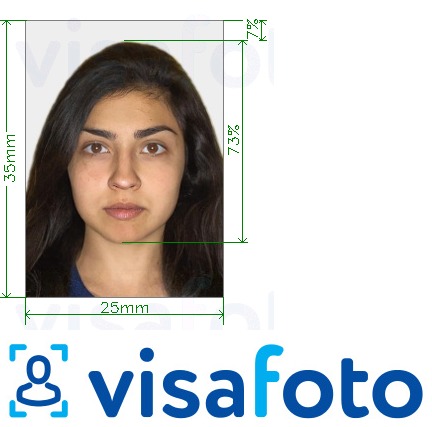
The current PAN photo size for a paper Form 93 or Form 95 application is 4.5 cm x 3.5 cm. The official forms require two recent colour photographs with white backgrounds. These rules replace the older 3.5 cm x 2.5 cm specification for fresh individual applications filed from 1 April 2026.
Follow these requirements when preparing and attaching the photos:
- Provide two recent colour photographs of the applicant.
- Each photograph must measure 4.5 cm x 3.5 cm, in the order printed in the official form.
- Use a white background.
- Place one photograph in each photo box on the form.
- Do not staple or clip the photographs to the form.
- Put your signature or left-hand thumb impression across the photograph in the left-hand box. Part of the signature or impression must appear on the photo and part on the form.
- Keep the photograph in the right-hand box clear and unmarked.
- If you use a thumb impression, have it attested by a Magistrate, Notary Public, Oath Commissioner or Gazetted Officer under an official seal and stamp.
- Use a clear, good-quality print because the image quality on the PAN card depends on the photograph attached to the form.
The same photo rules appear in Protean's current Form 93 for Indian citizens and Form 95 for people who are not Indian citizens. Neither form specifies a head-height percentage, pixel dimensions, DPI setting, JPEG format or digital file-size limit for this paper application route.
The two printed photographs are not required for Instant e-PAN. Eligible applicants complete that separate route using Aadhaar authentication and DigiLocker rather than attaching Form 93 or Form 95 photos.
Example of an NRI PAN card photo:
Get Your PAN Card Photo Online!
Here you’ll find out how to take a high-quality PAN card photo at home in minutes.
You no longer need a photo studio for a professional document picture. With Visafoto, a leading photo editor, you can generate a compliant PAN card photo in two steps:
- Upload a photo taken in natural daylight to Visafoto’s tool.
- Choose the country and document type (e.g., India, PAN card).
And you're done! Visafoto will automatically adjust the background, size, and head position to fit official requirements. You’ll receive a digital version perfect for online submissions and a format ready for printing.
Example of a suitable upload for Visafoto:

Result from Visafoto:


Visafoto boasts a 99.7% acceptance rate and more than 1,000,000 photos accepted by government authorities. We guarantee compliance with official standards or offer a full refund. Our tech support is available 24/7 for any assistance.
PAN Card Fees for NRIs
What are the PAN card application fees for foreign nationals? In 2026, the price of getting a PAN card as an NRI depends on whether you want a physical card or just an e-PAN, as well as your delivery location. Both UTIITSL and Protean offer standardised PAN card fees for NRIs. If you need the physical card sent overseas, the cost ranges from INR 1,011 to INR 1,017, including 18% GST, due to courier charges. Opting solely for an e-PAN can significantly reduce expenses. Here's a breakdown of these costs:
| Submission Mode | Physical PAN (Overseas) | e-PAN Only |
|---|---|---|
| TIN Centres/Online with documents | INR 1,017 | INR 72 |
| Paperless/Digital (e-KYC, scans) | INR 1,011 | INR 66 |
The fees cover the expenses of processing the application, delivery via DHL or FedEx for international locations, and applicable GST.
How to Update the Resident Status of a PAN for an NRI
How can I update my PAN card to NRI status? If your status changes to non-resident, it's essential to update your PAN record. This ensures accurate tax processing and reflects correct TDS rates. There's no charge for this update, and it typically takes 7-15 days. Follow these steps to update PAN card details for an NRI:
Online Profile Update:
- Log in to the Income Tax Department Portal with your PAN and password. First-time users need to register.
- Go to "My Profile" and select "Edit." Change your residential status to "Non-Resident" and save the changes. This updates your PAN information immediately, which is essential for tax return filings and transactions.
Submit to the Assessing Officer:
- Locate your Assessing Officer (AO) using the "Know Your AO" feature on the portal by entering your PAN or mobile number.
- Send required documents, passport with visa/address details, OCI card (if applicable), proof of foreign address and PAN copy, via email or post. Include a request to update your status to NRI, mentioning your stay dates. Track any pending status updates through the grievance system if needed.
Grievance Submission: If changing your status online doesn't work, file a grievance. Choose "Assessing Officer" and the category "PAN/Profile - Residential Status Change." Upload necessary documents and explain the status update requirement. The AO will verify and make the update.
FAQ
How to change a resident PAN to an NRI PAN?
NRIs can update their PAN status from resident to NRI through the Income Tax e-filing portal or by sending documents to their Assessing Officer. To update the status online, log in to the portal, open "My Profile," select "Edit," choose "Non-Resident" and save the change.
How to make a PAN card operative for an NRI?
To make your PAN card active as an NRI, update your residential status to "Non-Resident" by emailing your Jurisdictional Assessing Officer (JAO). Use "Know Your AO" on the Income Tax Department Portal to find the JAO contact details. Send copies of your PAN, passport showing overseas stay and OCI card if applicable, and request an NRI status update.
Do you need a PAN card to buy property in India?
Yes, as per Income Tax Rules (Rule 114B), both buyers and sellers must quote their PAN for real estate transactions over ₹10 lakh, covering residential, commercial properties, or land. This applies to NRIs too, preventing property registration without a PAN.
Do NRIs need to link Aadhaar and a PAN card?
NRIs are not required to link Aadhaar with PAN unless they have an Aadhaar number, as Aadhaar is based on Indian residency. Without Aadhaar, linking is optional. However, if an NRI has Aadhaar, linking it to PAN is mandatory as per current regulations. Missing the link deadline may cause PAN to be inoperative for certain uses.
Can I download an e-PAN card online?
Yes. The available download route depends on how the PAN was issued. For Instant e-PAN, use the "Check Status / Download PAN" option on the Income Tax e-filing portal and authenticate with the Aadhaar-linked mobile number. For a PAN issued through Protean or UTIITSL, use the provider that processed the application and follow its current download instructions.
The e-PAN has the same legal standing as a physical card. NRIs can access it through the contact details registered with the relevant service.
Last update: 16 September 2026