India Passport and Visa Photo Requirements
When applying for a new Indian passport or visa, whether online or by paper, always make sure that your photo meets the official passport or visa photo requirements for India. Incorrect size, format, pose, facial expression, headwear or poor photo quality - all may cause your application being rejected or delayed.

On this page we list detailed photo requirements for Indian passports.
Table of contents
- Indian passport photo size if you apply in India
- Indian passport photo size if you apply abroad
- Indian passport photo format
- Printing and paper quality
- Babies and children
- India passport photo guidelines
- Indian visa photo specifications
Colour photographs are required for both Indian visa and passport. Indian passport photo sizes vary depending on the place of submission.
Indian passport photo size if you apply in India
Photo requirements depend on how and where you submit your passport application. For most applications processed through Passport Seva Kendras (PSKs) and Post Office Passport Seva Kendras (POPSKs), applicants are photographed digitally during their appointment, so printed photos are generally not required.
However, printed passport photos may still be needed for certain paper applications, supporting forms, official and diplomatic passport applications, or other special cases specified by Passport Seva.
When a printed photo is required, the standard Indian passport photo size is 4.5 × 3.5 cm (45 × 35 mm).
- Photo size: 45 × 35 mm (4.5 × 3.5 cm).
- Colour photo only.
- Plain white or light-coloured background.
- Full-face view looking directly at the camera.
- Neutral facial expression with eyes open.
- Head occupying approximately 80–85% of the image.
- Sharp image without shadows, glare, or pixelation.
For online Passport Seva submissions, the digital photo format is 630 × 810 pixels in JPEG format, with a file size below 250 KB.
Always follow the instructions provided for your specific application type, as supporting documents and photo requirements may differ for special categories of passports and consular services.
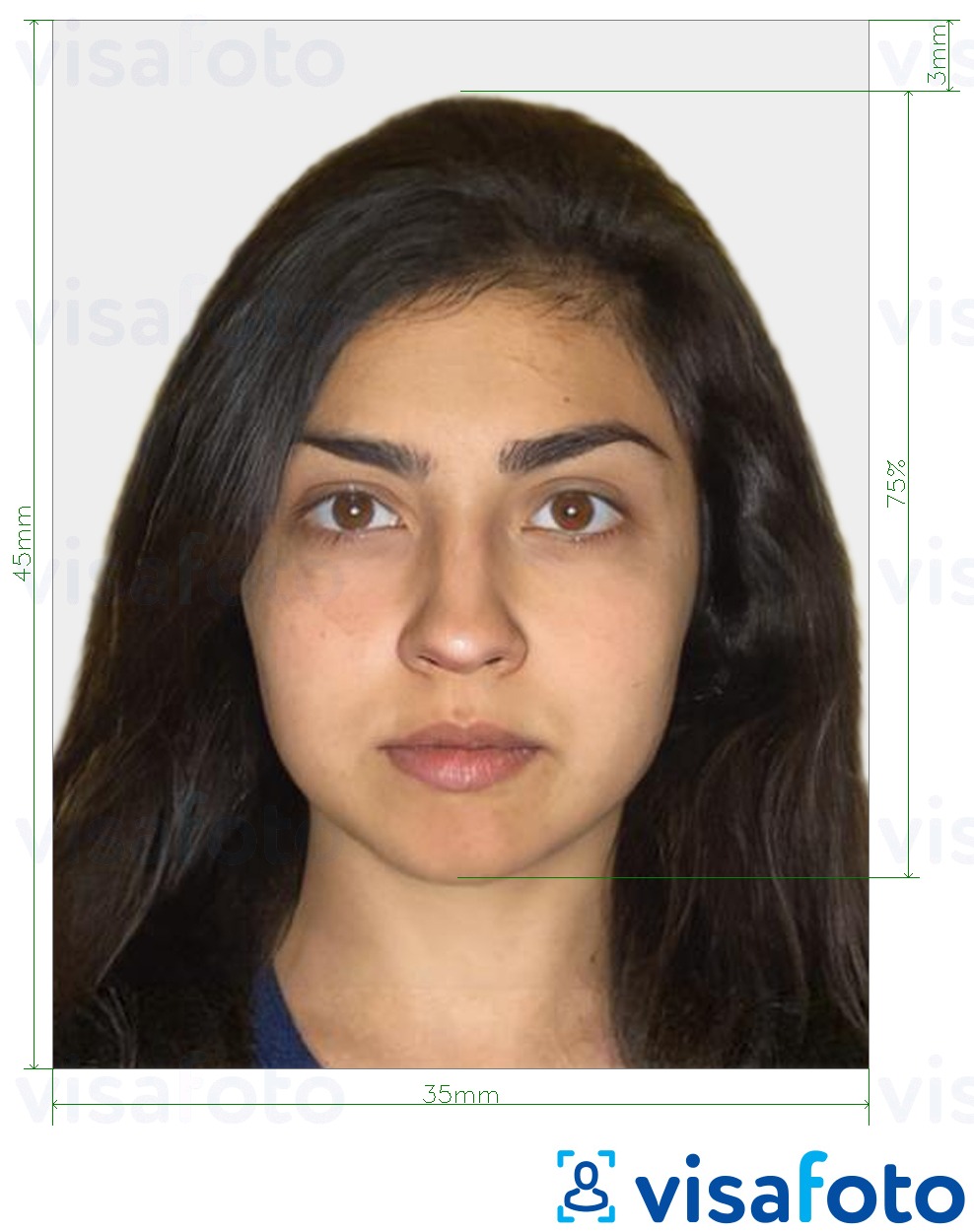
Indian passport photo size if you apply abroad
If you apply for an Indian passport through an embassy, consulate, or VFS Global centre outside India, photo requirements may differ from those used within India.
Many overseas Indian missions now follow the same 35 × 45 mm photo standard used by Passport Seva. However, some embassies, consulates, and VFS centres continue to request 2 × 2 inch (51 × 51 mm) photographs for certain passport and consular services.
For this reason, applicants should always verify the current requirements with the embassy, consulate, or VFS centre handling their application.
In general, overseas applications require:
- Colour photographs.
- A plain white or light-coloured background.
- A full-face, front-facing pose.
- Neutral facial expression.
- High-quality printing on photo paper.
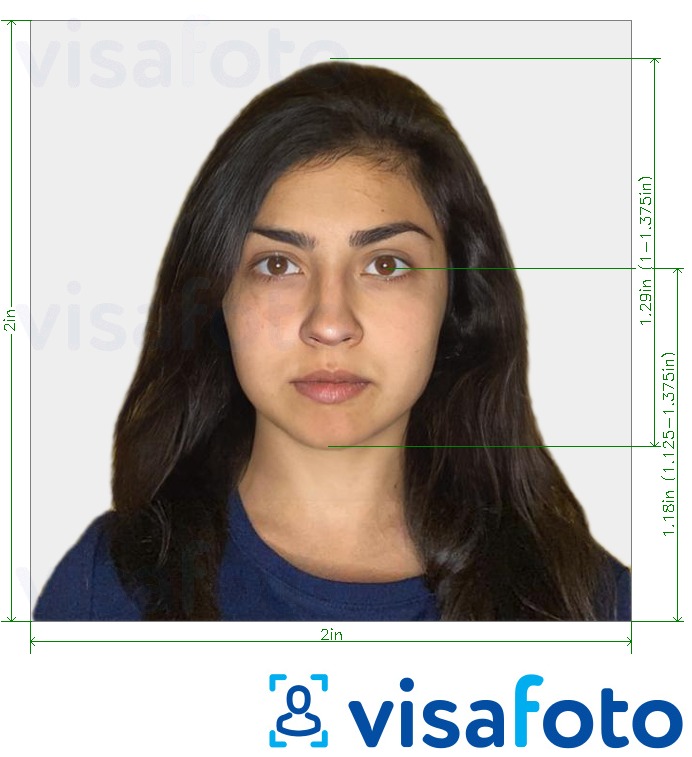
OCI card applications commonly use the 2 × 2 inch (51 × 51 mm) format, although applicants should always confirm the latest requirements before submission.
If you are unsure which format you need, Visafoto can automatically prepare photos for Indian passports, OCI cards, visas, and other Indian documents according to the selected application type.
Indian passport photo format
The exact photo format depends on the document and application channel. For most passport applications in India, the standard printed photo size is 45 × 35 mm (4.5 × 3.5 cm). Some overseas Indian missions and OCI card applications may require a 2 × 2 inch (51 × 51 mm) photo instead.
Regardless of the photo size, the same core requirements apply.
Head size and framing
The photograph must show the full head, from the top of the hair to the bottom of the chin. The face should occupy approximately 80–85% of the image, while leaving a small margin around the head.
Your head must be centred in the frame and photographed straight on. Do not tilt or turn your head. Both sides of the face should be clearly visible.
Recency
The photo should reflect your current appearance and should have been taken recently.
Pose
Look directly at the camera with your eyes fully open and clearly visible. Hair, accessories, or clothing must not cover the eyes or other facial features.
The photograph must show a full-face view with no shadows obscuring the face.
Background
The background must be plain white or light-coloured, without patterns, objects, shadows, or other people. The applicant should be clearly separated from the background.
Quality and lighting
The image must be sharp, clear, and properly focused. Blurred, pixelated, damaged, or heavily edited photos may be rejected.
Lighting should be even across both the face and the background. Shadows, glare, red-eye effects, and overexposed areas are not acceptable.
The printed photo should be produced on high-quality photo paper with natural colour reproduction and clear detail.
Expression
Maintain a neutral facial expression with your mouth closed and eyes open. Smiling broadly, showing teeth, squinting, or making facial expressions is not permitted.
Glasses
It is recommended to remove glasses before taking the photo. If glasses are worn for medical reasons, the lenses must be clear and free from reflections, glare, or tinting, and the eyes must remain fully visible.
Clothing
Wear everyday clothing that contrasts with the background. Avoid uniforms, clothing that blends into the background, or garments that obscure facial features.
Head coverings
Head coverings are permitted only for religious reasons. They must not cover any part of the face, and the full face must remain visible from the chin to the forehead and along both sides of the face.
The head covering must not cast shadows on the face or interfere with facial recognition.
Requirements for children and infants
Children's passport photos follow the same basic rules as adult photos. The child's face should be fully visible, centred, and properly lit against a plain background.
No toys, pacifiers, bottles, hands, or other objects may appear in the photo. For babies, a white sheet is often used to create a suitable background when taking the picture at home.
Printing and paper quality
Printed Indian passport photos should be produced on high-quality photo paper with sharp detail, accurate colours, and a continuous-tone finish. Both glossy and matte photo paper are generally acceptable, provided the image remains clear and professional.
The photograph must be free from blur, pixelation, printer streaks, ink marks, creases, stains, or other defects that could affect identification.
The image should be printed at the correct dimensions without stretching, cropping, or resizing. Facial features must remain sharp and clearly visible after printing.
For home printing, use high-quality colour photo paper and the highest print-quality setting available on your printer. Standard office paper is not recommended for passport applications.
Before submitting your application, check that the photo accurately reproduces natural skin tones, has no visible printing artifacts, and meets all size and background requirements.
India passport photo rules for babies and children
Children's passport photos generally follow the same requirements as adult passport photos. The image must be in colour, properly exposed, and taken against a plain white or light-coloured background.
The child's head and shoulders should be clearly visible, with the face occupying approximately 80–85% of the image. The child should face the camera directly, and all facial features must be visible from the chin to the top of the head.
The head should be centered within the frame, the infant’s eyes should be open and clearly visible (not covered by hair or other objects). Try to make your child look directly at the camera. The whole face from top to chin and both parts of the face should be open and visible. The background of the photo is to be plain white or light coloured. There cannot be any shadows, flash reflections or red eyes in the image.
The photo should include the child alone with no other people or objects like chair backs or toys visible in the photo. Facial expression should be neutral with the mouth closed. Babies under one year do not have to have their eyes open.
India Passport Photo for a Baby
India passport photo guidelines
One of the easiest ways to create a compliant Indian passport or visa photo is to use an online passport photo tool. Visafoto automatically adjusts your image to meet the requirements for Indian passports, visas, OCI cards, and many other official documents.
The service crops the photo to the correct dimensions, checks head positioning, replaces or corrects the background when necessary, and prepares both digital and print-ready versions.
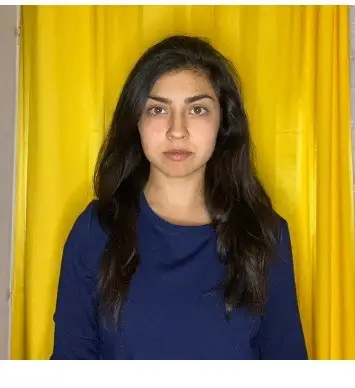
Every paid order also includes automatic photo enhancement. Within seconds, Visafoto can improve lighting, optimize image quality and resolution, create a more professional studio-like appearance, and correct common issues that often lead to photo rejection. Even scanned photos can often be converted into compliant passport photos if the original image quality is sufficient.
The resulting image can be used for online applications or printed using the included print template. If you select the appropriate document type, the photo will be prepared according to the relevant Indian passport, visa, or OCI photo specifications.
Source
Result
For best results, take a photo with a smartphone or camera in good lighting. A plain background is helpful but not required, since Visafoto can automatically adjust the background during processing.
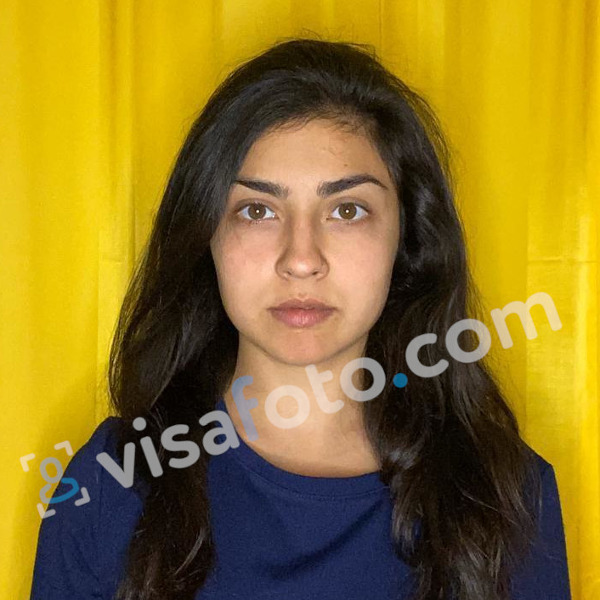
After processing, you will receive a digital photo for online submission and a print-ready template containing multiple passport photos arranged on a standard 10×15 cm (4×6") sheet.
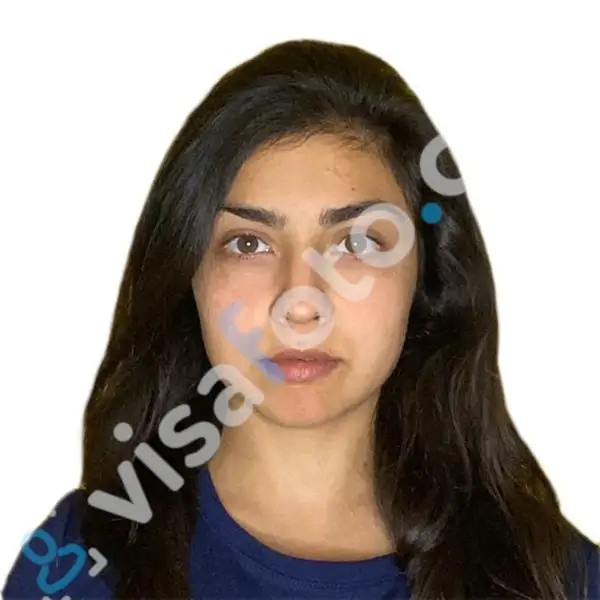
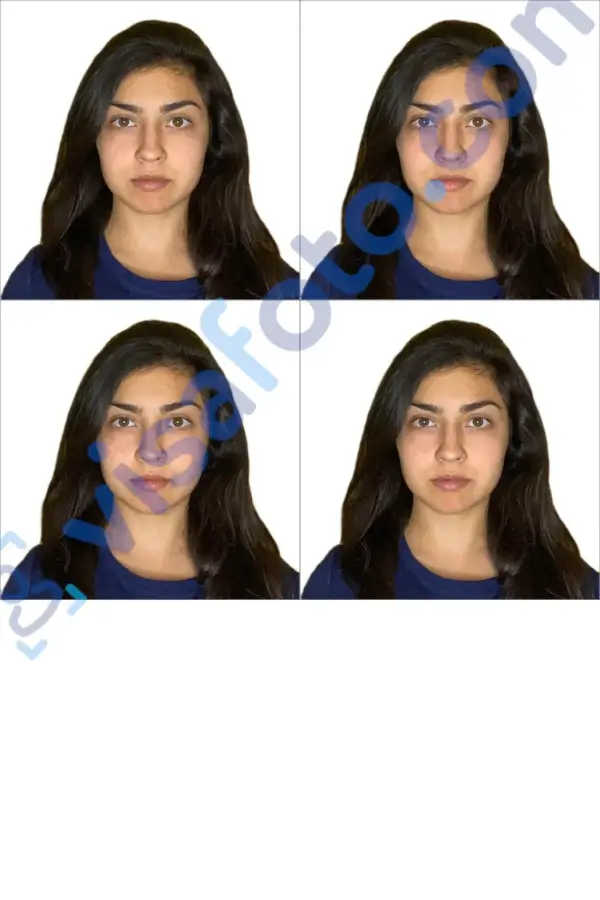
How it works:
- Take a photo with your phone or camera against any background.
- Look directly at the camera, keep your head straight, and maintain a neutral facial expression.
- Upload the image and select your document type.
- Visafoto automatically adjusts the size, background, framing, and other technical parameters.
- You receive a digital file for online submission and a print template ready for photo printing.
- If the authorities reject a photo produced by Visafoto, you can contact customer support and request a full refund under the money-back guarantee.
More than 500,000 photos created through Visafoto have been successfully accepted by government authorities worldwide. Customer support is available 24/7 if you need assistance.
Indian visa photo specifications
There are two types of visas issued by the Republic of India:
- Regular (paper) visa
- eVisa
Regular/paper visa is obtained through Indian Missions abroad, namely, Consulates or Consular Departments of Indian Embassies. First, an applicant is asked to fill out a detailed online application form at indianvisaonline.gov.in and upload a digital photo to it. Afterwards, he or she is prompted to print out the application form and submits it to an Indian Embassy or Consulate along with paper photo(s) (normally, 1 or 2) and other supporting documents.
Indian visa photo guidelines for online submission specify that you should provide a high resolution colour digital photo saved in JPEG format. The height and the width of the photo must be equal. The image can take from 10 to 300 KB of memory. The minimum acceptable resolution is 350 pixels x 350 pixels, and the maximum dimensions are 1000 pixels x 1000 pixels.
A commonly used Indian visa photo size for the accompanying printed application is 2 inch x 2 inch (5.1 cm x 5.1 cm). However, check with your Embassy or Consulate in advance, as photo sizes may vary.
VFS Indian visa photo specifications also indicate that you need two (2) recent 5.1 cm x 5.1 cm sized photographs. Printed visa photos should meet the standard Indian passport photo requirements.
The photo should have plain white or light coloured background. Overall Indian visa photo criteria are similar to Indian passport photo rules for 2x2 inch photos described above.
If you are eligible for Indian eVisa, you are invited to fill in an application form online at: indianvisaonline.gov.in (choose eVisa option), and upload your recent digital photo. Indian eVisa photo requirements are very similar to digital photo specifications for online submission. You are not so much restricted in photo size, though, as eVisa photo specs only set the minimum photo dimensions (350 pixels x 350 pixels) and you can upload a photo as large as 1 MB in size. Make sure your photo format meets the general Indian passport picture requirements described above, or your application will be rejected.
Last update: June 2026