India Transit Visa Guidelines (2026)

India serves as a major international transit hub, and many travelers pass through its airports on connecting flights. Indian transit visa requirements vary depending on whether you remain in the transit zone or enter the country during your layover.
In this guide, we explain when a transit visa is required, how to apply, and what documents you must prepare in 2026.
Table of contents
- Do you need a transit visa to go through India?
- When is an India transit visa required?
- Types of India transit visas (2026 updates)
- Indian transit visa requirements and eligibility
- How do you get a transit visa for India?
- Documents required for India transit visa application
- India visa photo requirements
- Get an India visa photo online!
- India transit visa validity
- India transit visa cost (2026)
- FAQ
Do you need a transit visa to go through India?
For travelers with a connecting flight in India, visa requirements hinge on your layover activities.
Do I need a visa if I have a connecting flight in India? A transit or tourist visa is essential if:
- You need to pick up and recheck your luggage (common with separate bookings).
- You must switch airports or exit for any reason, such as a hotel stay or a terminal change.
- Your layover exceeds 24 hours.
When can you transit India without a visa? You generally do not need any Indian visa if the following are true:
- Your flights are on a single reservation with bags checked to your final stop.
- Your layover is under 24 hours, based on scheduled arrivals and departures.
- You remain in the international transit area, bypassing Indian immigration.
Airside transit vs. passing through immigration
If you are airside transiting, you will stay in the "international bubble" and will never legally enter India. Passing through immigration means that you are entering India and will need a visa.
Airside transit (typically no visa required):
- You stay entirely within the international transit zone.
- No encounters with passport control or customs.
- Your luggage continues to your destination, allowing a simple gate-to-gate transfer.
Passing through immigration (visa required):
- You go through passport control to manage luggage, check in again, change terminals, or leave the airport.
- This process counts as entering India, necessitating a valid visa, often a transit visa valid for up to 72 hours or an e-tourist visa for more flexibility.
Visa protocols can vary, especially at specific locations like Delhi, which is stringent about separate tickets. Verify your specific travel details with your airline and the nearest Indian embassy/consulate to ensure compliance.
When is an India transit visa required?
You need an Indian transit visa whenever you plan to clear immigration in India. Key situations where a transit or tourist visa is required include the following:
- Layovers longer than 24 hours: If your stay between flights surpasses 24 hours, you are expected to enter India, necessitating a visa.
- Changing airports in India: Moving between airports, either within a city like Delhi or between cities, requires you to go through immigration, which means you need a visa.
- Leaving the international transit area: Anytime you collect and re-check baggage, stay at an airport hotel outside security, or enter the city, you are considered to be entering India and require a visa.
Can I leave my connecting flight in India? Yes, if you possess a valid Indian visa (transit or tourist) for the date of entry. Without it, you must remain in the international transit area.
Types of India transit visas (2026 updates)
In addition to e-tourist visas suitable for layovers, India offers both traditional and electronic visa options for short transit. Here, we explain the different types of Indian transit visas and show the differences between transit and tourist visas.
Regular transit visa (sticker in passport):
- Purpose: For travelers passing through India en route to another country. It is not intended for full visits.
- Validity: Typically allows entry within 15 days of issue; usually single or double entry.
- Stay duration: Up to 72 hours per entry, for onward transit purposes only.
- Restrictions: Cannot be used for tourism or business purposes.
- Application process: Apply through an Indian embassy, consulate, or an outsourced visa center in your home country.
e-Transit Visa:
- Purpose: The new e-Transit visa is designed for passengers with confirmed onward tickets.
- e-Transit basics: Permits up to two entries into India, valid for 30 days from the issue of the electronic travel authorization (ETA), allowing short stays for each transit.
- e-Transit Visa eligibility: Generally mirrors e-Tourist visa eligibility, covering about 160+ countries. Check your country’s eligibility on the official Indian e-Visa portal.
It is important to distinguish between a transit visa and a tourist visa because they have different conditions and permitted activities. The main differences between the two are listed in the table below:
| Feature | Transit Visa / e-Transit | Tourist Visa / e-Tourist |
|---|---|---|
| Main purpose | Pure onward transit through India to a third country | Tourism: sightseeing, visiting friends/relatives, casual visits |
| Typical allowed stay | Short, usually up to about 72 hours per entry | Longer stays, often up to around 90 days per visit (varies by nationality and visa) |
| Leaving the airport | Possible but only in line with brief onward transit, not general tourism | Freely travel around India within validity and stay limits |
| Flexibility if plans change | Low: not suitable if you decide to stay longer or change route significantly | High: better for long layovers, overnight stops, or turning a connection into a short visit |
Evaluate which one fits your needs, especially if you have a longer layover and wish to explore the city. For layovers between 8–24 hours, a short-term tourist e-Visa is often more practical for eligible nationalities.
Indian transit visa requirements and eligibility
To qualify for an Indian transit visa, applicants need to fulfill several criteria, such as having a valid passport and proving onward travel. Authorities require assurance that your journey will continue to another country, and eligibility varies based on nationality and adherence to immigration rules. Below you’ll find the specifics.
Indian transit visa requirements:
- You must possess a valid passport from an eligible country. Your passport should remain valid for at least six months from your planned arrival date in India, with two blank pages available for stamps. Airlines strictly enforce this rule and can refuse boarding if not met.
- The purpose of your stay must be transit only. Short activities, like an overnight hotel stay, are generally permissible.
- Required documents include a photo, proof of funds, and a completed application form.
- A confirmed onward ticket to a third country proves you are not staying long-term and will depart India within the visa's short stay limitation (typically 72 hours). Electronic tickets or PNR proof accepted, as airlines verify this before allowing you to board.
How do you get a transit visa for India?
Start your application process online by completing the required visa form and uploading necessary documents. Depending on your residence country, you might need to attend an appointment or follow specific consular guidelines. Here, you’ll find a breakdown of the process.
India transit visa online application:
- Available to citizens from over 160 countries via indianvisaonline.gov.in.
- Eligibility follows e-Tourist standards. Verify your nationality on the e-visa portal.
- Fees range from USD 25 to 80, depending on nationality and entries.
Follow these steps for either e-Transit or regular visa (online form is the same starting point):
- Visit the official Indian visa website and choose the "Regular Visa Application" or "e-Visa" for e-Transit.
- Fill out the form, selecting "Transit" as the visa type, and input your personal details, passport information, and travel itinerary (an onward ticket is mandatory).
- Upload the required documents, which are described further in the article.
- Pay the fee online using a Visa or Mastercard.
- If applying for a regular visa, book an appointment at an Indian Mission or VFS center to submit biometrics and your passport.
- Track your application status using the portal's ID. Receive an ETA by email for e-Visas or collect your passport for sticker visas.
How long does an Indian transit visa take? Processing times are as follows:
- e-Transit/e-Visa: Typically processed within 72 hours to 5 working days.
- Regular transit visa: Takes about 2 to 5 working days at the embassy, potentially longer for non-residents or complex applications.
Documents required for India transit visa application
When applying for an Indian transit visa, whether regular or e-Transit, certain essential documents are necessary. Additional documents may be needed based on your nationality or specific embassy requirements. Here you’ll find a comprehensive checklist.
Core documents
- Passport that has at least six months of validity past your planned exit from India and includes two blank pages for stamps.
- Copy of the passport's bio-data page (PDF for e-Visa) and a recent passport-sized color photo (with a white background, less than six months old).
- Completed and signed online application form via the Indian e-visa portal. Print it out if applying for a regular visa.
- A confirmed ticket or booking to a third country (e-ticket or PNR), demonstrating departure from India within the visa's stay limit, plus a visa for the final destination if necessary.
- Proof of funds/residence, like a bank statement, tax form, or utility bill, to prove financial stability.
Additional supporting documents (if applicable)
- For e-Transit visa: Upload all core documents online. No biometrics are required.
- For seafarers/crew: Include a seamen book, invitation from an Indian company, and a crew list.
- For non-residents: Provide proof of legal stay in the country of application (visa, registration).
- Embassy-specific requirements: Some embassies may request self-attested documents, invitation letters, or company registrations for transit purposes.
Always verify the specific document requirements with your local Indian mission, as they can vary slightly.
India visa photo requirements
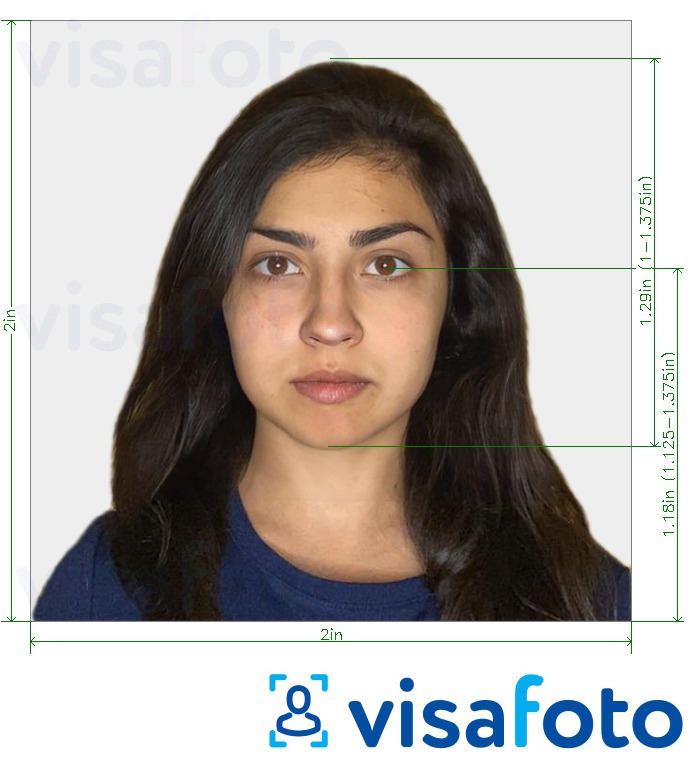
Photos for an Indian transit visa must meet strict criteria to ensure clear identification. Below are the precise specifications:
Official size and format:
- Physical size: 2 x 2 inches (51 mm x 51 mm) for printed photos submitted to embassies or VFS centers.
- Digital dimensions: Between 900 and 2250 pixels wide and 1200 and 3000 pixels high, maintaining a 3:4 aspect ratio.
Digital upload specifications:
- Accepted formats: JPG, JPEG, PNG (PDF, BMP, TIFF are not accepted).
- Size limits: Minimum 10 KB, maximum 300 KB.
- Quality: Must be a color photo taken within the last six months; avoid borders, shadows, blurriness, or pixelation.
Background and facial expression:
- Background: Should be plain white or very light, with no patterns, shadows, or objects.
- Facial expression: Keep a neutral expression (mouth closed, no smile or frown); ensure a full frontal view with eyes open and visible.
- Head position: Center your head, occupying 70–80% of the photo; ears and forehead must be fully visible.
- Other: Avoid glasses unless medically necessary (eyes must remain fully visible); headgear is permitted only for religious or medical reasons and must contrast with the background.
Here is a visa photo example:
Get an India visa photo online!
Here, you’ll learn how to take an online visa photo that will be accepted by the authorities.
With modern online photo tools, gone are the days when you needed to visit a photo studio for high-quality document photos. Here’s how you can quickly create a compliant India visa photo using Visafoto, a reputable photo editing service:
- Upload a photo taken in natural daylight to the Visafoto tool below.
- Select the country and document type (e.g., India, visa).
That's all you need to do! Visafoto automatically adjusts the background, size, and head position to ensure compliance with official standards. You will receive a digital copy perfect for online applications, as well as a format suitable for printing.
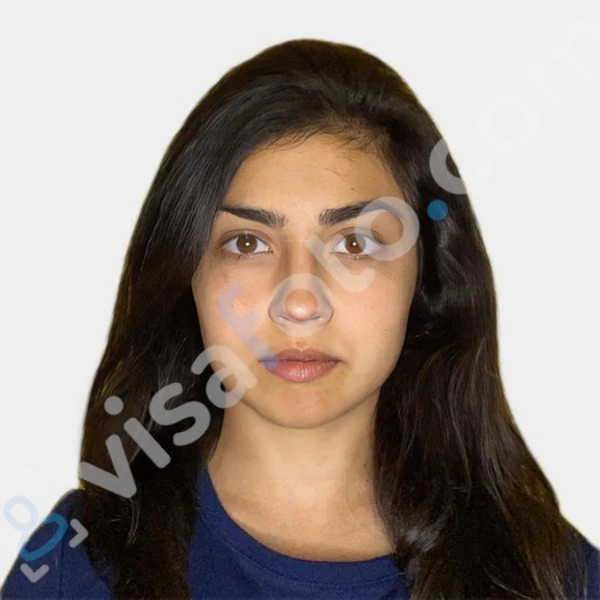
Example of a photo you can upload to Visafoto:

The result after Visafoto edits:
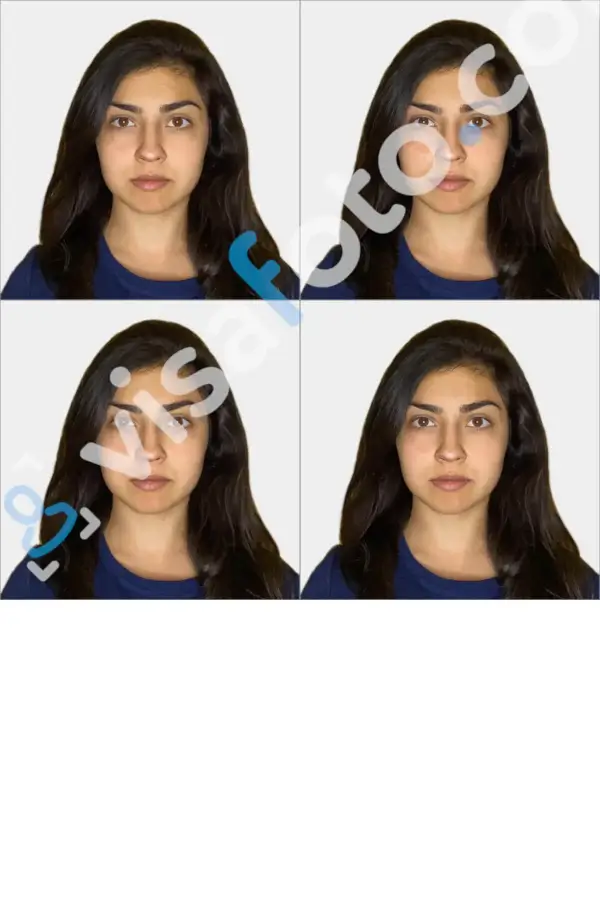
With a 99.7% acceptance rate and over 500,000 approved photos, Visafoto guarantees your photo will meet the official requirements, or you’ll receive a full refund. Our technical support team is available 24/7 if you have any questions.
India transit visa validity
Indian transit visas are issued for a short duration, designed to cover only the time necessary for your onward journey. You must complete your transit within the visa’s validity period. If the visa expires, you will need a new one. Below you’ll find the validity details:
Regular transit visa (sticker):
- Valid for entry into India for 15 days from the date of issuance.
- Allows for single or double entry, based on the application.
- Permits a maximum stay of 72 hours per entry, which is non-extendable unless in an emergency.
e-Transit visa (2026):
- Valid for 30 days from issue or first entry, similar to other short e-Visas.
- Allows for a short stay of up to 72 hours per transit, with up to two entries permissible.
If you need to stay longer than three days, consider applying for a tourist or other type of visa.
India transit visa cost (2026)
The cost of an Indian transit visa in 2026 depends on your nationality, the type of visa (regular sticker or e-Transit), and whether you apply online or through an embassy. Here is a cost breakdown:
e-Transit Visa (Online):
- The base fee ranges from USD 25 to 80 for most eligible nationalities from over 160 countries, which includes processing.
- If available, an urgent processing option costs an extra USD 99.
Regular transit visa (Embassy/VFS sticker):
- For US citizens, the India transit visa fee ranges from USD 40 to 63 for a 15-day single or double entry, with additional service and ICWF fees around USD 23.
- For UK citizens, the fee is approximately GBP 69, which is about USD 90.
- For other nationalities, the base fee ranges from USD 20 to 50, plus service fees totaling around USD 20 to 40.
Some nationalities, such as citizens of Nepal, Bhutan, and Afghanistan, may be eligible for gratis (free) visas in select cases.
FAQ
Do I need a separate transit visa if I already hold an Indian visa?
No, if you already have a valid Indian visa such as a tourist or business visa, you do not need a separate transit visa. Any multiple-entry Indian visa allows you to transit through India.
Do children need a separate transit visa?
Yes, each child requires their own transit visa, including infants. Every traveler, regardless of age, must hold an individual visa. Parents or guardians must apply on behalf of minors.
Can I leave the airport with a transit visa?
Yes, a transit visa allows you to leave the airport for up to 72 hours per visit for purposes related to onward travel, such as short hotel stays or airport transfers, but not for tourism.
Do I have to go through security again for a connecting flight in India?
Yes, you generally need to go through security again for connecting flights in India. After collecting and possibly re-checking your bags, or during airside transfers at some airports, you will pass through security screening before reaching your next gate.