Do You Have to Show Your Ears in a Passport Photo? (U.S. & International Rules Explained)

Small photo details can delay a passport application if you rely on unofficial advice. Ear visibility is one of the most misunderstood requirements worldwide. In this article, we explain the current US passport photo requirements for ears and compare them with international standards, so you know exactly what is required.
Table of contents
- U.S. Passport Photo Rules: Are Ears Required to Be Visible?
- What Facial Features Must Be Visible in a Passport Photo (U.S.)
- Can Hair Cover the Ears in a Passport Photo?
- Religious and Medical Exceptions
- Why Some Photo Studios Ask You to Show Your Ears
- How to Make Ears Visible in Passport Photo (If You Still Have Doubts)
- Online Passport Photo Editor
- Passport Photo Rules Worldwide
U.S. Passport Photo Rules: Are Ears Required to Be Visible?
U.S. passport regulations focus on clear identification rather than specific facial details like ears. The official rules explain what must be visible for identity verification and what is optional, helping applicants avoid unnecessary photo retakes.
While your ears don't need to be visible in U.S. passport photos, the U.S. Department of State mandates that your entire face be unobstructed and clearly shown. Your head should be visible from the top to the bottom of the chin and from ear to ear. The goal is to ensure that facial features are fully visible for accurate biometric identification.
When it comes to US baby passport photos, ears don't have to be visible. The same guidelines that apply to adults also apply to babies: the full face must be clearly visible, from the forehead to the chin, and from cheek to cheek. Hair may cover the ears as long as it doesn’t cast shadows or obscure the cheeks and jawline.
What Facial Features Must Be Visible in a Passport Photo (U.S.)
U.S. authorities require an unobstructed view of key facial features used for biometric identification. Below, we clarify which parts of the face must be clearly visible.
Eyes and the surrounding area
Both eyes should be open and not covered by hair, frames, glare, or shadows. Glasses, generally prohibited, can be worn for medical reasons but must not obscure the eyes or reflect light.
Nose, mouth, and expression
Your nose and mouth must remain uncovered, with no strong shadows cast over them. Maintain a neutral expression or a slight natural smile with your mouth closed, avoiding exaggerated expressions.
Forehead, hair, and head coverings
Your forehead and eyebrows should be visible, without being heavily obscured by hair or shadows from headwear. Religious or medical head coverings are acceptable as long as they don’t cover key facial features or cast shadows. The face must be fully visible from forehead to chin and from side to side.
Neck and shoulders
The neck and top of the shoulders are typically visible, but nothing should obscure the chin or jawline.
Why should ears be visible in a visa photo? In visa photos, ears generally aren't required worldwide. Facial recognition depends more on features like the eyes, nose, and mouth. However, showing ears can help ensure the face's width and shape remain visible, avoiding rejections caused by shadows or obstructions. Visa authorities prioritize clear facial contours over specific ear visibility, but conservative standards recommend showing ears for reliability.
Can Hair Cover the Ears in a Passport Photo?
Hair placement is one of the most common sources of confusion in passport photos. Here, you will learn whether covering the ears with hair is allowed and why tucking hair back is still suggested.
Does your hair have to be behind your ears for a passport photo? In passport photos, it's not required to tuck your hair behind your ears in the U.S. or most other countries. Hair can cover your ears as long as it doesn't obscure the face or cast shadows, and the full facial outline remains visible.
Why tucking hair back is recommended:
- Clarity: Photo services often suggest tucking hair back to ensure it doesn't fall over the face, which can lead to rejection.
- Visibility: This styling maintains clear visibility of the eyes, eyebrows, and facial contour, which enhances compliance and improves biometric recognition.
Religious and Medical Exceptions
U.S. passport rules accommodate situations where visible face requirements conflict with religious beliefs or medical needs. Head coverings for religious purposes or necessary medical devices are allowed, provided the entire face remains unobstructed. Here are the details:
Religious head coverings
Items like hijabs, turbans, tichels, and kippahs can be worn if they are part of sincerely held religious practices and are typically worn in public. The covering must not block any facial features (forehead, cheeks, chin, or jawline) or cast shadows, and it should be a solid color without patterns. If needed, officials may request a signed statement confirming the religious practice associated with the head covering.
Medical necessity
Hats or headwear for medical reasons, such as for hair loss or bandages, are allowed as long as they don't obscure the face. A medical professional's letter may be requested to verify the necessity if not visually apparent.
Why Some Photo Studios Ask You to Show Your Ears
Some studios follow stricter internal guidelines than official government rules. Here, we explain why photographers may insist on visible ears.
Many photo studios ask you to show your ears to enhance matching accuracy and to avoid potential issues with passport photos. Facial recognition works best when the full contour from ear to ear is clear. By tucking hair behind the ears, photographers ensure the complete "oval" of the face aligns with official standards, even though showing ears in a passport photo isn't explicitly required. Authorities might reject photos where ears, earrings, or hair cast strong shadows, as these can compromise biometric image quality and facial recognition.
How to Make Ears Visible in Passport Photo (If You Still Have Doubts)
If you want to minimize any risk of rejection, making your ears visible can be a safe choice. Below, we offer practical, simple tips to adjust hair and accessories while still meeting official requirements.
- Tie long hair back in a low ponytail, bun, or clip, or tuck it behind your ears to clear the hairline and sides of the face, avoiding strands across cheeks or the jawline.
- If you have bangs, pin or brush them back slightly to keep them away from the eyebrows and eyes, ensuring both eyes and the upper facial outline are unobstructed.
- Before taking the photo, check in a mirror or phone preview to ensure both ears are visible and not blocked by large earrings, hair, or scarves that could cast shadows.
- Use even, soft lighting from the front to prevent the ears and the sides of the face from being lost in shadows or overexposed against the background.
Online Passport Photo Editor
Here you’ll find out how to take a passport photo that authorities will accept.
Today's online tools eliminate the need for a photo studio visit. With Visafoto, a reliable photo editing service, you can easily take a professional passport photo at home. Follow these two simple steps:
- Upload a photo taken in daylight to the Visafoto tool below.
- Select your country and document type (e.g., USA, passport).
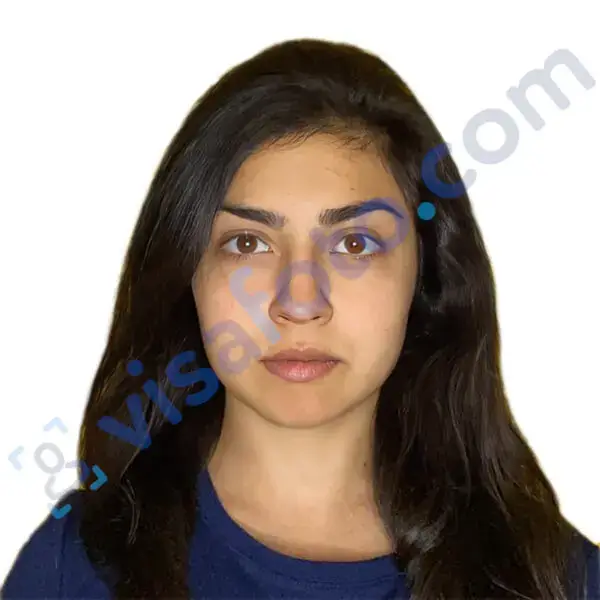
That's all you need to do! Visafoto automatically adjusts the background, size, and head position to match official standards. You'll instantly receive a digital copy suitable for online submissions and a format ready for printing.
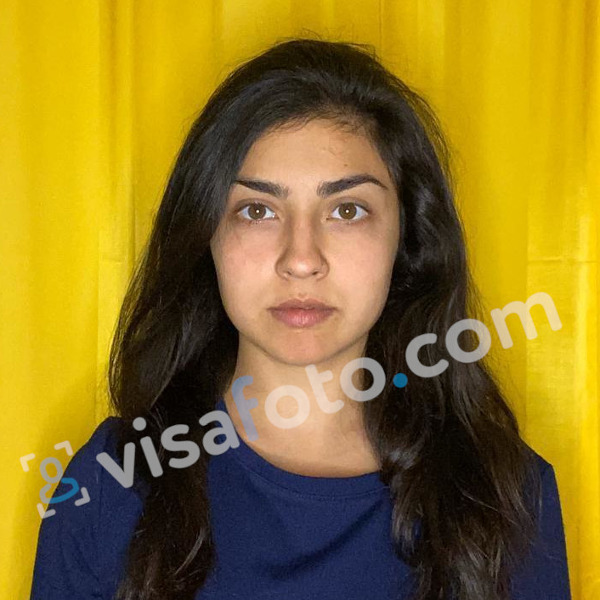
Example of the photo you can upload to Visafoto:
The result after Visafoto editing:
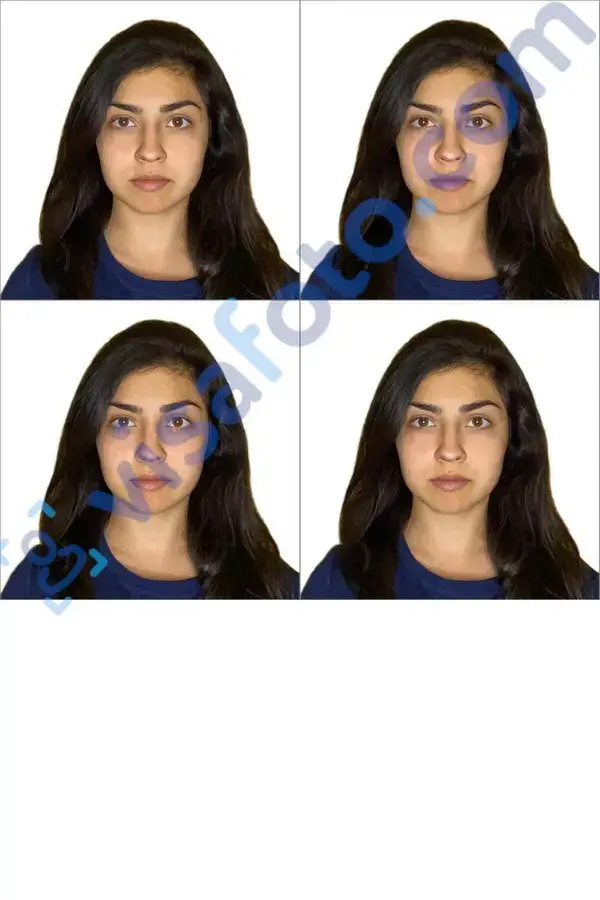
Visafoto offers a 99.7% acceptance rate, with more than 1,000,000 photos accepted by government authorities. We guarantee compliance with passport requirements or provide a full refund. Plus, our 24/7 tech support ensures help whenever you need it.
Passport Photo Rules Worldwide
Ears do not need to be explicitly visible in passport photos across the United Kingdom, European Union, Canada, Australia, or New Zealand. All follow ICAO biometric standards, prioritizing a clear full-face oval (forehead to chin, side-to-side outline) over ear exposure. However, each country has its own specifications for size, background, and presentation. The key rules for major passport-issuing countries are listed below.
United Kingdom:
Size and format: Photos should be 45 × 35 mm for prints or at least 600 × 750 pixels for digital formats. They must be in color, taken within the past month, against a plain light grey or cream background.
Pose and face: The photo should capture the full head and upper shoulders, looking directly at the camera with a neutral expression and closed mouth. Eyes must be open and unobstructed by hair, and there should be no shadows on the face or background.
Clothing and accessories: Avoid hats or head coverings unless for religious or medical reasons. The face must not be obscured, and glasses are discouraged unless necessary, provided there’s no glare or frame obstruction.
European Union (General ICAO standard):
Size and format: Generally 35 × 45 mm for prints, in color, with a high-resolution, plain light background without patterns or shadows.
Pose and face: The head should be centered, looking straight at the camera with a neutral expression and closed mouth. Eyes must be open and clearly visible with no head tilting.
Clothing and accessories: Headgear is not allowed except for religious purposes, as long as the face is fully visible. Glasses may be worn if there's no glare or frame obstruction.
Canada:
Size and format: Printed photos must be 50 × 70 mm, in color on a plain white or light background, with a face height within specified limits, and taken within the last six months.
Pose and face: Photos should show a straight-on, full-face view with a neutral expression and closed mouth. Avoid shadows or uneven lighting.
Clothing and accessories: No hats or uniforms, unless for religious or medical reasons, with the face remaining visible. Glasses should not have tinted lenses or cause glare.
Australia:
Size and format: Photos should be 35–40 mm wide by 45–50 mm high, with the face measuring 32–36 mm from chin to crown. Photos must be taken within six months on a plain white or light grey background, without retouching.
Pose and face: Maintain a neutral expression with a closed mouth. The head should be straight-on and centered with hair off the face; ear visibility is not required.
Clothing and accessories: Glasses are not allowed unless medically necessary, with no glare. Head coverings for religious reasons are permitted if the full face is visible.
New Zealand:
Size and format: Photos should be 35 × 45 mm for prints, or 900 × 1200 pixels for digital submissions. They should be recent, in color, and on a plain cream or light grey background with even lighting.
Pose and face: Center the full face straight ahead, with a neutral expression. Hair should not cover the eyes or face outline, and visible ears are not mandatory.
Clothing and accessories: Everyday attire is acceptable; no uniforms. Glasses should be avoided unless medically necessary, and religious headwear is allowed if the full face is visible from hairline to chin.