PERM Processing Time. How Long Does PERM Approval Take in 2026?
The PERM Labor Certification is the first step for most foreign employees on their way to a U.S. Green Card based on employment. It's a mandatory process performed by the Department of Labor (DOL) to prove that no qualified U.S. workers are available for the offered position. Understanding the PERM processing timeline is crucial for both employers and employees who are planning their next immigration steps.

Table of contents
- What is the PERM Labor Certification
- Stages that affect the PERM timeline
- Current PERM processing time in 2026
- How to track your PERM status
- Factors that affect PERM processing time
- What happens after PERM approval
- FAQ
What is the PERM Labor Certification
PERM stands for Program Electronic Review Management. Before a U.S. company can sponsor a foreign national for a Green Card under the EB-2 or EB-3 categories, it must complete this certification. The process verifies that hiring a foreign worker will not negatively impact the local job market or wages.
While the employer files the application (Form ETA-9089), the outcome directly affects the employee’s Green Card process. Many applicants naturally ask, “how long does the PERM process take?” - and the answer depends on several stages and review types.
Stages that affect the PERM timeline
The processing covers several stages that occur before and after the actual application is filed. Each phase involves specific government review periods and employer actions, all of which contribute to the total PERM approval waiting time.
- Prevailing Wage Determination (PWD). Before recruitment begins, the employer must request a prevailing wage from the Department of Labor (DOL). This ensures that the offered salary meets or exceeds the average wage for similar positions in that area and occupation. The PWD stage can take 4 to 6 months on average, depending on DOL workload and whether additional clarification is needed.
- Recruitment Period. Once the wage is determined, the employer must conduct a good-faith recruitment effort to test the U.S. labor market. This includes placing job ads in newspapers, posting online, and listing the job with the state workforce agency. The recruitment period lasts a minimum of 60 days, including a mandatory 30-day “quiet period” after advertising ends before the PERM can be filed. This stage often delays the process if documentation or timing requirements are missed.
- ETA-9089 Submission. After recruitment, the employer files Form ETA-9089 through the Foreign Labor Application Gateway (FLAG) system. This step officially starts the PERM Labor Certification review process. Any inconsistencies between the wage determination, recruitment data, and job details can trigger an audit, so accuracy at this point is crucial.
- DOL Review. Once submitted, the application enters the DOL’s analyst review queue. A case may be certified (approved), denied, or selected for audit.
- Standard reviews typically take 6 to 8 months.
- Audited cases can take 10 to 12 months or longer, since the employer must provide extra documentation proving compliance with recruitment rules.
After approval, the employer has 180 days to file the next step - Form I-140 (Immigrant Petition for Alien Worker) - or the PERM certification will expire.
Each of these stages adds significant time to the total PERM waiting, and understanding them helps applicants plan for the full employment-based Green Card process.
Current PERM processing time in 2026
As of January 2026, the U.S. Department of Labor (DOL) reports that PERM Labor Certification cases under analyst review are taking on average about 16 to 17 months from filing to decision, based on the most recent published processing-time data (approximately 496 calendar days for November 2025 determinations).
Cases selected for audit review typically take longer than standard analyst review cases and can extend well beyond 18 months, depending on case-specific factors and the DOL’s overall workload.
These estimates fluctuate depending on the DOL’s caseload and the number of applications submitted each month. Current data show that PERM cases with priority dates around August 2024 are in analyst review, while audit review is working on cases with priority dates around December 2024.
The DOL has implemented several initiatives that can affect processing efficiency over time, such as increased use of electronic filing through the FLAG system and ongoing efforts to streamline case handling. However, the current PERM backlog means that overall processing times remain significantly longer than a year for most cases.
- Electronic filing through FLAG and standardized forms: supports faster intake and reduces some manual data entry.
- More structured workflows: helps DOL staff manage high case volumes more consistently.
- Closer coordination with other agencies: facilitates smoother downstream immigration processing once PERM is approved.
The department continues to monitor and adjust its procedures to manage backlogs and improve timeliness where possible.
For the most current processing times and updates, you should refer to the official DOL FLAG processing times page at https://flag.dol.gov/processingtimes, which is typically updated at the end of the first work week of each month for PERM cases.
It is important to note that while PERM processing rarely stops completely, temporary slowdowns and backlogs can occur due to factors such as surges in filings, changes in immigration policies, and resource constraints at the DOL.
How to track your PERM status
Employers or their attorneys can monitor the case using the Foreign Labor Application Gateway (FLAG) system with the case number.
Common status messages include:
- In Progress – the application is under review by the DOL.
- Certified – the PERM Labor Certification has been approved.
- Denied – the application did not meet requirements and was denied.
- Audit Review – the DOL has selected the application for additional documentation review.
Tracking your case helps estimate where it stands in the overall PERM line. Regularly checking the status can also alert you to any required actions, such as submitting additional documents or responding to an audit notice.
Factors that affect PERM processing time
The DOL reviews every PERM application carefully, and several factors can influence how long the process takes:
- Audit selection. If the case is chosen for audit, additional documentation will be required, which can add several months to the timeline.
- Recruitment documentation. The accuracy and completeness of job postings, advertisements, and recruitment reports are crucial. Missing or incorrect information can trigger delays or audits.
- Employer compliance history. Employers with a strong record of following labor regulations may experience smoother processing. Those with previous issues could face closer scrutiny.
- Job description and wage determination complexity. Positions with unusual duties, multiple requirements, or challenging prevailing wage levels may take longer to review.
Unfortunately, there is currently no premium or expedited option for PERM. However, submitting a properly prepared, correct petition can prevent delay, reduce the chance of audit selection, and allow for a faster process.
What happens after PERM approval
Once the DOL certifies the PERM application, the employer can proceed with Form I-140 (Immigrant Petition for Alien Worker). After I-140 approval, the applicant may file Form I-485 (Adjustment of Status) if they are in the U.S., or Form DS-260 (Consular Processing) if applying from abroad.
At this stage, several key documents are typically required:
- Passport-style photos - 2x2 inches, white background, neutral expression, meeting USCIS and U.S. visa standards.
- Passport - valid for at least six months beyond the intended date of adjustment or visa issuance.
- Birth certificate - for identity verification, with certified translation if not in English.
- Marriage certificate (if applicable) - for derivative applicants.
- Form I-94 or visa copies - proof of current immigration status for applicants in the U.S.
- Employment verification letters - showing the job offer and continuity of employment for the Green Card process.
- Medical examination report (Form I-693) - required for Adjustment of Status applicants in the U.S.
For official guidance, see: USCIS I-140 and USCIS I-485.
USCIS Photo Online Editor + Application
When preparing documents for USCIS, having a passport-style photo that meets official requirements is essential. Two convenient tools for this are Visafoto and 7ID passport photo app.
Visafoto allows users to upload a photo taken with any camera or smartphone and automatically adjusts it to comply with USCIS standards, including size, background, and facial positioning. It also offers instant previews and options for electronic submission or printing. Users are guaranteed a compliant photo, and if the government rejects it, Visafoto provides a 100% refund.
Source

Result

Meanwhile, the 7ID Passport Photo App (available on iPhone and Android) provides automatic cropping, background removal, and ready-to-print templates, along with 24/7 support. Users simply upload a photo, select the country and type of document, and the app generates a professional result suitable for I-485, DS-260, or other USCIS applications.
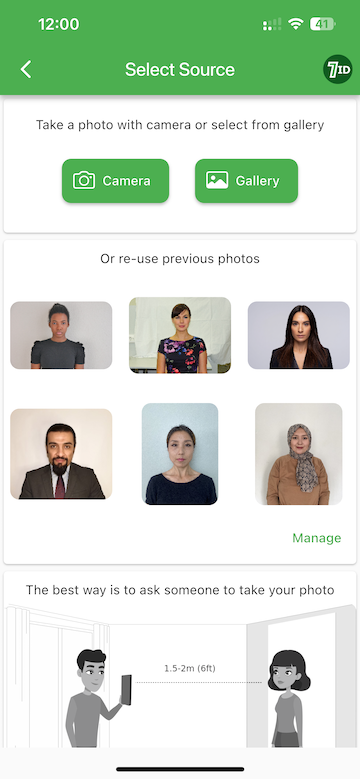
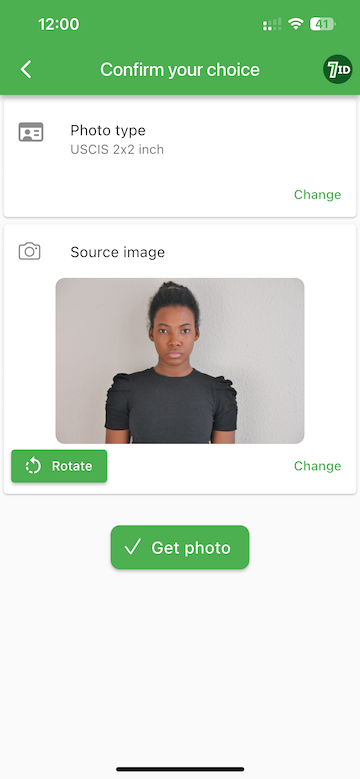
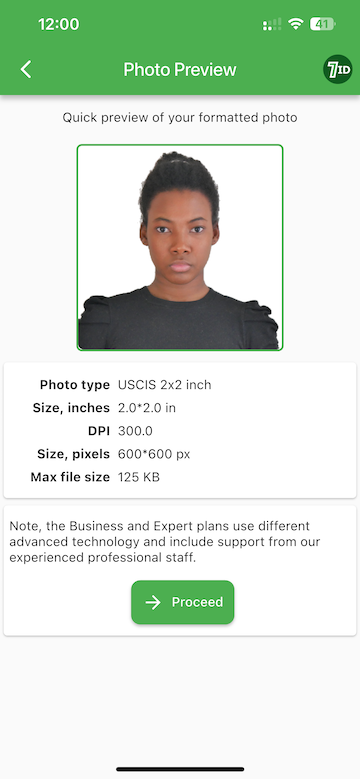
Both tools simplify the process, reduce the risk of rejection due to improper photos, and save time compared to manual editing.
FAQ
How long does the full PERM process take, including Prevailing Wage Determination?
In 2025, the total PERM process can take 15 to 24 months. This includes the Prevailing Wage Determination, recruitment period, PERM submission and DOL review, and additional time if the case is selected for audit.
Can I expedite the PERM process by paying a premium fee?
No, there is no premium processing option for the PERM labor certification. The Department of Labor does not offer expedited processing for PERM applications. However, once the PERM is approved, applicants can request premium processing for the subsequent Form I-140 petition, which guarantees a decision within 15 calendar days.
What happens if the application is selected for an audit?
During an audit, the DOL asks the employer to provide extra documentation to prove that the recruitment process was done correctly and that no qualified U.S. worker could fill the position. This can include things like job postings, resumes from applicants, and recruitment reports. An audit does not happen to every application, only a small percentage are selected.
What is the current audit rate for PERM applications?
In the first quarter of fiscal year 2025, the Department of Labor reported that none of the active PERM applications were under audit, meaning that, at that time, no applications were selected for additional review. However, this does not mean audits never happen - the audit rate can change over time, and future applications may still be chosen for audit depending on various factors like employer compliance history or recruitment documentation.
What happens if my PERM application is denied?
In a case of PERM rejection the employer has the option to request reconsideration if they believe the denial was based on an error. If reconsideration is not granted or is unsuccessful, the employer must restart the process, including obtaining a new Prevailing Wage Determination and conducting a new recruitment process.
How long does a certified PERM remain valid?
A certified PERM is generally valid for 180 days from the date of approval for filing Form I-140.
Last updated: 2026-01-06