Which country to apply for a Schengen visa: main destination vs first entry explained

If you submit your Schengen visa application to the wrong consulate, it may result in delays or denial. Which consulate you choose depends on your main destination, or if there is no clear one, your first point of entry.
Read on to learn everything you need to know about Schengen visa itinerary rules, complete with real-world examples.
Table of contents
- Main destination rule explained
- First destination rule explained
- Can you enter another Schengen country first?
- Scenarios for multiple trips
- Examples of Schengen entry scenarios
- Documents required for Schengen visa application
- Get a photo for your Schengen visa online!
- FAQ
Main destination rule explained
According to official EU rules, Schengen visa applications must be submitted to the consulate or embassy of the member state that is your main destination. Your main destination is the Schengen country where you will spend the most nights or where the primary purpose of your trip takes place, such as a conference or family visit. If your stay is equally divided among countries, the purpose of your visit takes precedence over the first point of entry, which serves as a last resort tiebreaker.
The “main destination rule” determines which consulate should process your Schengen visa, based on where you will spend the most time during your trip.
Follow this order:
- apply to the consulate of your sole destination if you visit only one country;
- choose the country where your longest stay occurs if you visit multiple countries;
- use the primary purpose (such as a key event) if your stays are equal;
- consider first entry last.
For instance, spending six nights in Portugal outweighs three nights in Spain, regardless of arriving in Madrid.
You can enter through another Schengen state if your itinerary proves the issuing country remains your main destination. Ensure your flights, hotel reservations, and plans consistently reflect this to avoid potential border issues.
What is the best country for a Schengen visa application? There isn't a one-size-fits-all answer since you must apply to the consulate of your main destination, as determined by your longest stay or trip purpose, according to EU regulations. Approval rates shouldn't dictate your application choice, yet countries with the lowest refusal rates may facilitate stronger applications. According to the latest data from SchengenVisaInfo, these countries have low refusal rates:
- Iceland: Refusal rates are about 2-6%, meaning 93-98% of applications get approved. With fewer applicants, processing is efficient.
- Latvia: Has approximately 11-12% refusal rates, maintaining consistently high approval rates.
- Lithuania/Slovakia: Display about 12-13% refusal rates, known for straightforward processing.
- Italy/Switzerland: Show around 12% refusal rates, managing a high volume of applications with dependable results.
Always check the official statistics and align your application with your travel itinerary for the best results.
First destination rule explained
Your first point of entry is the initial Schengen country you enter from outside the area, where border control will check your documents. This doesn’t have to be the country that issued your visa. You can enter through another country if your itinerary confirms that the issuing country is your main destination, determined by the longest stay or primary purpose.
- Apply at the consulate of your sole destination.
- If visiting multiple countries, apply to the consulate of the country where you will have the longest stay or the main purpose.
First entry with Schengen visa only matters if your stays are equal. For example, you can enter Germany first with a French visa if your longest stay is in France.
Expect careful examination at your entry point: have your passport, visa, itinerary, accommodation bookings, and proof of funds ready. Major discrepancies from your visa application can lead to entry refusal, even if your entry could be legally justified.
Can you enter another Schengen country first?
You are not required to enter the Schengen area through the country that issued your visa. You may begin your journey through any Schengen country, provided your travel plans demonstrate that the Schengen visa-issuing country remains your main travel destination, as defined by either the longest stay or the main purpose of your trip.
Scenarios for multiple trips
Travel plans often include several countries or repeated visits within the visa’s validity period. The type of visa – single-entry, multiple-entry, or transit – directly affects how and when you may enter the Schengen Area. Here, we clarify how these options work and how they influence the choice of the responsible consulate.
Single entry, multi-country
A single-entry (Type C) visa lets you enter the Schengen area once. After entering, you can travel freely among Schengen countries for up to 90 days within a 180-day period. However, you cannot leave and re-enter; exiting the Schengen area voids the visa. Multi-country itineraries are allowed as long as the visa-issuing country is your primary destination.
Multiple-entry visa
A multiple-entry visa, labeled "MULT," enables numerous entries and exits during its validity period, which ranges from six months to five years for frequent travelers with a positive visa history. Despite unlimited entries, your total stay cannot exceed 90 days in any 180-day period. This visa type is ideal for those making frequent visits. You should apply at the consulate of your main destination for each trip.
Transit-only
The Airport Transit Visa (Type A) is for travelers who will remain in the international transit area of a Schengen airport, without entering the Schengen area. This visa is necessary for nationals of certain countries, like Afghanistan and Nigeria. The Land Transit Visa (Type B) permits brief overland or air transit through Schengen countries for up to 5 days and is different from full short-stay visas.
Examples of Schengen entry scenarios
Real travel routes do not always match a simple “one country, one flight” pattern. Entry through a different state, equal stays in two countries, or an itinerary that raises questions at the border can all affect how your application is assessed. Below you’ll find practical examples that show how the main destination and first entry rules apply in concrete situations.
Visa issued by France. Traveler enters through Italy but stays mostly in France
Even if a Schengen visa is issued by one country, travelers may enter another Schengen state first without violating the rules. For example, a person with a visa issued by France may land in Italy first if the main part of the trip takes place in France. The entry point simply marks where the traveler first crosses the external Schengen border and receives the entry stamp.
In this scenario, the itinerary remains consistent with the visa application because France is still the main destination. Bring proof of your travel plans, such as French hotel bookings and tickets. Italian border guards typically accept this if France is clearly the primary destination.
Equal stay in Germany and Austria
In the case of an equal stay, which country should be entered first with a Schengen visa? When a traveler plans to spend the same number of days in two Schengen countries, the first entry rule determines which consulate should process the visa application. In such cases, the applicant must apply at the consulate of the country where they will first enter the Schengen Area.
For example, if the itinerary includes four days in Germany and four days in Austria and the traveler flies into Frankfurt first, Germany becomes the responsible country for the visa application. The first entry point acts as a tie-breaker when no main destination can be identified.
Visa issued by Spain but first entry in Netherlands
A traveler holding a Schengen visa issued by Spain may still enter the Schengen Area through the Netherlands. This situation is allowed because a short-stay Schengen visa is generally valid for travel across all Schengen countries.
However, border officers may ask questions if the entry country differs from the issuing country. Travelers should be ready to show documents – such as hotel bookings, onward tickets, or a travel itinerary – proving that Spain remains the main destination. Clear evidence of the planned stay usually resolves such checks quickly.
Documents required for Schengen visa application
To apply for a Schengen visa, you'll need to gather a set of standard documents along with specific ones based on your travel plans and personal situation. It's crucial to check the relevant consulate's website for any specific variations. Below is a checklist of the required documents.
Core documents (applicable for all short-stay (Type C) visas):
- A valid passport (issued within the last 10 years, valid for at least 3 months after your trip, with two blank pages).
- A completed and signed application form.
- Recent biometric photos, following ICAO standards, such as 35×45 mm.
- Travel medical insurance (minimum €30,000 coverage for medical expenses and repatriation, valid throughout your stay and in all Schengen countries).
- Round-trip flight reservation (not a purchased ticket).
- Proof of accommodation (hotel bookings or an invitation from a host with their ID and residence proof).
- Evidence of financial means (3-6 months of bank statements; approximately €50-100 per day).
Purpose-specific documents:
- For tourism: A detailed itinerary or cover letter.
- To visit family/friends: An invitation letter from the host, a copy of their passport, proof of residence, and evidence of your relationship.
- For business: An invitation from the company and a letter from your employer.
- For other purposes (like study or events): Enrollment or registration documents and a no-objection letter.
Make sure to bring originals for verification and copies for the consulate to keep.
Get a photo for your Schengen visa online!
Learn how to quickly get a visa photo online that meets all official standards.
The days of visiting a traditional photo studio for your documentation needs are gone. Thanks to modern online tools, it's now easy to take a high-quality Schengen visa photo. Use Visafoto, a reliable photo editing service, to make it happen in just two steps:
- Upload a photo taken in natural light to the Visafoto tool provided below.
- Choose the country and document type (e.g., Italy, visa).
That's all! Visafoto will take care of adjusting the background, size, and head position to ensure compliance with official requirements. You’ll receive a digital version perfect for online submissions and a format ready for printing.
Sample photo to upload to Visafoto:

Edited photo from Visafoto:

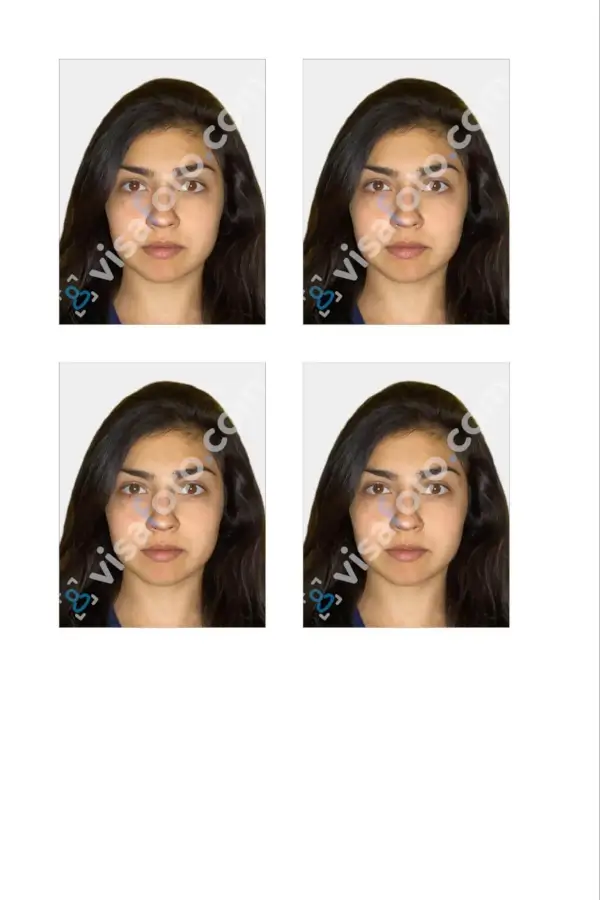
With a 99.7% acceptance rate and over half a million approved photos, Visafoto guarantees your photo will meet official standards, or you get a full refund. Our tech support is available 24/7 if you need any assistance.
FAQ
Can I enter any Schengen country with a Schengen visa?
Yes, you can enter through any Schengen country, but ensure your trip still aligns with your visa application. Your main destination should remain the issuing country.
Can I travel freely within Schengen after first entry?
Yes, after entering, you can travel freely between Schengen countries until your visa expires or you've stayed 90 days within a 180-day period.
Can I travel to multiple Schengen countries with a single-entry visa?
Yes, a single-entry visa allows visits to multiple Schengen countries, but you cannot re-enter the Schengen area after leaving.
Can I change my first entry country after getting a Schengen visa?
Yes, entering through a different Schengen country is usually allowed, as long as the issuing country remains your main destination. Be ready to explain any changes at border control.
What documents should I show at the first Schengen border crossing?
Be prepared to present your passport with a valid Schengen visa, proof of onward or return travel, accommodation details (such as hotel bookings or a host invitation), evidence of sufficient funds, travel insurance, and, if necessary, a basic itinerary or invitation letter.