How to get a German Opportunity Card? Chancenkarte application process

For professionals aiming to work in Germany, the Opportunity Card provides a practical entry route without the need for an employer sponsorship upfront. Success depends on meeting specific criteria and submitting a complete application.

In this article, we explain the meaning of the Chancenkarte visa for Germany and the full application process, including the eligibility rules, required documents, and timelines.
Table of contents
- What is the Opportunity Card visa in Germany? Chancenkarte scheme explained
- Who can apply for the Opportunity Card in 2026? Eligibility requirements
- Chancenkarte (Opportunity Card) step-by-step online application process
- In-person application process (alternative method)
- Documents required for Сhancenkarte
- Get a passport-sized photo for a German visa application online!
- How long does it take to get the Opportunity Card?
- Chancenkarte visa fees
- How to extend the Chancenkarte visa in Germany?
- FAQ
What is the Opportunity Card visa in Germany? Chancenkarte scheme explained
How does the German Opportunity Card work? Germany’s Opportunity Card is a points-based residence permit that allows qualified non-EU nationals to enter the country and look for a job without a prior offer. It evaluates candidates based on education, work experience, language skills, and age, giving more flexibility compared to traditional work visas. Read on to learn the details.
You can work in Germany with the Opportunity Card, but only on a limited basis until you switch to a regular work permit. Here is what the Opportunity Card allows:
- stay of up to 12 months in Germany to seek employment or gain recognition for qualifications;
- part-time work up to 20 hours weekly to support yourself during the job search;
- short "trial jobs" with potential employers, lasting up to two weeks per employer.
Eligible individuals can apply online, depending on their nationality, or through the German embassy or consulate in their country of residence.
Upon securing employment or enrolling in a qualification program, you typically convert the visa into a local residence permit at the Ausländerbehörde.
Is immigration to Germany possible through the Chancenkarte? Yes, qualified non-EU nationals can permanently move to Germany through the Chancenkarte, but it is a two-step process. First, you obtain a one-year residence permit to enter the country and seek skilled work. Once you find a job, you can transition to a regular work-based residence permit. Sustaining employment and meeting necessary criteria, such as those for an EU Blue Card or skilled-worker residence, can ultimately pave the way to permanent residency in Germany.
Who can apply for the Opportunity Card in 2026? Eligibility requirements
To qualify, applicants must meet a minimum points threshold or hold a fully recognized qualification in Germany. Factors such as professional experience, language proficiency, and financial means play a key role in determining eligibility. Below, we explain who qualifies and how the points system is assessed.
Eligibility criteria
To apply in 2026, ensure you meet all these requirements:
- You are a non-EU/non-EEA citizen.
- You possess a completed university degree or at least two years of formal vocational training, recognized in the country where it was obtained (or in Germany, if pursuing the "recognized skilled worker" path).
- You seek to obtain skilled employment in Germany, not casual or low-skilled jobs.
- You have valid health insurance for your stay in Germany.
- You can prove you have enough financial means to cover approximately 12 months of living expenses in Germany, typically done through a blocked account, bank balance, or a part-time job offer/Declaration of Commitment.
How much money is required for a Chancenkarte in Germany? According to current financial requirements for a German Chancenkarte, you generally need at least €1,091 monthly or about €13,092 annually.
Core eligibility paths
There are two main paths to obtaining the Chancenkarte:
Recognized Professional Route:
- Your foreign degree or vocational training is fully recognized in Germany.
- You can demonstrate sufficient funds for self-support.
The points system isn't necessary for this route since recognition automatically qualifies you.
Points-Based Route (for those without full recognition in Germany):
- Non-EU citizen with a recognized university degree or at least two years of recognized vocational training.
- Language proficiency: at least A1 in German or at least B2 in English.
- Proof of financial self-sufficiency (via blocked account, bank statements, or confirmed part-time job).
- Accumulate at least 6 points through the Chancenkarte points system.
Points system for German Chancenkarte
The system varies slightly by source, yet the key structure remains: gather at least 6 points from categories such as qualification recognition, shortage occupation, work experience, language skills, age, and ties to Germany. Common point categories include:
- Qualification recognition in Germany:
- Fully recognized: around 6 points.
- Partially recognized: around 4 points.
- Shortage occupation: +1 point.
- Professional experience:
- 2 of the last 5 years: 2 points.
- 5 of the last 7 years (or 3 of the last 7 in some variations): 3 points.
- Language skills:
- German A2: 1 point; B1: 2 points; B2 or higher: 3 points.
- English C1 or native proficiency: +1 extra point (added to German points).
- Age under 35: 2 points; age 35–40: 1 point.
- Previous legal stay in Germany (6+ months for study, language, or work, excluding tourism): +1 point.
- Eligible partner/spouse (in some models): +1 point.
Is there an age limit for the Germany Opportunity Card visa? There is no maximum age limit for the Germany Opportunity Card. Age is just one of several factors considered. Those under 35 receive 2 points, those between 35 and 40 receive 1 point, and those over 40 receive 0 points. However, you can still qualify by reaching at least six total points through education, work experience, language skills, and other criteria.
Chancenkarte (Opportunity Card) step-by-step online application process
Germany has introduced a digital application route that allows candidates to submit their request before traveling. The process includes filling out forms, uploading documents, and waiting for approval from German authorities. Here you'll learn what you need to do at each stage of the German Chancenkarte online application.
Follow the steps below:
- First, confirm your eligibility and score at least 6 points using the official Deutschland Chancenkarte self-check calculator (aim for at least 6 points unless you are a recognised skilled worker).
- Visit the Consular Services Portal, choose your country of residence, and select the German embassy or consulate relevant to your region. If you meet the minimum points or are a recognized skilled worker, proceed to the application form.
- Access and fill out the Opportunity Card application in the portal. Some missions, like in the UK, may still require you to create and sign a VIDEX form, but the main submission is via the portal.
- Upload clear electronic copies in PDF, JPG, or PNG formats (usually up to 10 MB each) of all the required documents outlined in your mission’s checklist and submit your application.
- Book and attend your appointment. During this appointment, provide fingerprints and a biometric photo, answer questions about your plans and qualifications, and pay the visa fee.
- After your visit, the mission processes your application, and you can track the status in the online portal.
- Once approved, collect your passport with the D-visa/Opportunity Card sticker, then travel to Germany. Upon arrival, register your address and later convert your visa into a residence permit at the local Ausländerbehörde.
In-person application process (alternative method)
If online submission is not available in your country, you can apply through a German embassy or consulate. This method involves booking an appointment, submitting documents in person, and completing identity verification. Here is how to apply for the German Opportunity Card visa in person:
- Book an appointment for a German Chancenkarte visa: Visit the German embassy or consulate's website (or the VFS/outsourced provider's, if applicable). Select a date, enter your basic information, and print or save the appointment confirmation for entry verification.
- Complete the visa form: Download and fill out the national visa application form for the Opportunity Card. This might be a PDF or online form that you print and sign twice. Some locations may still require the VIDEX form, while others might use their specific “Application form & declaration under Section 54 Residence Act,” which also needs to be signed in duplicate.
- Prepare your document package: Refer to the detailed list of required documents, specified below in this article, and always ensure it's mission-specific.
- Attend the appointment:
- Present the complete set of documents, including originals and any required copies.
- Answer a brief interview on your qualifications, job-search plans, and financial arrangements for your stay.
- Provide biometrics, which include fingerprints and a biometric photo.
- Pay the national visa fee, typically around 75 EUR (payment methods vary by location).
- After submission, expect a processing time of about 6–12 weeks, depending on the mission. The mission or VFS will guide you on how to track your application and receive your passport (pickup or courier options).
- Once approved, you'll receive your passport with a D visa for a job search via the Opportunity Card. Use this to enter Germany, where you'll register your address and later obtain the physical residence permit at the Ausländerbehörde.
Documents required for Сhancenkarte
Applicants must prepare a set of documents that prove their identity, qualifications, financial stability, and eligibility under the points system. Missing or incorrect paperwork can delay the decision or lead to refusal. Below, you’ll find the detailed document checklist for the Chancenkarte in Germany.
Core identity and application documents:
- A valid passport (issued within the last 10 years, with at least two blank pages) and copies of the data pages.
- A completed national visa/Opportunity Card application form, often VIDEX or a Section 54 Residence Act form, signed in duplicate.
- Two biometric passport photos.
- Proof of residence, such as a residence certificate, registration, or local ID if you're applying from a country in which you're not a citizen.
Qualification and work-search documents:
- Diplomas or degree certificates and vocational-training diplomas (at least two years of state-recognized training or a university degree).
- Documents proving professional experience, like employment letters, contracts, or employer certificates, especially if you're claiming points for work experience.
- Recognition or partial recognition documents for foreign qualifications, such as a ZAB "Statement of Comparability" or recognition letters from German authorities.
- A CV in German or English detailing your last decade of professional experience.
- A motivation letter outlining your job-search plan in Germany and how you'll finance your stay.
Language and points-related documents:
- Proof of language skills in German (A1 level or higher, e.g., Goethe-Institut, TestDaF) or English (B2 level or higher, e.g., IELTS, TOEFL, Cambridge).
- Documents to prove additional points, if applicable:
- Evidence of at least six months of legal stay in Germany within the last five years (past residence permits, registrations, enrollments, or employment contracts).
- Proof of being employed in a shortage or bottleneck occupation if included in your points-based profile.
Financial and health-insurance documents:
- Proof of financial means to cover up to 12 months: around €1,091 per month in 2026, totaling approximately €13,092 for a year:
- Blocked account confirmation, or
- A declaration of commitment (Verpflichtungserklärung) from a sponsor in Germany, or
- A signed part-time job contract in Germany showing sufficient income.
- Proof of health insurance valid for your stay, either German statutory health insurance or private insurance meeting German requirements.
Additional documents (mission-specific):
Depending on your location, you might also need:
- A printout of your results from the official Opportunity Card Self-Check or points calculator.
- A criminal record certificate, if required by your country.
- Proof of civil status, such as a marriage or civil partnership certificate (sometimes with an apostille and certified translation) if a spouse is applying with you.
- An autobiography or CV detailing the last 10 years of your education and work experience.
Get a passport-sized photo for a German visa application online!
Learn how to easily create an acceptable visa photo using online tools.
Say goodbye to photo studios, and get a high-quality document photo from home. Visafoto, a reliable photo editing service, helps you produce a compliant German visa photo in minutes. Just follow these two simple steps:
- Upload a photo taken in daylight to the Visafoto tool below.
- Choose the country and document type (e.g., Germany, visa).
That’s all! Visafoto automatically adjusts the background, size, and head position to meet official requirements. You receive a digital copy ready for online submission, as well as a print-ready format.
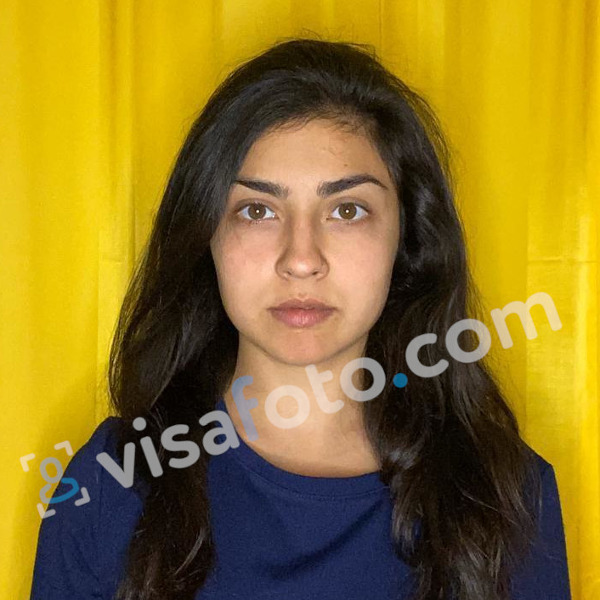
Example of the photo to upload to Visafoto:
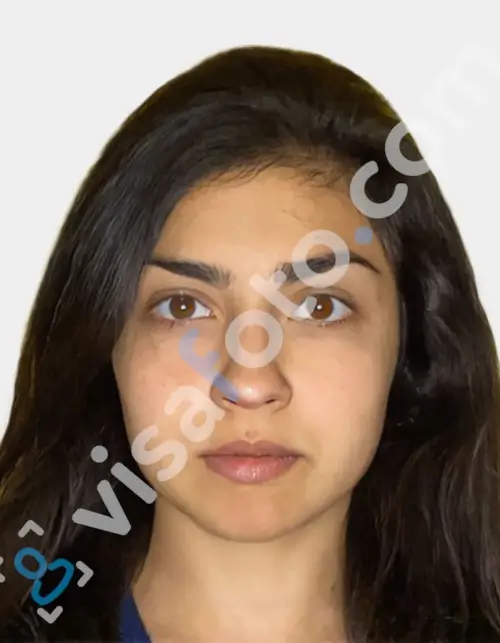
Result after Visafoto editing:
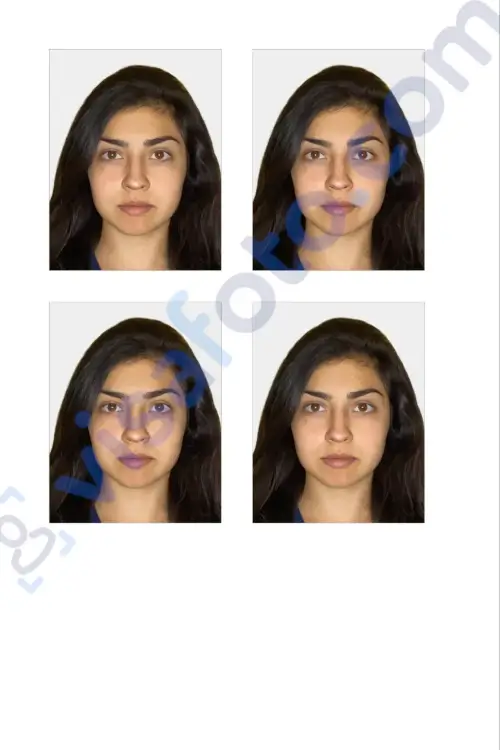
With a 99.7% acceptance rate and over 500,000 approved photos, Visafoto guarantees compliance with official standards or offers a full refund. Our tech support operates 24/7 to assist with any issues.
How long does it take to get the Opportunity Card?
Processing times vary depending on the application method, country of submission, and case complexity. Delays can occur if documents require verification or additional checks. Here you'll learn what timelines to expect.
Typically, receiving your Opportunity Card takes 4 to 12 weeks after you submit your application and attend your biometric appointment. If the embassy is experiencing high volumes or requires additional checks, processing could extend to 3 to 5 months.
To avoid potential delays, submit your application at least 3 to 4 months before your planned trip to Germany.
Stay informed about your application status by tracking it through the portal or contacting the embassy. If you notice no updates within 6 to 8 weeks, reach out to them for an estimated processing time.
Chancenkarte visa fees
The Chancenkarte visa fee is €75, payable in local currency at the German embassy or consulate at the time of application. This fee is non-refundable, even if your application is denied.
Fees for the Opportunity Card may vary slightly depending on the country where you apply.
How to extend the Chancenkarte visa in Germany?
The Opportunity Card can be extended if you meet certain conditions, such as continued job search or securing employment. Extensions are handled within Germany by local immigration authorities. Here, you'll find out about the extension rules and what you need to qualify.
The duration of the German Chance Card is usually up to 12 months (one year). To extend it, you can apply for the Folge-Chancenkarte, which grants an additional two years if you have a specific job situation and don't yet qualify for a standard work-based residence permit.
You must apply for the extension before your current Chancenkarte expires. Ensure you:
- Hold a valid Chancenkarte and are legally residing in Germany.
- Have a confirmed job offer or employment contract for a qualified role that matches your skills.
- Have approval from the Federal Employment Agency (Bundesagentur für Arbeit) for the job, yet fail to meet all criteria for a Section 18–21 residence permit, such as salary requirements or recognized qualifications.
In these situations, the authorities may grant a Folge-Chancenkarte for up to two years, allowing you time to fulfill any remaining requirements for a regular work residence permit.
Follow these steps to apply for a Chancenkarte extension in Germany:
- Gather necessary documents for submission to your local Ausländerbehörde, often through an online appointment:
- Passport and current Chancenkarte.
- Employment contract or a firm job offer for qualified work.
- Federal Employment Agency approval or evidence of their involvement.
- Proof of health insurance, current registration certificate (Meldebescheinigung), and any pending recognition or training documentation.
- Complete the local extension form, attend your appointment, and pay any required fees.
If you meet the criteria, you will receive a Folge-Chancenkarte valid for up to two more years. If not, you must either secure a work permit or leave Germany when your original card expires.
Best of luck with your Chancekarte application!
FAQ
Is IELTS required for the German Opportunity Card (Chancenkarte)?
IELTS is not mandatory. However, if you choose English over German A1 as your language requirement, you must demonstrate at least B2 English proficiency. Typically, a recognized B2 certificate like IELTS, TOEFL, or Cambridge is needed. If your educational qualifications are entirely recognized in Germany or you meet the German language requirement (A1+), an English test like IELTS is not necessary.
How can I check my eligibility for the German Opportunity Card?
Verify your eligibility using the official self-check or points-calculator tool available on the German government or "Make it in Germany" portals. Provide details of your education, recognition status, work experience, age, language skills, and any previous stays in Germany to see if you score the required 6 points or qualify as a recognized skilled worker.
Can I apply for the Chancenkarte while in Germany?
Yes, you can apply at your local Ausländerbehörde if you already hold a lawful residence permit (such as for study or work) and meet the Chancenkarte requirements. Generally, you must apply for and receive a new Chancenkarte only after you have stayed outside Germany for at least the duration of your previous card's validity.
What is the success rate of the German Opportunity Card?
There is no official success rate for the Chancenkarte as it is relatively new, and data are not available in this format. However, applications that meet the points-based minimum or recognition-based criteria, coupled with complete and accurate documentation and sufficient funds, typically get approved. Rejections usually stem from missing documents, inadequate finances, or unclear profiles.
What is the processing time for the German Opportunity Card?
Some cases conclude in 4 to 12 weeks, while others may extend up to 6 months, based on document completeness and embassy workload. It's advisable to apply at least 3 to 4 months before your intended travel date to Germany.