Ireland Employment Permit Application Process 2026: Step-by-Step Guide (EPOS 2.0)

In 2026, Ireland’s employment permit system operates entirely through EPOS 2.0, with no paper submissions. Applications require coordinated input from both employer and employee and must follow defined salary and documentation rules.

This guide explains the process step by step, including required documents, fees, and expected timelines.
Table of contents
- Ireland employment permit explained: general types and rules
- Who can apply for an Irish employment permit
- Step-by-step Ireland employment permit application process
- Documents required for a work permit application
- Get a passport-type photo for an Ireland employment permit application online!
- Ireland employment permit processing time in 2026
- Ireland employment permit fees in 2026
- FAQ
Ireland employment permit explained: general types and rules
Ireland offers a diverse range of employment permits tailored to job type, salary levels, and market demands. The General Employment Permit is popular among non-EEA workers and includes a variety of occupations except those listed as ineligible. Here you’ll learn what you need to know about the permit and its types.
What is a general employment permit in Ireland? The General Employment Permit (GEP) is crucial for non-EEA nationals pursuing regular jobs not on the Ineligible Occupations List in Ireland. This permit is employer-specific, job-specific, and location-specific, typically granted for up to two years with possible renewal for an additional three years.
What is it for? The GEP targets "general" workers not covered by the Critical Skills list. Employers often need to demonstrate through the Labour Market Needs Test that no suitable EEA candidate is available. After five years on a GEP, the holder can apply for long-term residency (Stamp 4) and gain the ability to work without a permit.
Key features of the GEP:
- Both employers and foreign workers can initiate the application. The permit is granted to the employee, with a copy sent to the employer.
- Requires a legitimate job offer, an acceptable salary (usually above the statutory minimum), and the position must not appear on the Ineligible List.
- Positions on the Critical Skills list typically favour the Critical Skills Employment Permit, unless a specific exemption applies.
Main types of employment permits
Ireland's Employment Permits Act 2024 outlines nine primary permit types. Essential permits include:
- General Employment Permit: For most eligible jobs.
- Critical Skills Employment Permit: For in-demand skilled jobs on the eligible occupations list.
- Intra-Company Transfer Employment Permit: For moving within a company.
- Contract for Services Employment Permit: For specific service contracts.
- Reactivation Employment Permit: For those who lost their permit status due to no fault of their own.
- Internship Employment Permit: For students seeking work experience.
- Sport and Cultural Employment Permit: For roles in sports or cultural sectors.
- Exchange Agreement Employment Permit: For work through approved exchange programs.
Who can apply for an Irish employment permit
Eligibility depends on factors such as your job offer, salary, qualifications, and whether your occupation appears on Ireland’s eligible or ineligible lists. Both the applicant and the employer must meet strict criteria before starting the process. Below, we explain who qualifies and what conditions must be met.
Who is eligible for a permit
The following individuals can receive an employment permit:
- Non-EEA nationals who are coming to Ireland for a job that is eligible and not on the Ineligible Occupations List.
- Non-EEA nationals who are already legally residing in Ireland with certain immigration permissions (e.g., Stamp 1, 1A, 1G, 2, 2A, or 3) and have been offered an eligible job.
- Workers with critical skills or specialised roles (such as ICT, specific language-support positions, or state-supported roles) who satisfy the required salary and skill criteria.
Who can apply for a permit?
The application for an employment permit can be made by:
- A non-EEA foreign national (employee) who has secured a job offer from an eligible Irish employer.
- The employer is applying on behalf of the non-EEA worker.
Once the permit is issued, it is granted to the foreign national employee, and a copy is provided to the employer.
How to get an employment permit in Ireland? Step-by-step application process
The application follows a clear sequence, starting with a job offer and ending with a decision issued through the EPOS 2.0 system. Each stage requires accurate information and coordination between the employer and the applicant. Here, we explain the application process for obtaining Critical Skills Employment and General Employment Permits in Ireland.
To apply, follow the steps below:
- Determine eligibility and select permit type:
- Ensure the job is not on the Ineligible Occupations List and verify it's legitimate employment (not disguised self-employment).
- Choose the appropriate permit type, General Employment Permit, Critical Skills Employment Permit, or another option (such as Intra-Company Transfer), based on job criteria, salary, and skills required.
- Conduct Labour Market Needs Test (if needed):
- For General Employment Permits, the employer must complete a Labour Market Needs Test (LMNT) by advertising the job on Jobs Ireland/EURES for a minimum of 28 days to demonstrate that no suitable EEA candidate is available.
- Critical Skills Employment Permits usually bypass this step if the job is on the eligible list.
- Prepare the required documents, as detailed further in the article.
- Complete the online application:
- Register an account on the Department of Enterprise, Trade and Employment's online portal (DETE), or the Employment Permits Online portal (EPOS).
- Start a new application for the chosen permit type, fill out all sections (employer and employee), and save the form ID for future access.
- Upload clear, scanned copies of required documents, including signed signature pages of the application form.
- Pay the application fee online using a card.
- Wait for the application to be processed and receive your employment permit. You can check your Ireland’s work permit status online via the Employment Permits Online portal (EPOS), where you log in with your employer or employee account and view the real-time status of each application.
- Apply for a visa (if necessary) and plan travel:
- If you come from a visa-required country, apply for a Long-Stay D employment visa using your approved permit as evidence.
- If you're from a visa-exempt country, you can travel to Ireland with your approved permit and begin working. Upon arrival, register with immigration for residence permission if required (e.g., obtain an IRP card).
Documents required for a work permit application
When applying for an Irish employment permit, you need to prepare documents for both the employer and the employee. Additional materials may be necessary if you're already in Ireland or renewing an existing permit. While document specifics can vary by permit type (General, Critical Skills, Intra-Company Transfer), the essential requirements are generally similar. Below is a list of required documents.
Employee's essential documents
- Valid passport copies: Include copies of the bio-data page (with photo, name, date of birth, passport number, expiry). Ensure the passport is valid for the entire expected employment duration, typically at least 6 months for new permits.
- Provide a recent photo that meets passport-photo standards.
- Employment contract and job offer:
- Submit a signed contract between the employer and employee.
- Include a job offer or letter confirming job title, duties, start date, location, working hours, and salary.
- Proof of qualifications and experience: Provide degree/diploma certificates, professional qualifications, a CV, and sometimes references.
- Current immigration status (if already in Ireland): Include a copy of your current Irish Residence Permit (IRP card) or any previous immigration stamp and visa, if applicable.
Employer's essential documents
- Company details and registration: Provide the company registration number, trading name, address, type of business, and contact information for the employer or HR contact.
- Proof of active trading and compliance: Show evidence that the company is trading in Ireland, such as recent accounts and tax filings. Include tax clearance or compliance information if relevant.
- Labour Market Needs Test evidence (for General permits): Provide proof of conducting the Labour Market Needs Test, such as job advertisements on Jobs Ireland/EURES, and evidence that no suitable EEA candidate was found.
- Signed application forms: Include the signed employer and employee pages of the employment permit application form. An agent's signature may be needed if an agent is involved.
Additional documents for the Irish employment visa and registration
Once your permit is approved, you'll need further documentation for obtaining a visa and registering in Ireland:
- For Long-Stay D Employment Visa: Submit the approved employment permit letter, along with your passport, passport photos, medical/travel insurance, contract, employer letter, and proof of finances/qualifications.
- For First-Time Registration in Ireland (IRP card): Provide the biometric passport page, the employment permit, and proof of employment (such as a contract or employer letter).
To help you with your application, use the appropriate checklist for the Ireland employment visa from the DETE portal.
Get a passport-type photo for an Ireland employment permit application online!
Learn how to capture a passport-style photo that complies with official requirements for an Ireland employment permit application.
With today’s online photo tools, there’s no need to visit a photo studio anymore to take a high-quality document photo. Here you'll find how to quickly take a compliant photo using Visafoto, a reliable online photo editing service, in just two simple steps:
- Take a clear photo in natural daylight.
- Upload your photo to Visafoto and select the relevant options for the country and document type (e.g., Ireland, employment permit).
And you’re done! Visafoto handles the rest by automatically adjusting the background, size, and head position to align with official standards. You'll receive a digital copy perfect for online submissions and a version ready to print.
Example of a photo to upload to Visafoto:

Result after Visafoto processing:

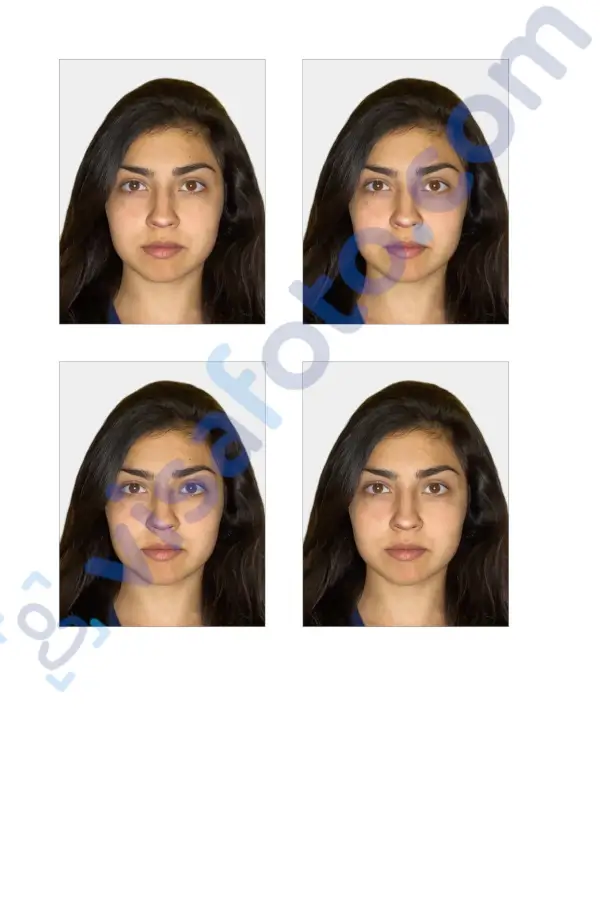
With a stellar 99.7% acceptance rate and over 500,000 successful photos, Visafoto guarantees acceptance of your photo or offers a full refund. Plus, our 24/7 tech support is ready to assist you with any concerns.
Ireland employment permit processing time in 2026
Processing times vary depending on the permit type and application volume, but authorities publish regular updates to help applicants plan. Delays can occur if additional checks or documents are required. Below, we explain typical timelines and what can affect them.
Critical skills employment permit (CSEP):
- New applications usually take about 2 to 4 weeks, often equating to 7 to 18 working days, provided the application is complete and accurate.
General Employment Permit (GEP) and other new permits' processing times in Ireland:
- New applications typically require about 6 to 8 weeks, or approximately 4 to 6 weeks for well-prepared submissions. Incomplete or returned applications can extend processing time to 12 to 15 weeks due to necessary resubmissions.
Renewals for all permit types:
- Renewal applications usually take longer, frequently ranging from 10 to 14 weeks, and occasionally more if there is a backlog.
Overall timeline from start to employment:
- For the Critical Skills route from abroad, the combined duration for permit and visa processing is typically around 2 to 3 months in 2026.
- For the General Employment Permit route from abroad, the entire process, from job offer to starting work on-site, often spans 4 to 6 months, as the permit is just one part of the process that also includes securing a visa, travel, and registration.
Ireland employment permit fees in 2026
In 2026, the costs of Irish employment permits are denominated in euros (€), and they vary depending on the type of permit and whether it is a new application or a renewal. Employers or their agents are responsible for paying these fees when they submit the online application. Below is a breakdown of the costs.
Cost of a General Employment Permit (GEP) in Ireland:
- First application:
- €1,000 for permits up to 24 months.
- €500 for permits of 6 months or less.
- Renewal:
- €750 for 6 months or less.
- €1,500 for up to 36 months.
Critical Skills Employment Permit (CSEP):
- First application: €1,000 for up to 24 months.
- No renewal fee, as this is typically a long-term permit route; a change in permit type might require a different application.
Intra-Company Transfer / Contract for Services / Reactivation / Sport & Cultural Permits:
- First application: €1,000 for up to 24 months or €500 for 6 months or less.
- Renewal:
- €500 for 6 months or less.
- €1,000 for up to 24 months.
- €1,500 for up to 36 months, with slight variations for certain categories.
Dependant/Partner/Spouse Employment Permit:
- No government fee if the main permit holder is already on an eligible route.
Exchange Agreement / Internship permits:
- Exchange Agreement: No fee.
- Internship Employment Permit: €1,000 for up to 12 months or €500 for 6 months or less; no renewal fee.
For the latest fees, please check the “Fees for employment permits” page on the DETE portal.
FAQ
How do employers register on EPOS before applying?
Employers can register on the Employment Permits Online System (EPOS) by visiting the official portal at epos.enterprise.gov.ie. Select “Create an Account” and then choose “I am an Employer.” Provide the necessary company information, such as the legal name, CRO/RCN, Revenue registration, and address. Create login credentials, verify email and mobile number, and upload supporting documents like a Revenue statement and an employer-registration letter to verify the company profile with DETE before starting the application process.
When does a Labour Market Needs Test (LMNT) require?
A Labour Market Needs Test (LMNT) is needed when applying for a General Employment Permit or a Contract for Services Employment Permit unless a specific exemption applies. Exemptions include roles listed on the Critical Skills list or those that qualify for certain high-salary or ID-agency exemptions. The LMNT requires employers to advertise the job on JobsIreland/EURES and another online platform for at least 28 consecutive days before submitting a permit application.
Are dependents included in the application?
Dependents, such as a spouse or children, are not automatically included in the primary employment permit application. They must apply separately for immigration permission, like Stamp 3 or Stamp 1G, and may need a Dependant/Partner-Spouse Employment Permit if they wish to work. Recent family reunification rules permit certain spouses of General/ICT permit holders to work on a Stamp 1G without a separate employment permit, though this process is distinct from the employer’s original EPOS application.
Can online applications be saved and resumed later?
Yes, with Ireland’s Employment Permits Online System (EPOS), you can save a draft of your application and return to it later. Log in, start a new application, complete as much as needed, and save it. The draft remains linked to your employer/employee account until you are ready to complete and submit it with payment.
Can I apply for an employment permit renewal before expiry?
Yes, you can apply for an employment permit renewal up to four months before its expiration. Some permits may also be renewed within one month after expiring, depending on the type, such as General Employment Permits. If renewal is submitted on time, you are generally allowed to continue working while it is processed.
Is a cover letter from the employer mandatory?
A standalone "cover letter" is not strictly mandatory, but an employer-provided official letter confirming the job offer, terms, and compliance with permit requirements is essential for both the employment permit and the subsequent visa application with Irish immigration. Although not obligatory, a concise cover letter to clarify the role and sponsorship is strongly recommended.