Nepal Tourist Visa Guide

If you are planning to travel to Nepal, a country known as the heart of the Himalayas and a paradise for outdoor enthusiasts, you will need some preparation, starting with your tourist visa.
In this guide, we explain how to obtain a tourist visa for Nepal, including how to prepare a photo for the application route you choose. For the detailed pre-arrival procedure, read our Nepal eVisa/ETA application guide.
Table of contents
- Nepal Visa Policy and Entry Requirements
- Can You Transit Nepal Without a Visa?
- Nepal Tourist Visa vs Visa on Arrival: The Difference
- Nepal Visa Duration
- How to Apply for a Nepal Visa Online
- Documents Required for a Nepal Visa Application
- Nepal Visa Photo Requirements
- Get a Nepal Visa Photo Online
- Nepal Tourist Visa Fees
- Nepal Tourist Visa Extension Rules
Nepal Visa Policy and Entry Requirements
Most foreign tourists need a visa to enter Nepal. Indian citizens do not need a Nepal visa, but must carry an accepted travel or identity document. A fee exemption for another nationality does not necessarily mean visa-free entry.
Nepal has tourist, business, transit, working, relationship and study visa categories. A tourist visa does not authorize employment. For work, study or another non-tourist purpose, follow the relevant category's procedure; some applications involve changing status through the Department of Immigration after entry.
Visa on arrival is available to many nationalities at designated entry points, but the following ordinary-passport holders must arrange a visa through a Nepalese diplomatic mission before traveling:
- Afghanistan
- Cameroon
- Ethiopia
- Ghana
- Iran
- Iraq
- Liberia
- Nigeria
- Palestine
- Somalia
- Eswatini, listed as Swaziland in Nepalese government sources
- Syria
- Zimbabwe
Iran's ordinary-passport holders were added under the Department of Immigration notice dated 15 March 2026. That revision does not apply to Iranian diplomatic or official passports. Holders of refugee travel documents also need to arrange the appropriate visa through a Nepalese mission rather than rely on visa on arrival.
For visa on arrival, you can complete the arrival form before your trip; its barcode submission receipt is valid for 15 days. This is not a universal deadline for all Nepal visa applications. A mission-issued visa or ETA may have a different entry window, as stated on the issued document.
Nepal also provides a direct Department of Immigration ETA/eVisa route for eligible travelers, while missions operate their own application process. Do not assume that all services described as "ETA" use the same form, payment method or issuance procedure.
Can You Transit Nepal Without a Visa?
A Nepal transit visa permits entry for a transit stay of up to 24 hours and costs US$5. It is a paid visa, not a visa-free entry allowance.
You can obtain this visa at Tribhuvan International Airport in Kathmandu by following the transit application procedure and presenting proof of onward travel. Carry any documents needed for your next destination. If you plan to remain airside without entering Nepal, check the arrangements for your connection with the airline rather than treating the transit visa as automatically necessary or unnecessary.
Nepal Tourist Visa vs Visa on Arrival: The Difference
A tourist visa is the category of permission to visit Nepal for tourism. Visa on arrival is one way to obtain it, at an eligible entry point after completing the arrival formalities.
The other routes are a visa through a Nepalese diplomatic mission and the Department of Immigration's direct ETA/eVisa service for eligible applicants. A mission application starts online but follows the chosen mission's document, payment and delivery instructions.
Completing the visa-on-arrival form online can reduce paperwork after landing, but the submission receipt is not an approved pre-arrival visa. Likewise, paying a fee does not by itself establish that a visa has been issued. For an approved ETA, keep the actual approval document and check that its details match your passport.
The restricted nationalities listed above and holders of refugee travel documents should use the required mission procedure. Our Nepal eVisa/ETA guide explains the routes, application steps, Submission ID and approval documents in more detail.
Nepal Visa Duration
You have the option to get a Nepal tourist visa for 15, 30 or 90 days. The permitted stay is counted from entry into Nepal, and extensions may be available within the overall annual limit.
The time allowed to enter using an issued visa is different from the time you can stay after arrival. For example, the Nepalese embassy in Washington states that its ETA is valid for entry for up to six months after issuance. Check your own visa or approval rather than applying the 15-day arrival-form receipt rule to it.
How to Apply for a Nepal Visa Online
Start by choosing the correct service through the official NepaliPort portal and the Department of Immigration's published instructions. Use Nepalese government application sites ending in .gov.np.
- Choose visa on arrival, the direct DoI ETA/eVisa service, or a Nepalese mission application, according to your eligibility and travel plans.
- Enter your passport details exactly as printed, along with your home address, telephone number, email and accommodation or contact details in Nepal.
- Upload the documents requested for the chosen route. The direct ETA guidance asks for a passport biographical-page copy and a recent white-background portrait as separate uploads. Do not upload the passport scan in the portrait field.
- Review your details before submitting. Save the Submission ID and the application confirmation.
- Follow that route's payment instructions. For a pre-arrival ETA, retain the issued approval; for visa on arrival, retain the application and payment receipts for the immigration desk.
Print the documents required for travel and keep digital backups. Check your email, including the spam folder, for the decision or any request for more information. Do not assume a receipt arrives immediately or represents approval.
For illustrated steps and a fuller explanation of what each route produces, see our Nepal eVisa/ETA application guide.
Documents Required for a Nepal Visa Application
Prepare the following, adjusting the checklist to the application route and mission handling your case:
- Your passport, generally valid for at least six months from entry, with the blank visa pages required by the issuing authority.
- The application confirmation or approved ETA, as appropriate for your route.
- A clear copy of the passport page containing your photograph and personal information, when requested.
- A recent passport-style portrait, supplied as a digital upload or print according to the application instructions.
- Details of where you will stay in Nepal, such as a hotel booking or contact address.
- Your return ticket or proof of onward travel, if requested.
- Supporting documents required for your nationality, travel document or mission application.
- A payment receipt or other proof of the fee paid.
Requirements are not identical at every mission. For example, Washington asks for two blank visa pages, while Dubai specifies at least one. Financial evidence, sponsorship documents and additional copies may be requested for particular cases, but three months of bank statements should not be treated as a universal requirement for every tourist.
Nepal Visa Photo Requirements
For the direct ETA/eVisa route, the Department of Immigration asks for a recent passport-style photo with a white background. Upload the portrait separately from the passport biographical-page image. For mission applications or visa on arrival, follow the instructions for that service rather than assume the same upload field or printed-photo requirement applies.
When preparing your Nepal visa photo:
- Use a clear, front-facing portrait with your face and eyes visible.
- Make sure the finished background meets the selected route's instructions; the direct ETA guidance specifies white.
- Keep facial features natural and clearly identifiable, without distracting glare or shadows.
- Check the current field's accepted formats, dimensions and file-size instructions before uploading.
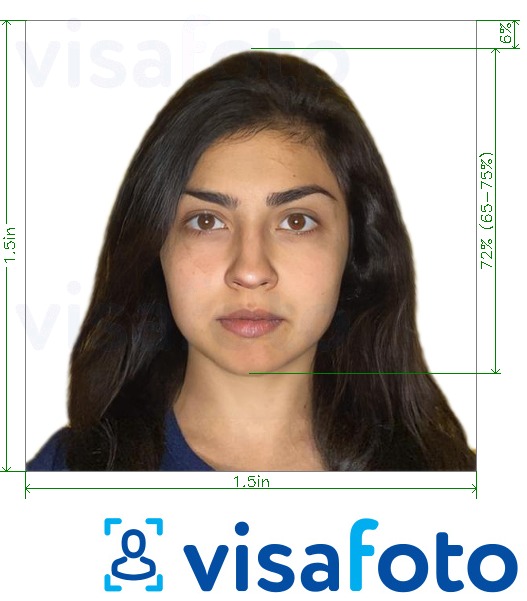
Do not assume every application requires a square 1.5 x 1.5-inch photo or a fixed 70% head proportion. Those figures are not established as universal requirements for the current ETA route. The public ETA guidance does not establish one universal pixel size or file-size limit for every application.
The example below shows the existing square Nepal photo format used in our older guide. It is an illustration of that format, not proof that the current ETA portal requires a square image:
Get a Nepal Visa Photo Online
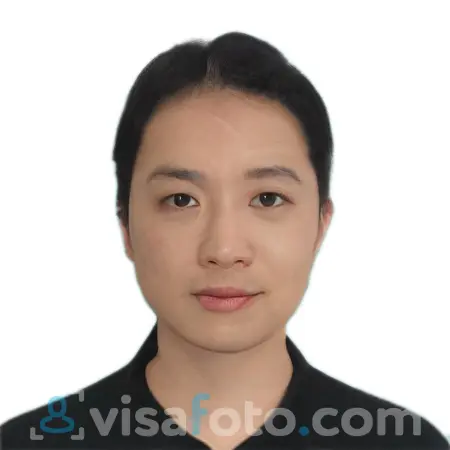
Visafoto helps you prepare a Nepal visa portrait at home, without needing a source photo that already looks like a finished document photo. Take a picture with your smartphone or digital camera, choose the relevant Nepal visa document format and upload the image. Visafoto adjusts the crop and framing, replaces the background and improves image quality.
Your starting background does not have to be white or perfectly arranged. Visafoto can replace it and correct lighting, contrast and resolution, including uneven brightness, while preserving your facial features. Leave space around your head and shoulders so the photo can be framed appropriately.
You receive a digital portrait and a template for printing. Use the individual portrait for a requested upload, and the template only when you need printed photos. Check the selected format and downloaded file against your actual application field; do not assume an older visa-on-arrival format is automatically the right choice for the newer ETA route.
First, take a clear source photograph like this one:

The prepared digital photo and printable layout are different files. These existing examples illustrate the square format shown above:
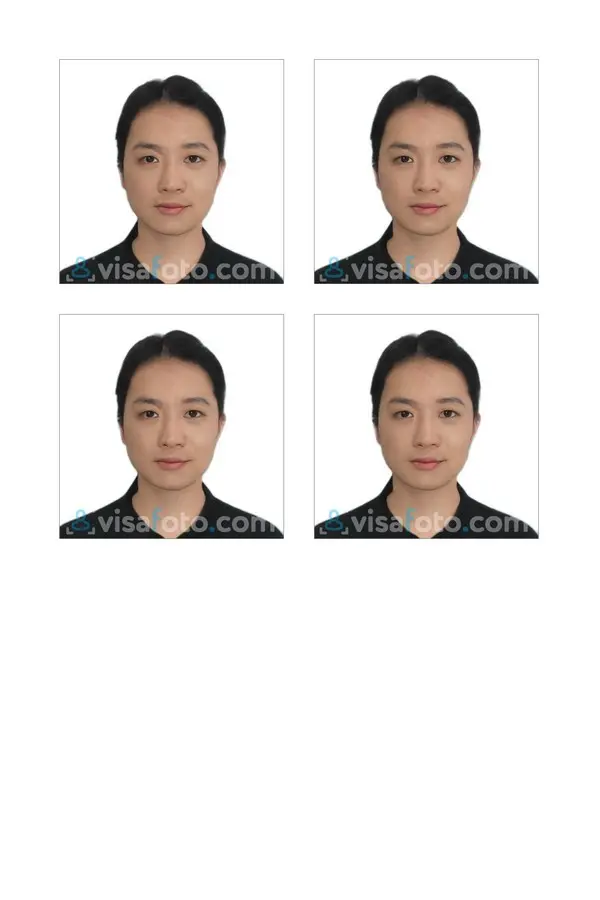
Select the digital file for an upload, not the sheet containing several photographs. If you need prints, use the paper size specified for your template and avoid automatic enlargement or cropping.
The service costs $9 and includes 24/7 support. Visafoto reports an overall photo acceptance rate of 99.7% across its supported documents. If officials reject a photo purchased from Visafoto, you can request a 100% refund. Keep the rejection explanation so support can help identify the issue.
Nepal Tourist Visa Fees
The standard multiple-entry tourist visa fees are:
| Permitted stay | Fee |
|---|---|
| 15 days | US$30 |
| 30 days | US$50 |
| 90 days | US$125 |
These are government visa fees, not a promise that every applicant pays the same total. Payment providers or missions may collect additional charges or a local-currency equivalent.
Nepal provides an official international debit/credit-card payment channel for supported applications, including visa-on-arrival payments before travel. Keep the Submission ID and payment confirmation. The published card-payment manual states a convenience fee of 3.5% of the transaction or the Nepalese-rupee equivalent of US$1, whichever is higher. Check the displayed total before authorizing payment, and verify payment status before retrying a failed transaction.
For payment at an entry point, follow its current instructions and carry some cash as a backup. Do not rely solely on an airport ATM or assume cash is the only accepted method. Mission applications follow the chosen mission's payment procedure.
Who may receive a free visa?
A gratis visa means the visa fee is waived; it does not necessarily remove the need for a visa or an application. The main tourist-related categories include:
| Category | Fee-exemption conditions |
|---|---|
| Children under 10, except U.S. citizens | The DoI's ETA guidance describes gratis visas for up to 30 days; do not assume every duration is free |
| Nationals of Bangladesh, Bhutan, Maldives, Pakistan and Sri Lanka | Up to 30 days on the first visit in a visa year |
| Afghan nationals | Special DoI recommendation is required; ordinary visa-on-arrival eligibility must not be assumed |
| Chinese nationals | Gratis tourist visas for up to 150 days in a visa year under the published DoI guidance |
| Holders of a valid NRN card | Fee exemption under the applicable NRN arrangements; carry the card and follow the relevant visa procedure |
Indian citizens do not need a Nepal visa. U.S. citizens, including children under ten, must pay the applicable visa fee under the Nepalese embassy's published instructions. Check eligibility for the selected duration before relying on an exemption.
Nepal Tourist Visa Extension Rules
To extend your stay, complete the tourist visa-extension application through NepaliPort and attend the Department of Immigration in Kathmandu or the Immigration Office in Pokhara with your passport and application receipt. Confirm the responsible office and any additional documents before attending; do not assume every immigration checkpoint handles extensions.
Tourist stays cannot exceed a combined total of 150 days in one visa year, from 1 January to 31 December. Your initial stay and extensions count toward the same limit; leaving and re-entering does not reset the annual total.
The Department of Immigration's service charter lists these standard extension charges:
- US$45 for the minimum 15-day extension.
- US$3 per day for additional days beyond that minimum.
- An additional US$5 per day for late stay or overstay.
- An additional US$25 for a multiple-re-entry facility, where applicable.
Fee exemptions can apply to eligible applicants. Apply before your permission expires rather than treating the late fee as permission to overstay. For the broader pre-arrival process, see our Nepal eVisa/ETA application guide.
Streamline your Nepal visa application process by taking a Nepal visa photo with Visafoto.com!
Last updated: 15 October 2026.