New Zealand Temporary Work Visa Guidelines

The New Zealand government offers various temporary work visas to meet different needs. Whether you are a skilled worker, a student, or the dependent partner of a worker, there is likely a work visa that suits your situation.
Read this guideline to discover which work visa is right for you, learn about the rules, and find out how to apply.
Table of contents
- New Zealand Temporary Work Visa Types and Requirements
- How to Apply for New Zealand Temporary Work Visa?
- Is it Possible to Apply for New Zealand Temporary Work Visa Online?
- New Zealand Visa Photo Requirements
- Get a New Zealand Visa Photo Online
- Can You Bring Your Family to New Zealand on a Work Visa?
- Can a Temporary Work Visa Lead to Residence?
- Work Visas for People in Difficult Situations
- FAQ
New Zealand Temporary Work Visa Types and Requirements
New Zealand offers several temporary work visa options. The right route depends on your circumstances—for example, whether you have an accredited-employer job offer, recently completed eligible study in New Zealand, have an eligible partner, or want to take seasonal work. Each visa has its own requirements, work conditions and maximum stay.
- Accredited Employer Work Visa (AEWV)
- Requires a full-time job offer of at least 30 hours a week from an accredited employer with an approved Job Check.
- You must meet the job’s skill, qualification, work-experience and, where required, occupational-registration requirements.
- Most applicants need either at least 2 years of relevant work experience or a relevant Level 4 or higher qualification, unless an exemption applies.
- The visa is tied to the employer, job and location stated in your visa conditions.
- Depending on the role, it may allow a stay of up to 5 years. Many lower-skilled roles have a 3-year maximum stay.
- Global Workforce Seasonal Visa
- For experienced workers taking an approved seasonal role with an accredited employer.
- Requires at least 3 seasons of similar work experience during the previous 6 years.
- Allows work in New Zealand for up to 9 months in each year on a 3-year visa.
- Peak Seasonal Visa
- For workers needed in approved seasonal jobs during short industry peaks.
- Requires a full-time offer from an accredited employer and at least 1 season of similar work experience in the previous 3 years.
- Allows a stay of up to 7 months.
- Recognised Seasonal Employer (RSE) Limited Visa
- For eligible Pacific workers with a job offer from a Recognised Seasonal Employer in horticulture or viticulture.
- Applicants must normally be at least 18 years old and have acceptable medical insurance.
- Work may include planting, maintaining, harvesting and packing crops.
- Most holders can stay for up to 7 months in any 11-month period.
- Post Study Work Visa
- For people who have recently completed an eligible qualification in New Zealand.
- You must apply within the relevant deadline after your student visa expires and show at least NZD 5,000 for living costs.
- Graduates with a Level 7 degree or higher can generally work for any employer in any occupation.
- The visa may be granted for up to 3 years, depending on your qualification and study.
- Partner Work Visas
- Available to eligible partners of New Zealand citizens, residents, workers or students.
- You must be living together in a genuine and stable relationship and meet health, character and other visa requirements.
- These visas usually provide open work rights, but eligibility depends on the supporting partner’s visa and circumstances.
- Specific Purpose Work Visa
- For a defined project, event, business secondment, specialist assignment, installation or other accepted purpose.
- You must provide evidence of the purpose, the expected duration and any required skills, qualifications or invitation.
- The visa is granted for the time needed to complete the approved purpose.
- Entertainers Work Visa
- For film, video or production work where the required skills are not readily available in New Zealand’s entertainment industry.
- Requires a contract and relevant industry or employer support.
- The stay is usually limited to the period needed for the approved work.
- Working Holiday Visa
- For citizens of countries with a working-holiday agreement with New Zealand.
- Most schemes are for people aged 18–30, while some allow applicants aged 18–35.
- You normally need sufficient funds, a return ticket or enough money to buy one, and may need medical insurance.
- Most visas allow a stay of up to 12 months. Canadian citizens may be eligible for up to 23 months, while UK citizens may be eligible for up to 36 months.
- You can take temporary work, but not a permanent job or run a business as its owner.
How to Apply for a New Zealand Temporary Work Visa?
The application process depends on the visa category, but most applicants follow these steps:
- Choose the right visa. Check whether your circumstances fit an employer-sponsored, seasonal, post-study, partnership, working holiday or specific-purpose visa.
- Check the visa-specific requirements. Confirm the required job offer, occupation, qualifications, work experience, relationship evidence, funds or other conditions before applying.
- Prepare your supporting documents. These may include your passport, identity photo, job offer, employment references, qualification documents, medical or chest X-ray certificates, police certificates, translations and proof of funds.
- Check employer requirements, if applicable. For an Accredited Employer Work Visa or seasonal visa, make sure the employer is accredited and has an approved Job Check for the role.
- Apply online. Most temporary work visa applications are submitted through the Immigration New Zealand website. Upload the requested documents and provide complete, accurate information.
- Pay the applicable fee. Check the final amount using Immigration New Zealand’s fee information immediately before payment, as charges can vary by visa type, citizenship and location.
- Wait for a decision. Immigration New Zealand may ask for further information or documents. If your application is approved, you will receive an eVisa with the conditions that apply to your work and stay.
- Follow your visa conditions. If your visa is employer-, job- or location-specific, do not change these conditions without the required approval, variation of conditions or new visa.
Processing times vary by visa category, application volume and the completeness of your documents. If you are already in New Zealand, make sure you remain lawfully in the country while your application is being assessed.
Is It Possible to Apply for a New Zealand Temporary Work Visa Online?
Yes. Most New Zealand temporary work visa applications can be submitted online through the official Immigration New Zealand website. You will generally need to create or use a RealMe account, upload your supporting documents and pay the required fee online.
Some visa categories or individual circumstances may require additional steps or documents. Always follow the instructions shown for your specific visa application.
New Zealand Visa Photo Requirements
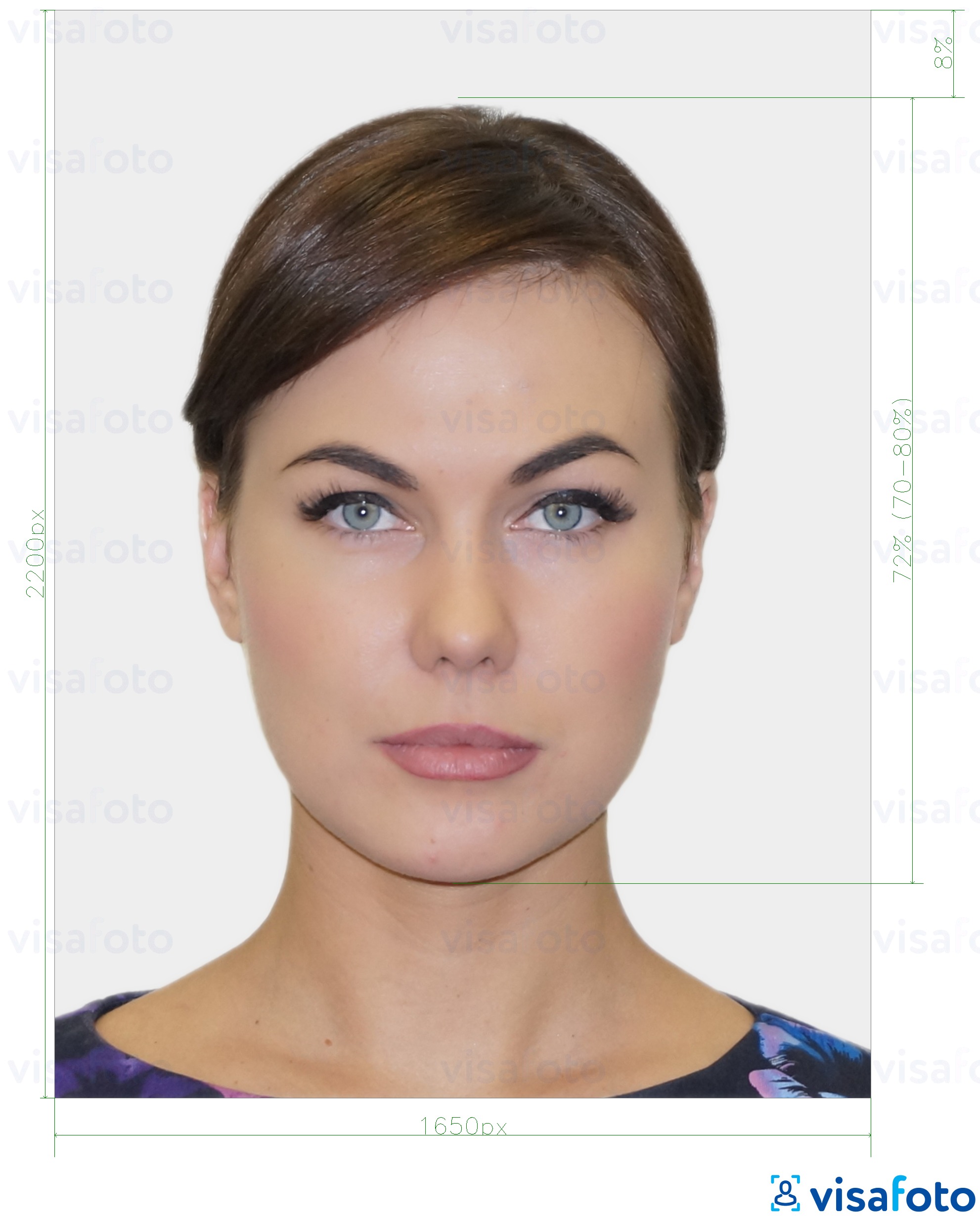
When applying for a New Zealand visa, your photo needs to meet these criteria:
- For paper applications, New Zealand visa photo size must be 35 mm by 45 mm.
- For online applications, the photo dimensions should range from 900×1200 pixels to 2250×3000 pixels. The file size should be between 500 KB and 3 MB.
- Your face should be centered in the photo.
- The background should be light.
- The photo should be taken in good lighting and have natural colors.
- Wear plain clothes; avoid busy patterns.
- Hats are not allowed, but headscarves for religious reasons are acceptable as long as the oval of your face is visible.
- Look directly at the camera and do not smile.
Here is an example:
Get a New Zealand Visa Photo Online
Save time on your New Zealand visa application by getting your photo professionally done online with Visafoto.com. This trusted photo editing service boasts an impressive 99.7% approval rate. With Visafoto, you can get a picture guaranteed to be accepted without ever setting foot in a photo studio.
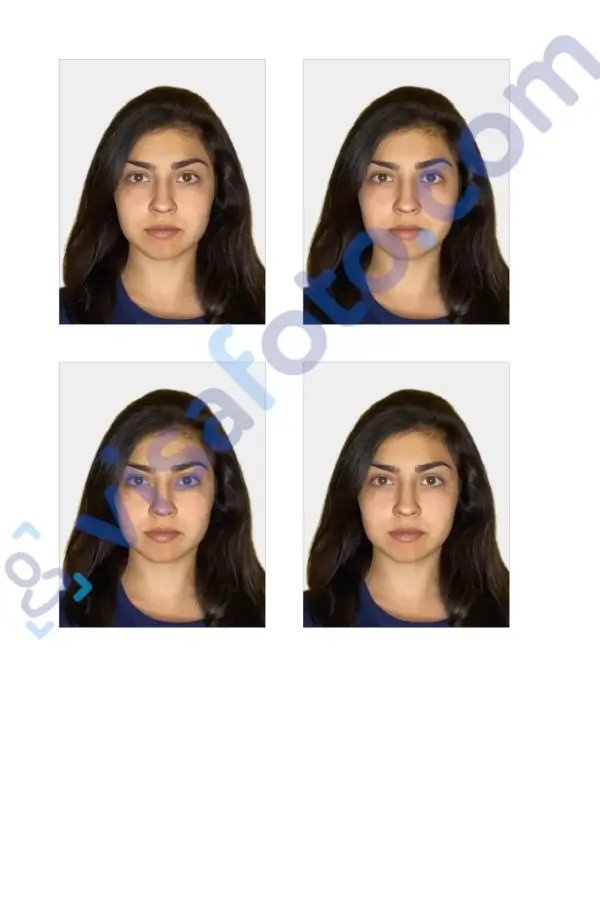
Simply snap a photo against a plain-white background and upload it to our tool. We take care of the format, background, sizes, and dimensions for you. You’ll receive both a digital copy for online applications and a print-ready version. If you’re not happy with the result, we offer a full refund.
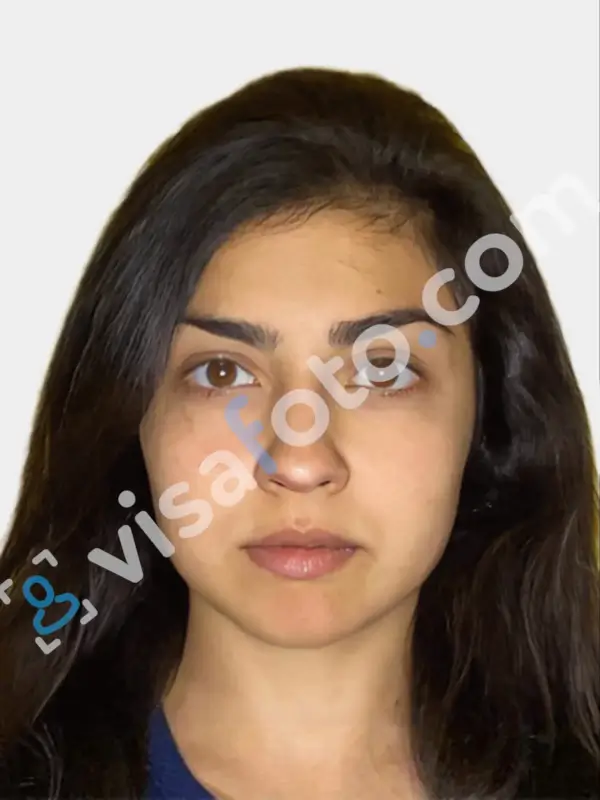
First, take a photo of yours under daylight like this one:

You will have two types of photos: a digital one for electronic applications and another one suitable for printing.
Here they are:
Can You Bring Your Family to New Zealand on a Work Visa?
In most cases, your partner and dependent children are not included in your temporary work visa application. They must submit their own visa applications and pay separate application fees.
Whether you can support a visa application for your family depends on your visa category, occupation, pay, work conditions and the type of visa your family members are applying for. For example, some Accredited Employer Work Visa holders may be able to support a partner or dependent children, while others may not meet the relevant income or pathway requirements.
- Partners may be able to apply for a partnership-based work visa if the main visa holder is eligible to support them.
- Dependent children may be eligible for student, visitor or other visas, subject to the main applicant meeting the required criteria.
- Global Workforce Seasonal Visa, Peak Seasonal Visa and RSE Limited Visa holders cannot support partnership-based visas for a partner or children.
- Working Holiday Visa holders generally cannot support visas for partners or dependent children based on their working holiday status.
Check family eligibility before accepting a job offer if relocating with your partner or children is essential to your plans.
Can a Temporary Work Visa Lead to Residence?
A New Zealand temporary work visa does not automatically lead to residence. It gives you the right to work in New Zealand for the period and under the conditions shown on your eVisa, but a separate residence application is required if you want to stay permanently.
Some jobs may create a pathway to residence through the Green List or the Skilled Migrant Category. Eligibility can depend on your occupation, qualifications, registration, salary, work experience and length of employment in New Zealand.
Before accepting a job offer, check whether the role is on the Green List or may help you meet the Skilled Migrant Category requirements. Do not rely on a recruiter’s promise—only the relevant Immigration New Zealand rules and your visa conditions determine your options.
Work Visas for People in Difficult Situations
New Zealand provides limited protection work visa options for people already in the country who face exploitation or family violence. These are not ordinary work visa routes, but they can give eligible people time to work legally and address their situation.
Migrant Exploitation Protection Work Visa
- This visa has no application fee.
- You must be in New Zealand and hold a current employer-specific work visa.
- You must report migrant exploitation to Employment New Zealand, receive a Report of Exploitation Assessment letter and apply within 1 month of receiving that letter.
- If approved, the visa allows you to work for any employer for up to 6 months while the exploitation is addressed.
Victims of Family Violence Work Visa
- This visa has no application fee.
- It may be available to eligible victims of family violence who were partnered with a New Zealand citizen or resident, or who hold a partnership-based visa with a temporary migrant.
- You must provide the required evidence of family violence and meet the relevant visa requirements.
- The visa usually provides open work rights for up to 6 months. A further visa may be possible in some circumstances if you have applied for residence.
If you believe you are being exploited or are experiencing family violence, seek confidential advice from the relevant New Zealand support services or a licensed immigration adviser.
New Zealand Temporary Work Visa Fees
New Zealand temporary work visa costs depend on the visa category and the applicant’s citizenship and location. The figures below are current published starting fees in New Zealand dollars (NZD):
| Visa Type | Current Fee |
|---|---|
| Accredited Employer Work Visa (AEWV) | From NZD 1,540 |
| Global Workforce Seasonal Visa | From NZD 1,540 |
| Peak Seasonal Visa | From NZD 1,540 |
| Recognised Seasonal Employer (RSE) Limited Visa | From NZD 325 |
| Working Holiday Visa | Usually from NZD 770 |
| Post Study Work Visa | From NZD 1,670 |
| Partner Work Visa | From NZD 1,630 |
| Specific Purpose Work Visa | From NZD 1,455 |
| Entertainers Work Visa | From NZD 1,455 |
| Business Investor Work Visa | From NZD 12,380 |
Note: “From” means that the final amount may vary depending on your passport, where you apply from, the application channel and any applicable immigration or visitor levies. Fees do not usually include medical examinations, police certificates, document translations, qualification assessments, insurance or professional immigration advice.
For an Accredited Employer Work Visa, the employer also pays separate accreditation and Job Check charges. An employer or recruiter must not pass these costs—or recruitment costs—to the worker. Check the final payable amount using the official Immigration New Zealand Fees page immediately before applying.
FAQ
Do I need a job offer to get a New Zealand work visa?
Not always. A job offer is required for employer-sponsored visas such as the Accredited Employer Work Visa, Global Workforce Seasonal Visa and Peak Seasonal Visa. However, you may not need a job offer if you qualify for a Working Holiday Visa, Post Study Work Visa, partnership-based work visa or certain specific-purpose routes.
What is the minimum age for a New Zealand temporary work visa?
There is no single minimum age for every temporary work visa. For example, Working Holiday Visa schemes are generally available to applicants aged 18–30 or 18–35, depending on nationality. RSE Limited Visa applicants must normally be at least 18. Check the rules for the specific visa you want to apply for.
Can I change jobs on an Accredited Employer Work Visa?
Usually, no—not without approval. An AEWV is normally linked to the employer, job and location shown in your eVisa. Before changing any of these, you may need a Job Change, a variation of conditions or a new visa. Do not start working for a new employer until you have the required immigration approval.
Can my employer charge me for a job offer or visa-related costs?
No. An employer or recruiter must not charge you for a job offer or pass on employer accreditation, Job Check, recruitment or employer immigration-advice costs. Offering or promising money in exchange for a job may affect your visa application.
Do I need a medical examination or police certificate?
It depends on your visa type, the length of your intended stay, your country of citizenship and your travel history. Some applicants may need a chest X-ray, a medical certificate or police certificates. Immigration New Zealand may also ask for these documents after you submit your application.
Do my documents need to be translated into English?
Yes. Documents that are not in English should be accompanied by acceptable English translations. Depending on the visa category, you may also need independently verifiable proof of work experience, such as employer references, payslips or tax records.
What happens after I reach the maximum stay allowed on an AEWV?
The maximum continuous stay depends on your role and visa conditions. After reaching the applicable maximum stay, you will normally need to spend 12 consecutive months outside New Zealand before another regular AEWV can be granted.
Do I need health or travel insurance?
Some visa categories require acceptable medical insurance. For example, Peak Seasonal Visa applicants may need medical insurance when the job offer is for 3 months or longer, and RSE Limited Visa applicants normally need it. Even when insurance is not compulsory, it can help cover unexpected medical and travel costs.
Can I study while holding a temporary work visa?
Your study rights depend on the visa conditions. Working Holiday Visa holders may generally study or train for up to 6 months in total. If study is your main purpose, a Student Visa may be more appropriate.
What should I do if my visa application is declined?
Read Immigration New Zealand’s decision carefully to understand the reason for the decline. You may be able to provide further information, apply again if your circumstances change or seek advice from a New Zealand licensed immigration adviser or an exempt lawyer. Application fees are generally not refunded when an application is declined.
How can I check the exact visa fee before applying?
Use the official Immigration New Zealand fee checker immediately before submitting your application. The final amount can vary by visa category, citizenship, application location and applicable levies.
Last update: September 2026