Peru visa guide: types, requirements, application and photos

Peru has different visa routes for tourism, business, work, study and joining family. Many travellers can enter the country without a tourist visa, while others must apply through a Peruvian consulate before departure. Work, study and residence applications can also require approval from Peru's immigration authority, Migraciones.
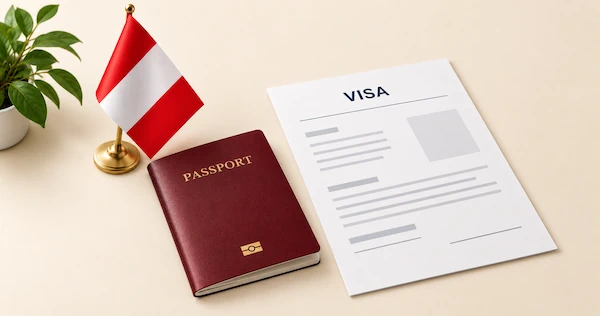
This guide explains how to choose the right category, where and how to apply, and which documents and photos to prepare. It covers consular applications, online services such as e-SAMI, fees, processing times and the rules to check before travelling.
Contents
- Which type of Peru visa do you need?
- Who needs a visa to visit Peru?
- Where should you apply for a Peru visa?
- Peru visa application requirements and documents
- Peru visa photo requirements
- Get your Peru visa photo online with Visafoto
- How to apply for a Peru visa through a consulate
- How to apply for a Peru visa online through e-SAMI
- How to check your Peru visa application status
- Peru visa fees and payment methods
- Peru visa processing time
- Receiving your Peru visa and preparing to travel
- Frequently asked questions
Which type of Peru visa do you need?
Choose the category that matches your activities in Peru. A tourist exemption does not automatically permit work or long-term study.
| Purpose | Relevant visa or immigration category |
|---|---|
| Holiday or sightseeing | Tourist, unless a nationality-based or conditional exemption applies |
| Business meetings, negotiations or commercial transactions | Business, or negocios, unless a business exemption applies |
| Employment or professional services | Worker, temporary or resident; designated-worker routes can apply to overseas assignments |
| Study, an exchange or recognised training | Training or study, known as formación, temporary or resident |
| Joining a Peruvian citizen or a foreign resident | Family resident, or familiar residente, if the relationship qualifies |
| Investment or living on a pension or permanent income | Investor resident or rentista resident |
Research, religious activities, journalism and official assignments have separate provisions. For an airport connection, establish whether you must pass immigration and whether your passport requires a transit visa.
Business visits are not the same as employment
A business visit can involve meetings, negotiations and signing contracts. It is not a general permit to take a paid job in Peru. If you will provide services, receive local remuneration or be assigned by an overseas employer, confirm the appropriate category before travelling.
Work, study and family residence
Migraciones handles applications for categories including worker, formación and family resident. Its published applications for obtaining these categories from abroad require the applicant to be outside Peru. Once authorised, follow the instructions for visa issuance through the designated consulate.
If you are already in Peru, a change of immigration status, or cambio de calidad migratoria, is a different procedure. Eligibility depends on your circumstances; entering as a tourist does not itself authorise your intended work or studies. The official Migraciones service directory separates applications for a status, changes of status and residence renewals.
Who needs a visa to visit Peru?
Your passport nationality, document type and purpose of travel determine whether you need a Peruvian visa. An exemption for tourism does not necessarily cover business, study or work.
Peru visa requirements by nationality
The table below covers ordinary passports from the United States, United Kingdom, Canada, Australia, India and China. It separates nationality-based tourism exemptions from exemptions that depend on another visa or permanent residence:
| Passport | Tourist visa before travel? | Important distinction |
|---|---|---|
| United States | Not required for tourist stays of 90 days or less | The exemption does not cover U.S. official or diplomatic passports. |
| United Kingdom, full British citizen passport | Not required for tourism or short visits | The period authorised at entry determines when you must leave. |
| Canada | Not required for tourist stays of less than 90 days per 365-day period, according to Canadian travel advice | Business and study have separate requirements. |
| Australia | Not required for tourism | Australian travel advice describes an arrival permit of up to 90 days. |
| India | Required unless a qualifying exemption applies | A qualifying foreign visa or permanent residence can provide an exemption, as explained below. |
| China | Required unless a qualifying exemption applies | Check the conditions for the document you hold, not just its issuing country. |
This is a reference for those six passport groups, not a complete worldwide list. For the country-by-country position, use the Foreign Ministry's official ordinary-passport visa and exemption table. Check whether the column describes a visa requirement or an exemption before interpreting a "Yes" or "No" entry.
If you are visa-exempt for your visit, you do not need to submit a tourist visa application just because e-SAMI exists. You must still meet Peru's entry requirements.
Conditional visa exemptions
Indian and Chinese ordinary-passport holders can qualify for a tourist visa exemption if they hold either:
- A visa with at least six months' validity for the United States, Canada, the United Kingdom, Australia or a Schengen state; or
- Permanent residence in one of those countries or a Schengen state.
Carry the qualifying document when travelling. A temporary residence permit is not the same as permanent residence, and this exemption does not automatically apply to every nationality holding a U.S. or Schengen visa.
Peru also publishes a tourist exemption for visa-required foreign nationals with permanent residence in Chile, Colombia or Mexico. Confirm that your particular residence document qualifies before relying on this route.
When a tourist Peru visa is not the appropriate category
A tourist visa is for recreation and similar visits. It does not authorise taking employment or settling permanently in Peru. Business, study, journalism and residence-related activities can require a different category or prior authorisation. Select the route that matches what you will actually do.
Where should you apply for a Peru visa?
For a consular visa, start with the Peruvian consulate responsible for where you live. Your nationality determines the visa rule, while your residence and the consular district help determine which office handles the application.
An Indian citizen living in Japan, for example, should not assume that the document checklist for an applicant in India applies unchanged. Tokyo's tourist visa instructions include a Japanese residence card. Other offices request their own local residence evidence.
Before creating an application, confirm the office, the visa category and whether it accepts applications from visitors who are not local residents. If there is no Peruvian consulate in your country, ask which office is designated to handle your nationality or place of residence. Do not choose an unrelated office simply because its appointments look more convenient.
Consular applications, e-SAMI and Migraciones: which route applies?
- Consular visa: the responsible office evaluates the application and tells you how to submit documents, attend an interview and present your passport. This is the starting point for visa-required tourists and many business visitors.
- e-SAMI: an online Peru visa application channel used by consular network. It can replace initial paperwork or email submission, but does not remove the consulate from the process.
- Migraciones: handles the immigration-status application for relevant work, study and residence categories, including through its Agencia Digital. Approval and consular visa issuance are separate stages where the route requires both.
An e-SAMI application does not replace a required Migraciones authorisation. Establish the route before opening an account.
Peru visa application requirements and documents
Prepare a basic file, then add the evidence for your purpose of travel. A consular application commonly involves:
- Passport: a copy of the biographical page and the original for any required appointment. Plan for at least six months' validity from arrival; check the office's blank-page requirement too.
- Application: a completed visa form, such as DGC-005, or the e-SAMI submission required by the office. Print and sign it if instructed.
- Photograph: the portrait required by the consulate and upload field.
- Travel plans: an itinerary, reservation or ticket as specified for your category; tourist applications commonly require return or onward arrangements.
- Accommodation or host details: a hotel reservation, address or invitation, as applicable.
- Funds: financial evidence appropriate to the trip, such as bank statements and employment income.
- Residence evidence: proof that you may apply in that consular district, where required.
- Payment evidence: the receipt if the office requires payment before evaluation.
Supporting documents for different Peru visa categories
- Tourism: hotel or tour reservations, or a host's invitation with any required notarisation, plus evidence that you can pay for your visit and onward travel.
- Business: a letter from your employer or business organisation explaining the purpose, duration and financial support for the trip. Include a letter from the Peruvian company when the visit involves a specific local counterpart.
- Work: the employment or service contract and the employer's supporting documents required by Migraciones. Labour-authority approval can be required unless an exemption applies. The contract and assignment determine whether the temporary, resident or designated-worker route fits.
- Study: enrolment, an admission or exchange letter, or other evidence of the recognised training programme, together with proof of financial support.
- Family residence: the relevant marriage, birth or other qualifying relationship record, plus the Peruvian relative's identity document or the foreign sponsor's residence evidence.
- Investment or rentista residence: evidence of the qualifying investment, pension or permanent income. For foreign-source rentista applications, Migraciones lists a minimum permanent net income of US$1,000 per month; the supporting income document and declaration about receiving the funds in Peru are also required.
Residence applications can require criminal-record evidence covering the relevant countries during the five years before arrival. Foreign-issued documents may need an apostille or legalisation and a Spanish translation. Check these formalities before ordering certificates, as an untranslated scan may not meet the requirements.
Extra documents are not identical everywhere. São Paulo requests a criminal-record certificate from adult applicants for the country of residence during the preceding year. Mendoza has additional instructions for Venezuelan applicants. These should not be turned into a universal checklist for every traveller.
For a child, prepare their own passport details and photograph, and ask the consulate about birth records, parental signatures and consent. A parent's visa or application does not automatically cover a child.
Peru visa photo requirements
Prepare the photograph for the consulate and visa category handling your case. The required size depends on where you apply, as the examples below show.
Peru visa photo size
For tourist visa applications, the two consulates publish these requirements:
- São Paulo: tourist visa: One colour photograph, 35 × 45 mm, white background.
- Tokyo: tourist visa: One colour passport-style photograph, 40 × 45 mm, white background.
The figures come from the consulates' own tourist visa requirements, including São Paulo's published checklist and Tokyo's separate instructions. They are not alternative sizes that every applicant may choose between.
For reference, this is Visafoto's 35 × 45 mm Peru visa format:

Peru visa photo background, expression and appearance
São Paulo specifies a white background, a front-facing pose, no glasses, an uncovered face and ears, no smile, and no headwear except for religious reasons. Tokyo also specifies a white background. Use the instructions for your own office when preparing the final photograph.
For a clear source image, keep the camera at eye level, look directly into it and make sure your face is sharp rather than blurred. A neutral expression and visible eyes make it easier to prepare an identification portrait. Avoid holding the camera so close that it distorts your facial proportions. Take a new photo if your appearance has changed rather than reusing an outdated portrait.
Get your Peru visa photo online with Visafoto
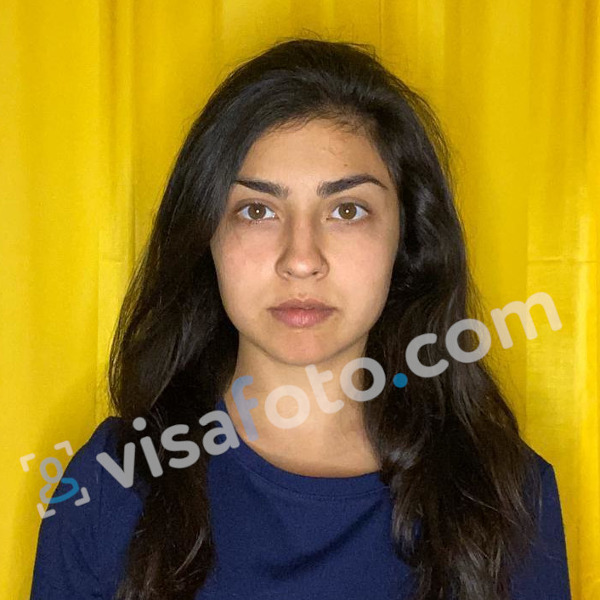
You can prepare your Peru visa picture at home instead of arranging a studio visit. Take several photographs with your phone or camera, choose a clear front-facing image and upload it to Visafoto. The source background does not have to be white, and the lighting does not have to be perfect.
Visafoto automatically replaces the background, adjusts the crop and framing, and prepares the selected photo dimensions. It can also improve lighting, contrast and image quality while preserving your facial features and identity. That is useful when a photo has a distracting background or needs more space around the head and shoulders.
Example of the photo you can upload to Visafoto:
The result after Visafoto editing:
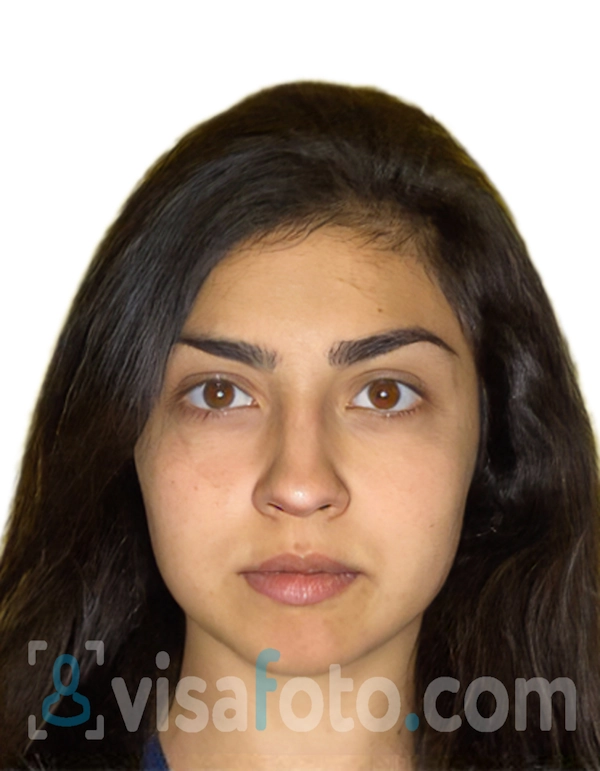
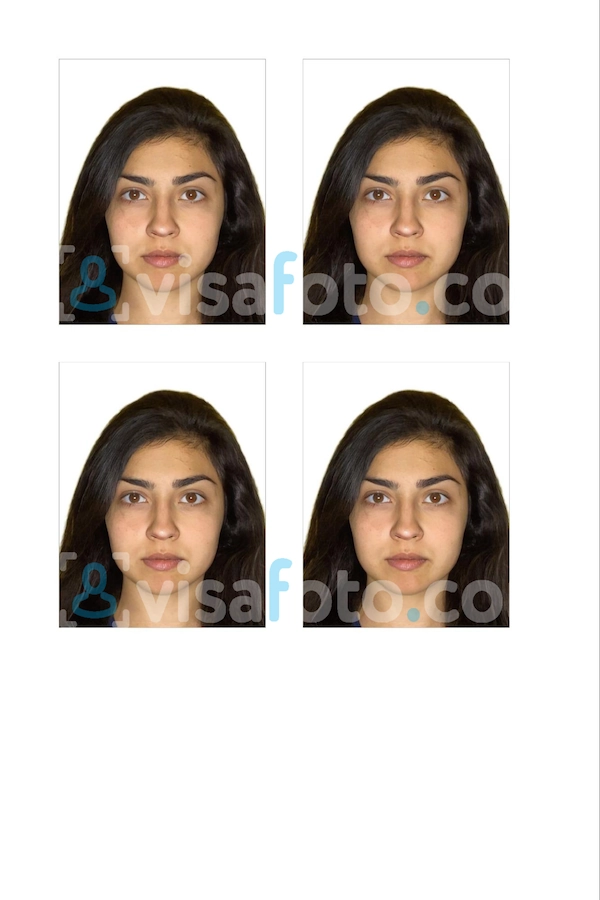
For a consulate requesting 35 × 45 mm, choose the Peru visa 35 × 45 mm photo format. Visafoto also offers a Peru visa 2 × 2 inch option; use it only when that is the size your consulate requests. If your instructions specify a different format, such as Tokyo's 40 × 45 mm photograph, contact support to confirm the appropriate option before ordering.
Your order includes an individual digital photograph and a printable template. Use the individual portrait for an online photo attachment, not the sheet containing multiple copies. If physical photos are requested, print the template at its intended paper size without stretching it or using a fit-to-page setting that changes the individual photo dimensions.
Experienced support specialists are available 24/7 to help with your particular photograph and application instructions. If the authority rejects a photograph purchased from Visafoto, you can request a 100% refund of the photo purchase. This guarantee concerns the photograph, not the government's decision on visa eligibility or a refund of the consular fee.
For practical source-photo advice, see how to take a good passport-style photo at home.
How to apply for a Peru visa through a consulate
A consular application usually combines document review with an interview or passport appointment. The initial submission may be through e-SAMI, email or an appointment. Follow the responsible office's procedure.
1. Confirm the category and request instructions
Give the consulate your nationality, country of residence, purpose and travel dates. Confirm the checklist, submission method, fee and appointment arrangements. If your category needs prior Migraciones approval, establish that stage first.
2. Complete the application and prepare the file
Complete the form or online submission with your passport details exactly as printed. Add the supporting documents and specified photograph, and keep copies of everything submitted.
For paper DGC-005 applications, follow the signature and photograph instructions. For e-SAMI, use the steps below and retain originals. Submit both versions only if asked.
3. Submit the documents and attend the interview
Submit the file and arrange the appointment as instructed. Bring your original passport, requested copies, photographs and supporting originals. Be ready to explain the purpose, funding and duration of the trip.
A complete file does not guarantee approval. The consulate may request further evidence, checks or authorisation.
4. Pay the applicable fee
Use the consulate's specified amount, currency and payment method. Some offices require the receipt with the initial file; others give instructions later. Keep the receipt and check the refund rule before paying.
5. Present or collect your passport as instructed
For a physical visa, the office needs your original passport for the sticker, either after preliminary approval or during processing. Confirm collection or return arrangements; do not assume postal return is available.
Check the issued visa's category, personal details, dates and entries. A submission confirmation or fee receipt is not a visa.
How to apply for a Peru visa online through e-SAMI
e-SAMI, short for Sistema de Administración Migratoria Integral, lets applicants register, submit documents and follow a consular visa case online. Use the official e-SAMI application portal, reached through your consulate's instructions, rather than a private visa-agency website.
Does Peru offer an e-visa or only an online application?
Electronic issuance currently covers specific categories, not a general tourist e-visa available to every traveller. Notices from Peru's consulates in Madrid, Mexico and other locations identify official, consular and diplomatic visas, in temporary and resident forms, as electronically issued. Other categories, including tourist visas, are issued physically.
Where your consulate uses e-SAMI, you can begin a tourist application remotely. You may still need an interview, original documents and a passport appointment. The online submission is one part of the consular process, not approval to travel.
Steps for an e-SAMI visa application
- Confirm the visa route and office. Establish whether you need a visa, choose the correct purpose and read the responsible consulate's checklist.
- Register your account. Select "Registrar usuario", complete the requested details and validate your email using the verification code.
- Sign in. Published consular instructions describe receiving a username and temporary password. Replace the temporary password as directed, then sign in again if prompted.
- Start a new application. Select "Nueva solicitud" and complete the sections using the details in your passport. Check the spelling of your name, passport number and dates.
- Add travel information and documents. Explain your purpose, itinerary and accommodation, then attach the portrait and other evidence requested for the case. Make sure every file is complete and legible.
- Follow the payment instructions. Where advance payment is required, use the consulate's accepted method and attach the receipt. Do not assume payment is collected by card inside e-SAMI.
- Review and submit. Use the "Guía de Solicitud" to identify incomplete mandatory fields. Check that the application is submitted, not merely saved as a draft.
- Keep the confirmation. Save any application reference displayed and retain copies of the files and receipt. Monitor the registered email for the consulate's response.
- Complete the consular stage. Supply additional evidence, attend an interview or present your passport when instructed. Wait for the visa to be issued before treating the process as complete.
Payment timing and the order of local appointment steps can differ. Follow your office's sequence rather than paying into an account copied from another consulate's website.
How to check your Peru visa application status
For a consular application, use the tracking method or contact channel given by the office. Quote your application reference and passport details when making an enquiry. If you applied to Migraciones, monitor its Buzón Electrónico for requests and the decision; an e-SAMI account is not a substitute for that separate case record.
Sign in to e-SAMI and review the application associated with your account. Keep checking the email address you registered, including its spam folder, because consulates send decisions and next-step instructions there.
Mendoza and São Paulo distinguish between these statuses:
- Borrador: Draft. Required information is still missing, so the application needs to be completed.
- Solicitado: The required sections have been completed and the application has been sent for consular evaluation.
Neither status is a visa approval. If you notice an error after submission, contact the office handling the case before creating a duplicate application or paying again. Give the application reference and explain exactly which information needs correcting. Do not assume a submitted application can always be edited or withdrawn through a particular button.
Peru visa fees and payment methods
The fee depends on the visa category and the consulate handling your case. Use its current tariff, not a universal private-agency "e-visa package" price. Work or residence routes can also involve a separate Migraciones application charge. Official tourist visa fee examples include:
| Consular office | Published tourist visa charge | Payment information |
|---|---|---|
| São Paulo | 30 consular soles, listed locally as R$165 | Cash or PIX; the office states the local amount is subject to change. |
| Valencia | €30 | Bank payment with proof attached to the application. |
| Hamburg | €30 | The published service instructions state that the payment is non-refundable and non-transferable. |
A consular sol is a consular accounting unit, not the same as a Peruvian sol spent locally in Peru. São Paulo describes one consular sol as approximately US$1. Use the consulate's current local-currency amount rather than converting its tariff yourself.
For Tokyo, the tourist visa page instructs applicants to pay by bank transfer using their name in Roman letters exactly as it appears in the passport, then upload the receipt. Other locations have different arrangements. Verify the recipient, amount and payment stage with your own office.
Check the applicable refund rule before paying. São Paulo explicitly states that a refusal does not lead to a fee refund. A private agent's service fee and a Visafoto photo order are separate purchases, not government visa charges.
Peru visa processing time
There is no single waiting time for every Peru visa. The category, responsible consulate and any required prior authorisation affect the schedule. Document requests, interviews and passport handling can add time, whether you apply online or submit paperwork directly.
Published advance-application recommendations also differ: Madrid asks applicants to provide the requirements at least 15 days before travel, while Munich recommends submitting at least 45 days before the intended trip. These are lead-time recommendations, not promises that every decision takes 15 or 45 days.
Prepare early enough for a further document request and an appointment if needed. If a deadline is approaching, contact the office with your reference; do not assume the portal offers paid express processing. Avoid non-refundable arrangements that depend on an approval you have not received.
For a work, study or family residence route, allow for the immigration-status decision as well as any consular visa stage. A tourist visa lead-time recommendation is not a processing estimate for a residence application.
Receiving your Peru visa and preparing to travel
Tourist and other physically issued visas
Wait for the consulate's instructions about your passport. Mendoza describes sending an appointment message after approval so the applicant can attend with their passport for the visa sticker. São Paulo likewise describes a physical collection stage and bringing the requested documents.
Before leaving the appointment or accepting a returned passport, check your name, passport number, visa category, dates and entries. Raise an error with the issuing office rather than altering the visa yourself. Carry the same passport used for the application.
Eligible electronic visa categories
If you qualify for an electronically issued official, diplomatic or consular visa, follow the issuing office's delivery and presentation instructions. Do not assume those instructions apply to tourist applications or that online registration removes every appointment requirement.
Visa validity versus permitted stay
The time available to use a visa for entry and the number of days you may remain in Peru are different. Peru's published consular rules generally require using a visa within six months of issuance; an unused visa expires after that period. Check both the visa's dates and the stay authorised by immigration, rather than treating six months as permission to remain in Peru that long.
For visa-exempt travellers, the permitted stay also depends on the applicable nationality rule and the immigration decision. A reference to Peru's maximum tourist stay is not permission for everyone to remain that long.
When arriving by air, entry and exit records are kept digitally rather than through routine passport stamps. Check the authorised period in your Tarjeta Andina de Migración Virtual (TAM Virtual) record and keep track of your departure deadline. TAM Virtual is an immigration record, not a substitute for a visa.
Frequently asked questions
Can I work in Peru with a tourist visa or tourist exemption?
No. Tourist entry does not authorise employment. Establish the appropriate worker or other qualifying category with Migraciones, and complete the required authorisation before starting the activity. A business visa is not a general employment permit either.
Can I complete a Peru visa application without visiting a consulate?
You can complete the online submission remotely where the consulate uses e-SAMI. However, the office can require an interview, original documents or your passport for the physical visa. Plan around that office's instructions, not the assumption that everything is remote.
Can I apply from a country where I am not a citizen?
Often the relevant question is whether you live within the consular district and can prove your local status. Do not assume every office accepts applications from short-term visitors. Confirm jurisdiction before submitting or paying.
Do I need a Peru visa if I have a U.S. or Schengen visa?
That depends on your nationality. The published conditional exemption for Indian and Chinese ordinary-passport holders requires the qualifying visa to have at least six months' validity, or qualifying permanent residence. The same rule does not automatically cover every other passport.
What photo size do I need for a Peru visa?
Use the size specified by your consulate. São Paulo's tourist instructions request 35 × 45 mm, while Tokyo's request 40 × 45 mm. Read any separate technical instructions for the digital upload as well.
Do children need their own application information and photo?
Prepare each child's passport details and an individual portrait. Ask the consulate how the parent or guardian should submit the child's application and what consent or birth documents are required. Do not assume the adult's visa covers the child.
Last updated: 28 October 2026