Thailand Destination Visa (DTV), or Digital Nomad Visa: Application Guide

Does Thailand have a Digital Nomad Visa? If you want to live and work remotely in Thailand, we have good news for you. Thailand has introduced the new Destination Thailand Visa (DTV) to attract digital nomads and boost tourism.
Read on to find out all the details about the Thailand Digital Nomad Visa, including how to apply and how to make the process smoother.
Table of contents
- Thailand Digital Nomad Visa in 2026
- Thailand Digital Nomad Visa Requirements
- How to Apply for Thailand Digital Nomad Visa (DTV) Online?
- How to Apply for Thailand Digital Nomad Visa (DTV) at the Consulate?
- Documents Required for Thailand Destination Visa Application
- Thailand Visa Photo Requirements
- Get a Thailand Visa Photo Online!
- Mobile Visa Photo Maker
- Thailand Digital Nomad Visa Fees
- FAQ
Thailand Digital Nomad Visa Policy in 2026
Thailand's new Destination Thailand Visa (DTV) is an excellent option for digital nomads and remote workers. Launched on July 15th, 2024, this visa allows you to stay in Thailand for up to five years. Each visit can last up to 180 days, and you can extend your stay for an additional 180 days during that period.
The policy prohibits employment with Thai entities, limits lifetime DTV visas to four per person, and allows participation in qualifying "soft power" activities like Muay Thai or cooking classes alongside remote work.
Thailand Digital Nomad Visa Requirements
To apply for the Thailand DTV, applicants must generally be at least 20 years old (some Thai embassies apply this minimum age), show proof of at least 500,000 THB (about $14,500) in liquid funds, and demonstrate that they work remotely or freelance for clients or employers located outside Thailand. Legal spouses and unmarried dependent children under 20 may apply as dependents if the main applicant holds the primary DTV.
The visa is issued as a five-year multiple-entry visa. Each entry allows a stay of up to 180 days, with the option to extend once per entry for another 180 days. After reaching the visa’s five-year validity period, there is no automatic renewal; eligible applicants must apply for a new DTV.
Tax obligations depend on the length of stay in Thailand. If a DTV holder spends fewer than 180 days in Thailand during a calendar year, they generally do not become a Thai tax resident for that year. Staying 180 days or more typically results in tax residency, which may require filing taxes on foreign income remitted to Thailand, potentially with relief under applicable double taxation agreements.
How to Apply for Thailand Digital Nomad Visa (DTV) Online?
Depending on your nationality and where you currently live, you might be able to apply for the DTV online through the official e-visa website. Eligible countries for online applications include the United Kingdom, the United States, Brazil, Australia, and many European countries. If your country isn't eligible, you'll need to apply at your local Thai embassy. You can check eligibility and other details on the Thailand digital nomad visa official website.
To apply for the Thailand Digital Nomad Visa (DTV) online, follow the simple steps below:
- Visit the Thai e-visa website and create an account.
- Fill in the application form.
- Upload the required documents.
- Pay the visa fee.
- Wait for your visa to be processed. You will receive the e-visa confirmation by email.
How to Apply for Thailand Digital Nomad Visa (DTV) at the Consulate?
How to apply for the Thailand Digital Nomad Visa (DTV) at a Consulate If you need to apply for the DTV at a Consulate, follow these steps:
- Find the nearest Royal Thai Embassy or Consulate in your country. You must apply in the country where you are a legal resident.
- Gather all the necessary documents.
- Go to the consulate to submit your documents.
- Fill out the DTV application form provided at the consulate. Make sure all information is correct.
- Pay the application fee.
- Submit your application.
- Attend an interview if required.
- Wait for processing. It usually takes about 15 to 20 days.
Documents Required for Thailand Destination Visa Application
To apply for the DTV, you'll need the following documents:
- Filled-out visa application form
- Valid passport (with at least six months left)
- Two recent passport-sized photos
- Proof of remote employment or business ownership (like a contract or a letter from your employer)
- Bank statement showing at least THB 500,000 (around USD 14,500)
- Proof of accommodation
Thailand Visa Photo Requirements
For your Thailand visa, the photo must meet these guidelines:
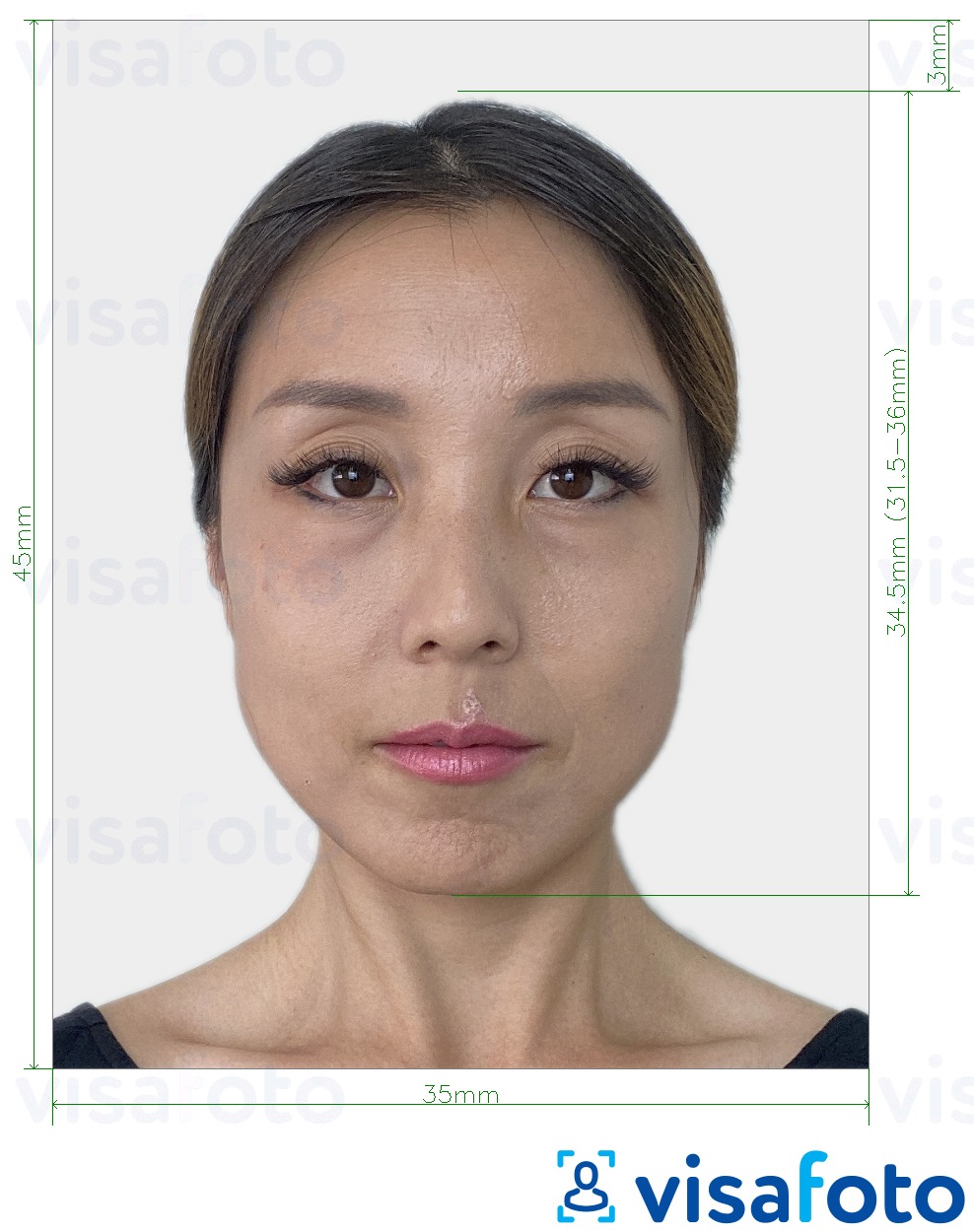
- Thailand visa photo size should be 3.5×4.5 cm, and the file size not more than 1024 KB, with a minimum resolution of 500×500 pixels.
- The digital photo should be in JPEG format.
- It should show a close-up of your head and shoulders.
- Your head should be centered, facing straight ahead with a neutral expression, and clearly in focus.
- Your face should cover 70 to 80% of the photo.
- Eyes must be clearly visible, with no hair covering the face.
- Glasses are fine if they are thin-framed, clear, and do not reflect light or block your eyes.
- Head coverings, hair, and facial jewelry must not obscure your face.
- The Thailand visa photo background should be plain white, with no other people or objects.
- The lighting must be even, without shadows on your face or in the background.
- Avoid "red-eye" effects.
Here is an example of a Thai e-visa photo:
Get a Thailand Visa Photo Online!
The simplest way to get a high-quality passport photo is by using an online service like Visafoto.com. Since 2013, Visafoto has been helping people with their passport photos and can make sure your photo meets all the requirements for a Thailand visa.
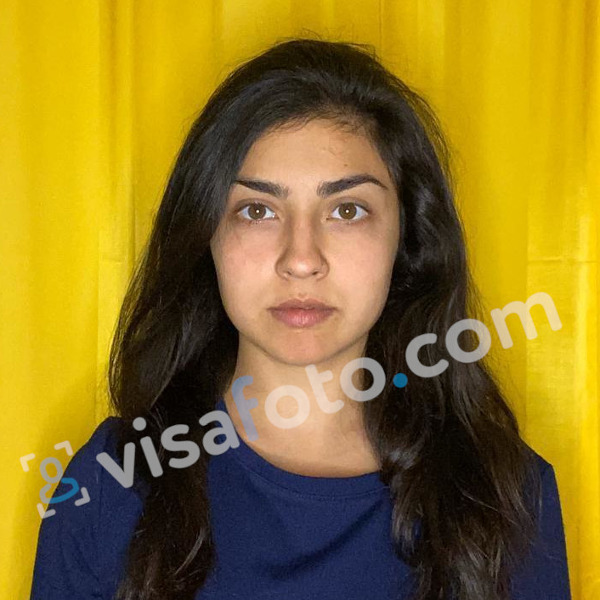
Here's how it works: snap a photo against a plain white background using your phone or digital camera, then upload it to Visafoto.com. Our team will adjust the size, format, background color, and face positioning to meet Thailand's visa photo standards. Not happy with the result? We'll give you a full refund.
You'll also get both a digital copy for online applications and a print-ready version.
First take a photo of yours which will look like this one:
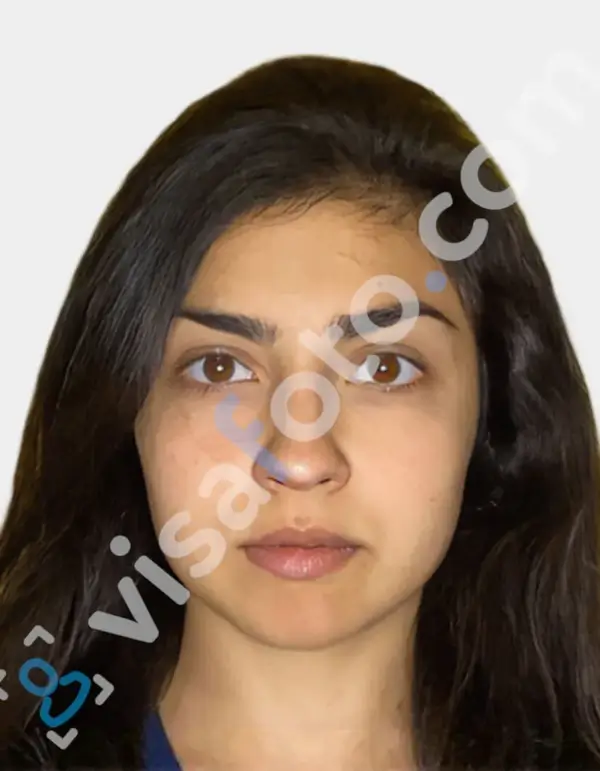
You will have two types of photos:
- The digital one is for applications online;
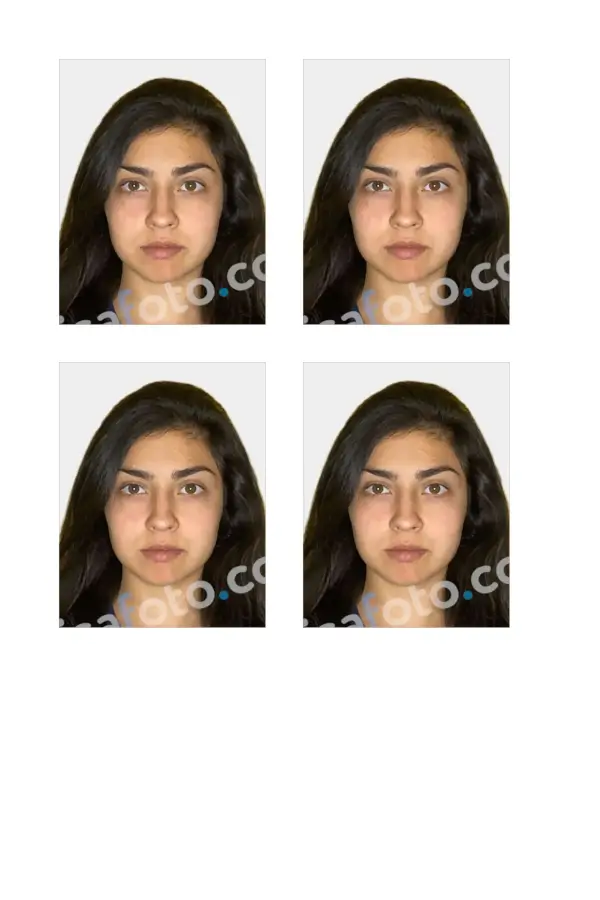
- The printable template with 4 individual Thai visa pictures.
Mobile Visa Photo Maker
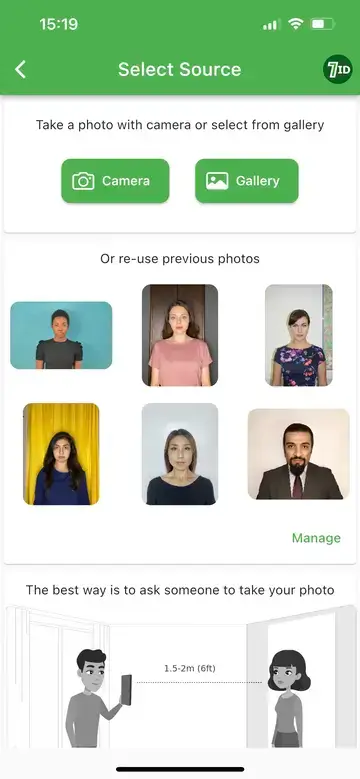
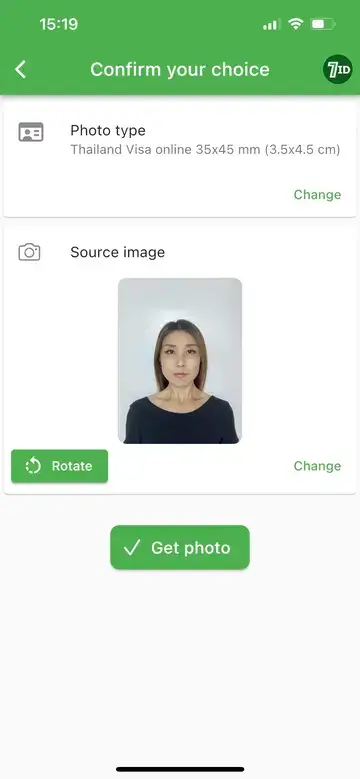
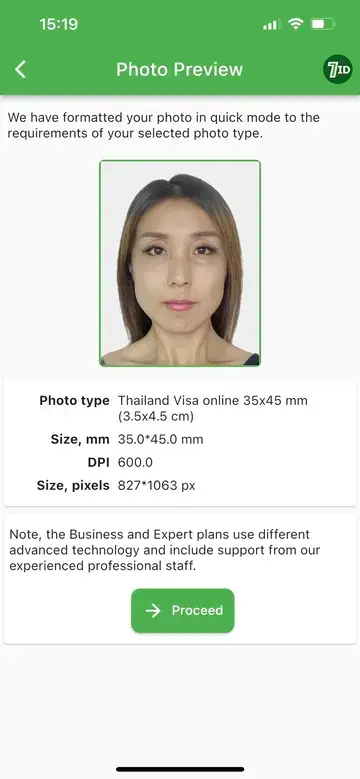
For an even smoother experience, try the 7ID app by Visafoto.com. This app uses advanced algorithms to perfect your photo and works on both iPhone and Android devices.
Just take a picture following the guidelines and upload it to the app. We’ll take care of the format, background, size, and dimensions. You’ll get a digital file and a print template that fits standard paper sizes like 4×6, A4, A5, or B5.
Got questions? Our support team is available 24/7 to assist you.
Thailand Digital Nomad Visa Fees
The current Thailand digital nomad visa cost is THB 10,000 (around USD 280).
The extension fee is 1,900 THB per 180-day extension at Thai immigration offices.
FAQ
Can I re-enter Thailand immediately after a DTV extension?
No. After completing the initial 180-day stay and the single 180-day extension allowed for each entry, you must leave Thailand before entering again to receive a new 180-day stay permission. The visa itself remains valid for five years and allows multiple entries during that period.
What happens if I overstay my DTV permission?
Overstaying results in a fine of 500 THB per day, up to a maximum of 20,000 THB. In serious cases, it may also lead to detention or deportation. Thai immigration authorities strictly enforce overstay rules, so it is important to extend your stay before it expires or leave the country on time.
Is travel insurance required for DTV approval?
Travel health insurance is not always listed as a mandatory requirement for DTV applications. Many embassies and the official e-Visa portal do not include it among the core documents. However, some consulates may request proof of medical coverage—often around $50,000—for the initial stay, depending on local practice.
Do I need a round-trip or onward ticket for a DTV visa?
A round-trip or onward ticket is generally recommended but is not usually a strict requirement for a multiple-entry DTV visa. Since the visa allows repeated entries, immigration authorities may assume periodic travel. In some cases, embassies may ask for proof of onward travel during the application process.
What is the difference between the DTV remote work and Thai soft power categories?
The remote work category requires evidence of employment, freelance activity, or clients located outside Thailand. The “soft power” category covers activities such as Muay Thai training, cooking courses, wellness programs, or medical treatment and requires confirmation of enrollment. Both categories follow the same stay rules and do not permit employment within Thailand.
How many DTV visas can one person obtain?
Some guidance suggests a limit of up to four DTV visas per person over a lifetime. Each visa is issued independently with a five-year validity period.
Does the DTV allow family members other than spouses or children under 20?
No. Only a legal spouse and unmarried dependent children under the age of 20 are eligible to apply as DTV dependents, and each must submit a separate application. Other family members must use standard tourist visas if they wish to visit Thailand.
Can a DTV be converted to another visa type inside Thailand?
Direct conversion to another visa category is generally not available. DTV holders may extend their stay once per entry, but applicants seeking other long-term visas usually need to leave Thailand and apply again from abroad.
Are there updates to the DTV policy in 2026?
As of March 2026, no major structural changes to the DTV program have been widely reported. The commonly cited requirements include a 10,000 THB visa fee and proof of at least 500,000 THB in funds. Applicants should monitor official Thai immigration or e-Visa announcements for any updates.
Last Update: March 2026