Thailand Retirement Visa: Requirements, Costs, and How to Apply

Thailand has established a clear visa framework for foreign retirees who wish to live in the country on a long-term basis. Eligibility depends on factors such as age, financial resources, and compliance with immigration rules.
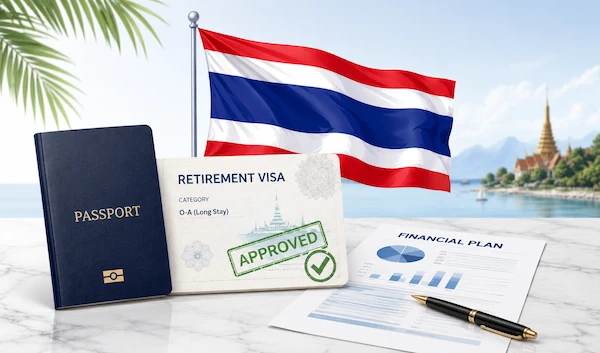
Read on to find out how to get a Retirement Visa in Thailand, which type of visa to choose, and what requirements you must meet.
Table of contents
- Thailand Retirement Visa program explained
- Thailand Retirement Visa requirements
- Thailand Retirement Visa types compared
- Thailand Retirement Visa application process
- Documents required for a Retirement Visa application
- Get your Thai visa photo online!
- Retirement Visa validity and extension rules
- How much does it cost to get a Retirement Visa to Thailand?
- FAQ
Thailand Retirement Visa program explained
A Thailand Retirement Visa is a category of long-stay visas designed for foreign nationals over the age of 50 who wish to reside in Thailand for extended periods. Here you'll learn about the four main types of visas and the key rules.
Standard Retirement Visa (Non-Immigrant O and O-A)
The most common Retirement Visas are the Non-Immigrant O and O-A categories. Both are available to applicants aged 50 and older who can demonstrate sufficient financial resources.
- Non-Immigrant O Retirement Visa in Thailand is often used by retirees already in the country and can serve as the basis for annual retirement extensions.
- Non-Immigrant O-A is typically obtained outside Thailand and usually allows a one-year stay with multiple entries.
Non-Immigrant O-X Visa (10-Year Retirement Visa)
The O-X visa offers a significantly longer stay period than standard Retirement Visas. It is available only to citizens of selected countries and requires applicants to meet higher financial thresholds.
Long-Term Resident (LTR) Wealthy Pensioner Visa
This visa is designed for affluent retirees who have a high passive income, as well as those who have an investment in Thai property, government bonds, or direct investment. It allows the holder to work in Thailand as a digital nomad. The LTR visa is administered by the Thailand Board of Investment (BOI) and requires pre-approval.
Key rules for Retirement Visa holders
Regardless of the visa category, retirees must comply with Thai immigration regulations throughout their stay:
- No employment: Traditional Retirement Visas, including Non-Immigrant O, O-A, and O-X, do not permit employment with a Thai employer. The LTR Wealthy Pensioner Visa is the only Retirement Visa that explicitly allows remote work and includes a digital work permit.
- 90-day address reporting: Most Retirement Visa holders must notify Thai Immigration of their residential address every 90 days while continuously staying in the country. The LTR visa is an exception, requiring only annual reporting.
- Dependents: Many Retirement Visa holders can bring eligible dependents, including a spouse and, in some cases, children under 20 years of age. The exact requirements depend on the visa category.
- Re-entry permit rules: If you hold a single-entry Non-O Thai Retirement Visa or have a 1-year extension of stay, you must obtain a re-entry permit before leaving Thailand. Failure to do so will void your current permission to stay. The re-entry permit can be obtained at your local immigration office or at the airport before departure.
Thailand Retirement Visa requirements
To qualify for a Retirement Visa, applicants must satisfy several conditions related to age, finances, health insurance, and legal background. Below, we explain the eligibility criteria and income requirements for a Thailand Retirement Visa.
These are core Thailand Retirement Visa qualifications:
- Have no serious criminal convictions. Some visa categories, particularly O-A and O-X, require a police clearance certificate.
- Meet applicable health and insurance requirements:
- A medical certificate may be required, especially for O-A and O-X applicants.
- Health insurance is mandatory for O-A and O-X visas and may also be required by local immigration authorities in other cases.
How old do you have to be to get a Retirement Visa in Thailand? Applicants must be at least 50 years old at the time of application.
Non-Immigrant O and O-A Visas
Applicants must satisfy one of the following financial requirements:
- Maintain at least THB 800,000 in a Thai bank account.
- Show a monthly income of at least THB 65,000, such as a pension.
- Use a combination of savings and annual income totaling THB 800,000.
Health insurance is also required. Applicants must hold health insurance with coverage of at least USD 100,000 (or THB 3,000,000) for medical expenses. Policies issued by both Thai and foreign insurers are generally accepted.
Non-Immigrant O-X Visa (10-year visa)
This visa is available only to citizens of 14 selected countries, including Australia, Canada, Denmark, Finland, France, Germany, Italy, Japan, the Netherlands, Norway, Sweden, Switzerland, the United Kingdom, and the United States.
Applicants must meet the following conditions:
- Financial requirements (choose one):
- Thai bank deposit: Keep THB 3,000,000 (about USD 92,000) in a Thai bank account.
- Combination: THB 1,800,000 (approx. USD 55,150) deposit + an annual income of at least THB 1,200,000 (approx. USD 36,770). You must have total funds of THB 3,000,000 (about USD 100,000) in a Thai bank within one year of entering Thailand.
- Health insurance requirement: Carry health insurance that meets Thai regulations, including minimum coverage of THB 40,000 (about USD 1,230) for outpatient treatment and THB 400,000 (about USD 12,260) for inpatient care.
Long-Term Resident (LTR) Wealthy Pensioner Visa
This Thailand Retirement Visa targets foreigners over the age of 50 who have substantial income or investment assets.
- Financial requirements:
- Annual passive income of at least USD 80,000, such as pension payments, dividends, or investment income; or
- Annual passive income between USD 40,000 and USD 80,000, combined with an investment of at least USD 250,000 in qualifying Thai assets, such as government bonds, real estate, or direct investments.
- Health insurance or financial provision:
- Either health insurance with minimum coverage of USD 50,000, or
- Proof of at least USD 100,000 in savings maintained for 12 months.
Thailand Retirement Visa types compared
Choosing the right type of Retirement Visa depends on your long-term plans, budget, and preferred length of stay. Below, we compare the three main options to help you decide which is best for you.
| Standard Retirement Visa (O/O-A) | 10-Year Retirement Visa (O-X) | LTR Wealthy Pensioner Visa | |
|---|---|---|---|
| Validity | 90 days/1 year (renewable annually) | 5 years + 5-year extension (10 years total) | 10 years (5+5, renewable) |
| Financial requirement | THB 800,000 in Thai bank or THB 65,000/month income or combination | THB 3,000,000 in Thai bank or THB 1.8 million deposit + THB 1.2 million/year income | USD 80,000/year passive income or USD 40,000 income + USD 250,000 Thai investment |
| Health Insurance | Required (USD 100,000 coverage) | Required (Thai insurer: THB 400,000 inpatient / THB 40,000 outpatient) | Required (USD 50,000 coverage or USD 100,000 in savings) |
| Nationality restriction | All nationalities | 14 countries (US, UK, CA, AU, JP, EU, etc.) | All nationalities |
| Key Thailand Retirement Visa benefits | Most accessible and affordable. Renewable annually in Thailand. Can lead to permanent residency pathway. | No re-entry permit needed. Can buy condo and register vehicle. Allows volunteer work. Only 2 renewals in 10 years. | Tax exemption on foreign income. Annual reporting (not 90 days). Fast-track airport service. Digital work permit included. Bring unlimited dependents. Qualify via USD 250,000 property investment. |
Thailand Retirement Visa application process
Most Thailand Retirement Visa applications are submitted through the official Thai e-Visa platform. Although requirements differ between visa categories, the overall application process follows the same basic structure.
To apply, follow the steps below:
- Confirm your eligibility. Check the minimum age requirement, financial criteria, nationality restrictions (if applicable), and any health insurance obligations.
- Prepare the required documents, listed below in the article. Documents issued in a language other than Thai or English may need certified translation and legalization.
- Complete the online application form through the official Thai e-Visa portal.
- Upload all required documents and review the information carefully before submission.
- Pay the applicable visa fee online. Visa fees are generally non-refundable, even if the application is denied.
- Once approved, you will receive an electronic visa confirmation by email. Print a copy and present it to immigration officers when entering Thailand.
Additional steps for the LTR Wealthy Pensioner Visa
Applicants for the Long-Term Resident (LTR) Wealthy Pensioner Visa must complete an extra approval stage before applying for the visa itself:
- Submit an application for a Qualification Endorsement Letter (QEL) through the Thailand Board of Investment (BOI).
- After receiving the QEL, apply for the visa within the specified validity period through a Thai embassy, consulate, or the One Stop Service Center in Bangkok.
- Complete the final verification process and receive your LTR visa approval.
Documents required for a Retirement Visa application
The exact document list depends on the Retirement Visa category you choose. However, most applicants must provide proof of identity, financial eligibility, and compliance with Thailand's health and immigration requirements.
Basic documents
Prepare the following items regardless of the Retirement Visa type:
- Passport valid for at least 6 months beyond your planned entry date (the O-X visa typically requires at least 18 months of validity).
- At least two blank passport pages.
- One recent passport photo (3.5 × 4.5 cm) taken within the last six months against a plain white background.
- Completed and signed visa application form submitted through the Thai e-Visa system.
- Proof of legal residence in the country where you apply, such as a residence permit, long-term visa, or similar document.
Financial documents
Applicants must show that they meet the Retirement Visa's financial requirements.
Bank deposit option:
- Recent bank statements or passbook records showing the required balance.
- A bank letter confirming the account balance and ownership, often issued shortly before the application date.
Income option:
- Pension statements, income certificates, or other official documents proving regular income.
- Recent bank records showing incoming pension or income payments, if requested.
Combination option:
- Evidence of both savings and recurring income demonstrating that the required annual financial threshold has been met.
Health and background documents
These requirements are standard for permanent Retirement Visas in Thailand (O-A and O-X) and may also apply to certain retirement-based Non-Immigrant O applications:
- Medical certificate: A recent medical certificate, often issued within the previous three months, confirming that you do not have any of the diseases prohibited under Thai immigration regulations.
- Police clearance certificate: A criminal record check issued by the authorities in your country of citizenship or residence, typically dated within the last three months. Some Thai embassies also require notarization or legalization.
- Health insurance proof: Insurance documents showing that your policy meets the minimum coverage levels required for the visa category. For O-A and O-X visas, this commonly includes coverage for both inpatient and outpatient treatment.
Additional supporting documents
Depending on the embassy, consulate, or visa type, you may also need:
- Proof of accommodation, such as a hotel reservation, rental agreement, or invitation letter from a property owner.
- Flight itinerary or travel booking confirmation.
- Additional documents requested by the Thai embassy, consulate, or immigration office handling your application.
Get your Thai visa photo online!
Learn how to create a professional-quality photo for a Thai visa that will be accepted by the authorities.
Thanks to today's online photo editing tools, there's no need to visit a photo studio to get a high-quality photo for your documents. With Visafoto, a trusted photo editing service, you can take a compliant visa photo in just a few minutes. It only takes two simple steps!
- Upload a photo taken in good natural lighting to the Visafoto tool below.
- Select the country and document type (Thailand, visa).
That's it! We'll handle the rest for you. Visafoto will adjust the image to meet Thailand visa requirements, including the background, size, and head positioning. You will receive a digital file ready for online submission and a printable version.
Visafoto improves photo quality as needed by optimizing lighting to create a studio-like effect, enhancing image clarity and resolution, and correcting framing if the original photo was cropped too tightly. You don't even need to take a new photo. You can simply photograph an existing passport photo with your phone, and Visafoto will optimize the scan quality.
When a photo already complies with the requirements, Visafoto leaves it unchanged apart from any necessary formatting adjustments.
Original photo:

Edited result:

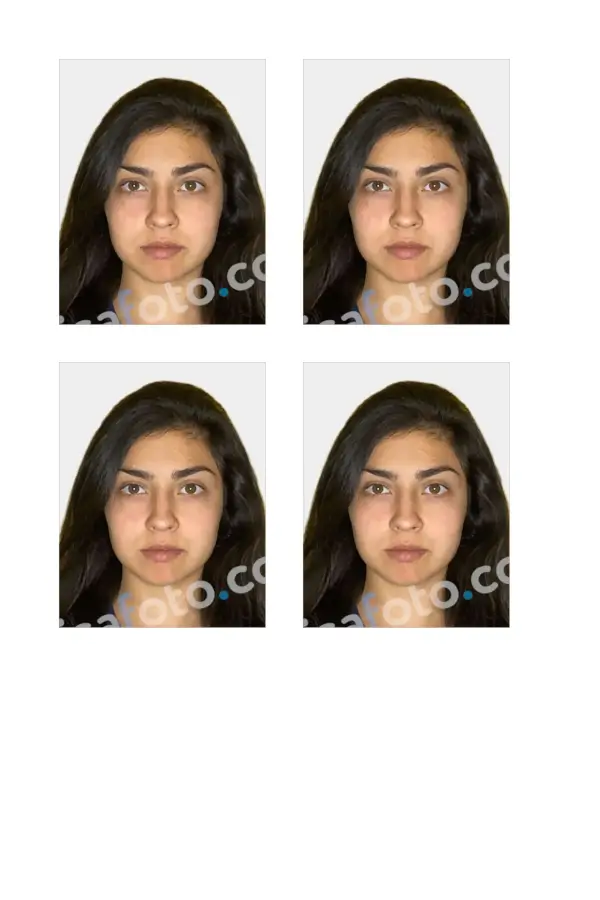
Visafoto has processed more than 1 million approved document photos and maintains a 99.7% acceptance rate. If your photo is rejected, you receive a full refund. Our support is available 24/7.
Retirement Visa validity and extension rules
Thailand offers various long-stay visas for retirees, each with its own rules regarding validity and extensions. Read on to learn about validity and renewal rules for each Thai Retirement Visa.
Non-Immigrant O Visa (Retirement)
- Validity: 3 months from the date of issuance.
- Stay period: 90 days upon entry.
- Extension rules: You can apply for a one-year extension of your initial 90-day stay at your local Thai immigration office. To qualify for an extension of stay with this type of Thailand Retirement Visa, demonstrate financial stability by maintaining THB 800,000 in a Thai bank, a monthly income of THB 65,000, or a combination of these.
Non-Immigrant O-A Visa (Long Stay)
- Validity: This Thailand Retirement Visa is multiple-entry and lasts for one year from the issue date. Enter and exit Thailand as often as needed within this period.
- Stay period: On each entry, you receive a stay allowance of one year.
- Extension rules: Extend your stay by another year through the Thai Immigration Bureau, totaling a maximum of two years on the same visa. To qualify for an extension, demonstrate financial stability by maintaining THB 800,000 in a Thai bank, a monthly income of THB 65,000, or a combination of these.
Non-Immigrant O-X Visa (10-year Retirement Visa)
- Validity: The visa spans five years and allows multiple entries.
- Stay period: Each entry grants you a stay of five years.
- Extension rules: Apply for a five-year extension to reach a total stay of ten years. Ensure you have at least THB 1.5 million in a Thai bank to qualify. Despite the extended stay, an annual visit to immigration is necessary for a qualification review.
LTR Wealthy Pensioner Visa
- Validity: This visa is valid for a total of ten years, usually structured as two five-year segments.
- Extensions/maintenance: Maintain BOI requirements such as income and insurance to ensure the visa remains valid. Failure to meet these conditions can result in cancellation.
How much does it cost to get a Retirement Visa to Thailand?
There are two main expenses involved in getting a Thailand Retirement Visa: the government application fee and the financial requirements for maintaining a bank account. Below, you'll find a clear breakdown of the costs for each visa option.
| Government application fee | Financial requirement (funds you provide) | |
|---|---|---|
| Non-O (Retirement) | USD 80 (Single) / USD 200 (Multiple) | THB 800,000 in a Thai bank or THB 65,000/month income |
| Non-O-A (Long Stay) | USD 200 | |
| Non-O-X (10-Year) | USD 400 | THB 3,000,000 in a Thai bank |
| LTR (Wealthy Pensioner) | THB 50,000 (about USD 1,500) | USD 80,000/year income or USD 40,000 income + USD 250,000 Thai investment |
Good luck with your Thai Retirement Visa application!
FAQ
Can I work on a Retirement Visa in Thailand?
No. Thailand’s Retirement Visas, including Non-Immigrant O, O-A, and O-X categories, do not permit employment. This restriction applies to both local jobs and remote work for overseas employers. To work legally in Thailand, you must obtain an appropriate work-authorized visa and a work permit, or qualify under an eligible Long-Term Resident (LTR) program.
What is the average visa processing time?
Processing times depend on the visa category:
- Non-Immigrant O (Retirement): usually 3–10 business days after submission of a complete application.
- Non-Immigrant O-A (Retirement): typically 2–8 weeks.
- Non-Immigrant O-X (Long Stay): usually over 3 weeks.
- LTR Visa (Wealthy Pensioner): generally 3–4 months.
Can I buy a property in Thailand on a Retirement Visa?
Yes, but ownership rights are limited. Foreign retirees may purchase a condominium in freehold, provided the building's foreign ownership quota has not been reached. Foreign nationals generally cannot own land directly. Those interested in houses typically use long-term lease agreements or other legally recognized property arrangements.
Can I bring my spouse?
Yes. Your spouse can apply for a dependent visa based on your retirement status. You must provide an official marriage certificate and any required translations or legalizations requested by the Thai authorities.
How long can I stay outside Thailand?
There is no fixed limit, provided you hold a valid re-entry permit. Without one, leaving Thailand automatically cancels your permission to stay. The 90-day reporting requirement also pauses while you are abroad and starts counting again when you return.
Can I convert a Tourist Visa into a Retirement Visa?
In some cases, yes. Applicants who meet all Retirement Visa requirements may be able to change their immigration status before their current stay expires. However, many retirees choose to obtain a Non-Immigrant O Retirement Visa outside Thailand and then apply for a one-year extension after arrival.
What happens if my bank balance drops below the limit?
The consequences depend on when the funds fall below the threshold:
- During the first three months after approval, the full THB 800,000 must remain in the account.
- After that period, the balance generally must not drop below THB 400,000.
- Before renewal, the account must again show the required THB 800,000 for the prescribed seasoning period.
Failure to meet these conditions can affect future extension applications.
How early can I renew my Retirement Visa in Thailand?
Most retirees submit their renewal application about 30 days before the current permission to stay expires. Applying before the expiry date helps maintain a continuous legal status and provides time to address any issues with the application.