UK dual citizenship passport rules. How to use dual citizenship when travelling?

While the UK continues to recognise dual citizenship, British dual nationals now face new passport rules when travelling home. Since February 2026, it has become essential to use the correct travel document because airlines must verify every passenger's right to travel before boarding.
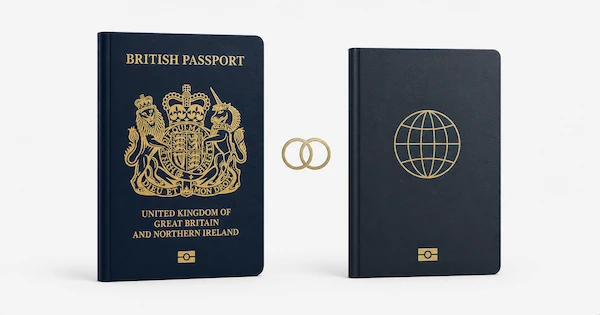
In this guide, you'll find the new British passport dual citizenship rules explained, including when a Certificate of Entitlement is required and which passport to use when flying to the UK with dual citizenship.
Table of contents
- Does the United Kingdom of Great Britain and Northern Ireland allow dual citizenship
- Which passport should a dual citizen use?
- What Is a Certificate of Entitlement?
- What documents do British dual citizens need?
- Documents required to get the Certificate of Entitlement
- Get the British passport-sized photo online!
- UK ETA rules for dual citizens
- Can you enter the UK on a foreign passport alone?
- FAQ
Does the United Kingdom of Great Britain and Northern Ireland allow dual citizenship
Can you have dual citizenship in the UK? Yes, British citizens may legally hold another nationality.
What this means in practice:
- You can hold two or more citizenships at the same time. There is no separate application for dual citizenship. If you qualify for British citizenship and another country also recognises you as its citizen, you automatically become a dual national.
- You do not have to give up your existing nationality. The UK does not require new British citizens to renounce another citizenship, and British citizens who acquire a foreign nationality generally keep their British citizenship.
- No registration is required. You do not need to notify the UK government that you have another nationality.
Can I apply for a British passport if I have dual citizenship? Yes. Holding another nationality does not affect your right to apply for or renew a British passport. Any British citizen who meets the passport requirements can apply, regardless of how many other citizenships they have.
Which passport should a dual citizen use?
According to changes to the entry rules for British dual citizenship holders introduced on 25 February 2026, a non-UK passport alone will no longer be enough to prove your status when travelling to the UK.
If you have a British passport and dual nationality, you should normally use your valid British passport when travelling to the UK. This is the simplest way to prove your right of abode and confirm that you are entering the country as a British citizen rather than as a foreign visitor. The UK government recommends using a British passport whenever possible.
If you also hold Irish citizenship, you can generally travel to the UK using a valid Irish passport instead. British-Irish dual citizens are exempt from the UK's Electronic Travel Authorisation (ETA) requirement, and the Irish passport is accepted for entry under the rules of the Common Travel Area.
If you choose to travel on another country's passport, you may need a Certificate of Entitlement to prove your right of abode.
What Is a Certificate of Entitlement?
A Certificate of Entitlement to the Right of Abode is an official UK immigration document that confirms your unrestricted right to enter, live, and work in the UK without a visa or an ETA. It allows eligible people to prove their right of abode when they travel without a valid British passport.
Who is it for?
The Certificate of Entitlement is available to people who have the Right of Abode but do not have a valid British passport:
- British citizens. Every British citizen has the right of abode. Most prove this by travelling with a valid British passport. The Certificate of Entitlement is an alternative for those who cannot use one.
- Eligible Commonwealth citizens. Some Commonwealth citizens also have the right of abode if they meet specific legal conditions, such as qualifying through a parent born in the UK or, in certain cases, through a marriage that took place before 1 January 1983.
Since 26 February 2026, the Certificate of Entitlement has been issued as a digital record linked to your passport through a UK Visas and Immigration (UKVI) account. Unlike the previous passport vignette, the digital certificate remains valid after you renew your passport, provided you keep your UKVI account up to date. You must also update your photograph every 10 years, or every 5 years if you are under 16.
What documents do British dual citizens need?
Since British dual citizens cannot apply for or use an ETA to enter the UK, you must prove your right of abode with one of the following documents:
- A valid British passport.
- A valid Irish passport, where applicable.
- A valid non-UK passport with a Certificate of Entitlement.
- Emergency travel document (ETD) in urgent cases.
Please note that a British nationality certificate alone, such as a certificate of naturalisation or registration, is not a valid travel document. Although it proves your British citizenship, it does not contain a photograph or biometric data and is not recognised by airlines, ferry operators, or border officials as valid identification for entering the UK. Therefore, if you try to travel with only your naturalisation certificate, you will almost certainly be denied boarding.
Documents required to get the Certificate of Entitlement
To apply for a Certificate of Entitlement to the Right of Abode, you must submit several standard documents along with evidence showing that you qualify for the right of abode.
Required for all applicants
The following documents are required in every application:
- A valid passport or travel document. Your digital Certificate of Entitlement will be linked to this passport.
- Two recent passport-sized photos that meet the UK government's photo requirements and were taken within the last six months.
Documents proving your right of abode
The supporting evidence depends on how you obtained British citizenship or the right of abode. Submit original documents unless the Home Office specifically states otherwise.
- Naturalised or registered as a British citizen on or after 1 January 1983: Registration or naturalisation certificate.
- Born in the UK before 1 January 1983: Full birth certificate showing your parents' details.
- Commonwealth citizen born before 1 January 1983: Your full birth certificate, your parents' full UK birth certificates, and your parents' marriage certificate if you are claiming through your father.
- Female Commonwealth citizen who married before 1 January 1983: Marriage certificate and proof that your husband has the right of abode, such as his UK passport or UK birth certificate.
- Born in the UK on or after 1 January 1983: Full birth certificate, proof that one parent was a British citizen or settled in the UK when you were born, and your parents' marriage certificate if you are claiming through your father.
- Born outside the UK on or after 1 January 1983: Full birth certificate, your parents' marriage certificate if applicable, and your parents' birth, registration, or naturalisation certificate showing your claim to British citizenship.
Get the British passport-sized photo online!
With Visafoto, you can create a UK passport-sized photo from home in just a few minutes – no photo studio required. The process takes only two steps:
- Upload a photo taken in good natural light to the Visafoto tool below.
- Choose the country and document type (for example, UK passport).
That's all. Visafoto automatically adjusts the background, image size, head position, and other technical details to match the official specifications. You'll receive both a digital file for online applications and a print-ready version.
If needed, Visafoto can also improve your photo by correcting lighting, enhancing sharpness and resolution, and adjusting the framing. Even if you already have a printed passport photo, you can simply photograph it with your phone, and Visafoto will optimise the image quality. If your photo already meets the official requirements, we leave it unchanged.
Original photo:

Edited by Visafoto:
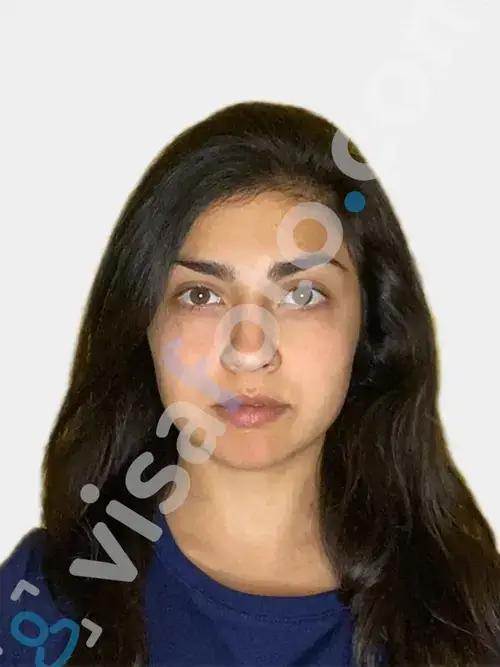
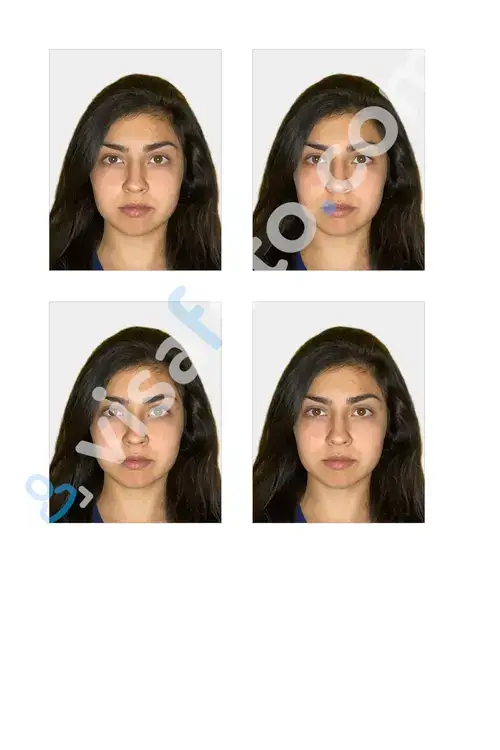
Visafoto has a 99.7% acceptance rate and more than 1 million approved photos. If your photo is rejected, you'll receive a full refund. Our tech support is available 24/7.
UK ETA rules for dual citizens
The UK's Electronic Travel Authorisation (ETA) requirements do not apply to all travellers in the same way. Whether or not you need an ETA depends on your citizenship status. Read on to find out who is exempt and why the new rules have affected many dual citizens.
The Parliament has confirmed that UK citizens are not eligible for an ETA. Because they already have the right to enter the UK as British or Irish citizens, they are exempt from the ETA scheme, even if they also hold the passport of a country whose citizens would normally need an ETA. To benefit from this exemption, however, you must be able to prove your British or Irish citizenship.
The introduction and enforcement of the ETA system created confusion for many dual nationals who had previously travelled to the UK using only their non-UK passport. In the past, some travellers could confirm their British or Irish citizenship with supporting documents after arrival. Today, airlines usually require proof of your right to travel before boarding.
As a result, many British citizens living overseas, and some who have never held a British passport, have had to apply for a British passport or obtain a Certificate of Entitlement to the Right of Abode before travelling to the UK.
Can you enter the UK on a foreign passport alone?
Under the new dual citizenship requirements, British passport holders cannot rely on a foreign passport alone when travelling to the UK, as it does not prove British citizenship or the holder's right of abode. If you present only a non-UK passport, you may be treated as a foreign national. Without valid proof of UK entry rights, the carrier may refuse boarding.
When using dual citizenship passports, British nationals should normally present a valid British passport when travelling to the UK. If you do not have one and choose to travel on a foreign passport, you should normally have a Certificate of Entitlement to the Right of Abode.
FAQ
Can I travel to the UK with two passports?
While it is possible for dual citizens to hold two passports when travelling to the UK, you must use the correct one at the right time. To enter or leave the UK, you must use your valid British passport (or a valid Irish passport if you are an Irish citizen). Since the ETA rule changes in February 2026, a non-UK passport alone is no longer sufficient.
Do you have to declare dual nationality when renewing a British passport?
No. The UK does not require you to disclose or register another nationality when applying for or renewing a British passport.
Do dual citizens need to renounce one citizenship?
No. UK law allows British citizens to hold one or more additional nationalities. However, your other country of citizenship may have different rules and could restrict or prohibit dual nationality.
Can I have 3 passports as a UK citizen?
Yes. The UK does not limit the number of citizenships or passports you can hold. If each country involved recognises multiple citizenships, you may legally possess three or more passports. When entering the UK, however, you should travel with your British passport (or an Irish passport if you qualify).
Do UK passports show dual citizenship?
No. A British passport does not list any additional nationalities. It confirms only your British citizenship and contains no information about other citizenships you may hold.