How Long Can You Stay in the U.S. on a Visitor Visa?

Many travelers assume that an American visa automatically allows long stays, but the reality is more nuanced. The answer to the question of how long you can stay in the U.S. as a tourist depends not only on the visa label in your passport, but also on entry records, travel patterns, and decisions made by border officers. This article explains stay limits, extensions, marriage rules, and common risks, relying on official CBP and USCIS procedures rather than myths or forum advice.

Table of contents
- B1/B2 Visa Basics and Eligibility
- Get Your U.S. Visa Photo Online
- How to Check Your U.S. Visa Status? I-94 Record Explained
- How Long Can You Stay in the U.S. on ESTA
- How Long Can You Stay in the U.S. on a Tourist Visa Per Year?
- How to Extend Your B1/B2 Visa Length of Stay
- U.S. Visa Extension Fees
- How Long Can You Stay in the U.S After Applying for Visa Extension?
- U.S. Visa Overstay Consequences
B1/B2 Visa Basics and Eligibility
A B-1/B-2 visa is a U.S. nonimmigrant visa that allows temporary travel to the United States for business-related activities (B-1) and tourism, family visits, or medical treatment (B-2). It is often issued for multiple years, frequently up to ten, yet this validity only controls how long the visa can be used to request entry to the United States. The U.S. tourist visa length of stay is determined separately at each arrival and does not necessarily match the visa’s expiration date printed in the passport.
How to Obtain a Visitor Visa to the USA? B1/B2 Visa FAQ
When entering the country, travelers are inspected by the U.S. Customs and Border Protection officers, who assess the purpose of the visit, length of stay requested, prior travel history, and evidence of strong ties outside the United States. Based on this assessment, the officer decides whether to admit the visitor and for how long.
Admission is documented electronically through the I-94 record, which specifies the authorized stay period and serves as the only legally binding reference for departure. Even holders of valid, long-term B-1/B-2 visas may be granted shorter stays if their travel plans or circumstances warrant it.
Final authority over admission and stay duration always rests with U.S. Customs and Border Protection officers at the port of entry, regardless of prior visa approvals issued by a U.S. consulate.
Get Your U.S. Visa Photo Online
Before applying for a U.S. visa or renewing travel documents, applicants must submit a compliant photo. Visafoto offers a fully online solution designed specifically for U.S. visa requirements.
The process takes only two steps. First, you take a simple selfie using a smartphone or camera, even against a plain home background. Second, you upload the image, select the United States and the required visa type, and receive a ready-to-use photo within seconds. The system automatically adjusts size, background, head position, and lighting according to official standards.
Your original photo can look like this:

The result after editing by Visafoto will look like this:

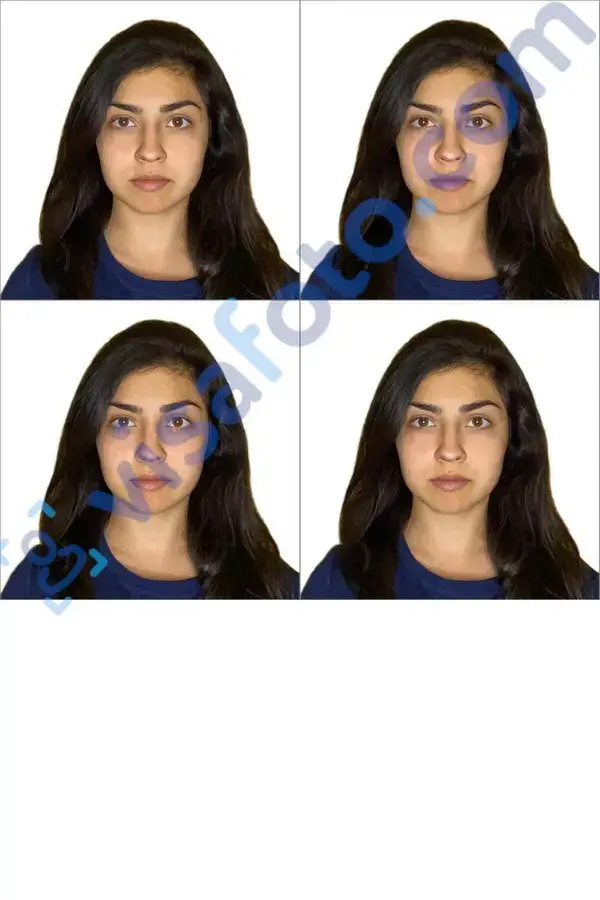
Visafoto includes professional quality checks and responsive customer support if questions arise. A full acceptance guarantee applies: if an authority rejects the photo, a refund is provided.
How to Check Your U.S. Visa Status? I-94 Record Explained
After admission to the United States, every visitor is assigned an electronic I-94 record, which serves as the official proof of lawful entry and authorized stay. This record can be accessed online through the U.S. Customs and Border Protection website and should be reviewed shortly after arrival to confirm that all details are correct. The I-94 lists the date of entry, immigration status, and (most importantly) the exact date by which departure from the United States is required.
The date shown on the I-94, not the visa sticker in the passport, controls how long a visitor may remain in the country.
The B1/B2 visa duration of stay is usually granted for up to six months per entry, but border officers may authorize a shorter period if the stated purpose of travel, length of visit, or overall circumstances suggest a limited need to remain. Staying beyond the I-94 expiration, even unintentionally, is considered an overstay and can lead to serious immigration consequences.
How to retrieve your I-94 record step by step
- Go to the official U.S. Customs and Border Protection I-94 website: https://i94.cbp.dhs.gov
- Select “Get Most Recent I-94” and agree to the terms of service.
- Enter your personal details exactly as they appear in your passport, including full name, date of birth, passport number, and country of issuance.
- Submit the form to view your electronic I-94 record.
- Review the information carefully, paying close attention to your admit-until date, which determines the last day you are legally allowed to stay in the United States.
- Download or print a copy of the I-94 for your records, as it may be required for visa extensions, status changes, or future travel.
If the I-94 record is missing or contains an error, travelers should contact U.S. Customs and Border Protection promptly to request a correction, as relying on an incorrect record can lead to unintended overstays.
How Long Can You Stay in the U.S. on ESTA
Citizens of Visa Waiver Program countries enter the United States under a different legal framework than visa holders. The ESTA length of stay is fixed: a maximum of 90 days per visit, counted from the date of arrival, with no possibility of extensions, changes of status, or in-country renewals.
ESTA travel is strictly limited to short-term tourism, business meetings, or transit. Overstaying by even one day can result in loss of Visa Waiver Program eligibility and future travel restrictions. Official and up-to-date ESTA rules are published by U.S. Customs and Border Protection at https://esta.cbp.dhs.gov.
How Long Can You Stay in the U.S. on a Tourist Visa Per Year?
U.S. border officers closely evaluate how much total time a visitor spends in the country, not just the length of a single trip. Although there is no officially defined annual limit, travelers who spend a large portion of the year in the United States often face increased scrutiny.
Repeated long stays, frequent reentries, or patterns showing that more time is spent in the U.S. than abroad can be interpreted as de facto residence rather than temporary tourism. In such cases, CBP officers may shorten the authorized stay, refer the traveler to secondary inspection, or deny entry altogether.
| Stay Pattern | Risk Level | CBP Considerations |
|---|---|---|
| 1-2 short trips/year | Low | Routine tourism |
| Annual 6-month stays | Medium | Prove non-immigrant intent |
| >6 months/year total | High | Likely denial or secondary inspection |
| Consecutive long stays | Very High | Overstay presumption |
How to Extend Your B1/B2 Visa Length of Stay
A visitor who needs additional time in the United States must file Form I-539 with U.S. Citizenship and Immigration Services before the I-94 expiration date. Filing after the authorized stay has expired can result in a denial and may create overstay issues, even if the delay was unintentional. Official instructions and eligibility criteria are published by USCIS at https://www.uscis.gov.
A B1/B2 extension is discretionary and approved only when the applicant demonstrates a legitimate, temporary reason for remaining in the country. Commonly accepted grounds include ongoing medical treatment, unexpected events that prevent timely departure, or other circumstances beyond the visitor’s control. The request must be supported by documentation, such as medical records, proof of financial means, and evidence of continued ties to the home country.
If the application is filed on time, the applicant is generally allowed to remain in the United States while the request is pending, even if the original I-94 date passes. However, an extension does not permit employment or study, and approval is not guaranteed. USCIS may deny the request if it finds signs of immigrant intent, prior status violations, or insufficient justification for the additional stay.
U.S. Visa Extension Fees
If you decide to request an extension of your authorized stay in the United States, you must pay government filing fees to U.S. Citizenship and Immigration Services.
As of the latest USCIS fee schedules:
- The base filing fee for Form I-539 is approximately $470 for a paper application.
- Online filing may be slightly lower (around $420), depending on how you file.
USCIS sometimes adjusts fees, and the exact amount can vary slightly by filing method and category. For the most up-to-date fee information, always check the official USCIS filing fee schedule or use the USCIS Fee Calculator at https://www.uscis.gov.
In addition to filing fees, applicants should be prepared for potentially long processing times, which can stretch from several weeks to many months, and should understand that payment of the fees does not guarantee approval of the extension request.
How Long Can You Stay in the U.S After Applying for Visa Extension?
If you timely file Form I-539 before the expiration of your current I-94 authorized stay, you are generally allowed to remain in the United States while the extension request is pending, even after the original I-94 date passes. This period is considered a period of authorized stay while USCIS reviews the application.
However, a pending I-539 does not automatically grant lawful status beyond the I-94 expiry. Rather, it gives you a temporary authorized period until USCIS decides.
If the extension request is approved, USCIS will issue a new I-94 with an updated departure date. If the request is denied, the applicant is expected to depart the United States promptly, usually within a very short timeframe specified in the decision notice.
U.S. Visa Overstay Consequences
Even a short overstay can trigger serious immigration consequences, including visa cancellation and future entry restrictions. Because enforcement is strict, travelers should never assume any flexibility when calculating how long you can stay in US on tourist visa beyond the authorized date shown on the I-94.
Potential consequences of overstaying include:
- Automatic cancellation of the current visa, even if the overstay was brief or unintentional;
- Difficulty obtaining future U.S. visas, with increased scrutiny of all subsequent applications;
- Refusal of entry at the border on later trips, including secondary inspection or immediate return;
- Accrual of unlawful presence, which can lead to long-term reentry bars under U.S. immigration law;
- Loss of eligibility for certain immigration benefits or status changes in the future.
Because the I-94 departure date is legally binding, travelers are strongly advised to plan departure well in advance and leave the United States early if there is any uncertainty about timing.