U.S. Visa Denied: What to Do

A U.S. visa refusal is usually communicated directly during the interview, often within minutes of speaking to the consular officer.
This article explains what a U.S. visa refusal actually means in practice and how decisions are made at the interview. It also outlines when reapplying makes sense, what must change before a new interview, which documents should be reviewed, and what mistakes can seriously harm future applications.
Table of contents
- Common types of U.S. visa denials and how to avoid them
- Can you reapply after a U.S. visa denial?
- Documents to review before reapplying
- Get a U.S. visa photo online with Visafoto
- Does a U.S. visa denial affect future applications?
- When legal advice may be necessary
- Countries with the highest U.S. visa rejection rates
- FAQ
Common types of U.S. visa denials and how to avoid them
After the interview, applicants usually receive written notice explaining the outcome. Understanding the meaning of a U.S. visa refusal letter helps clarify whether the decision is temporary or based on legal grounds.
Each cited section of law explains the specific basis for the refusal and determines what options, if any, are available. Administrative processing indicates that a case requires further review, while a refusal reflects a completed decision. Some refusals allow reapplication after circumstances change, whereas others require waivers or legal remedies.
Most U.S. visa refusals fall into a small number of legal categories. While the wording on the refusal slip may look formal, the underlying reasons are often practical and predictable.
INA §214(b): Failure to demonstrate non-immigrant intent
This is the most common type of refusal for visitor (B1/B2), student, and exchange visas. It is issued when the consular officer is not convinced that the applicant intends to leave the United States after a temporary stay.
Typical interview situations:
- The applicant cannot clearly explain the purpose of the trip.
- Employment is recent, unstable, or poorly documented.
- There is no clear explanation of why the trip fits the applicant’s current life situation.
- Answers about future plans are vague or inconsistent.
How to reduce the risk:
- Present a clear, specific travel purpose that matches the visa category.
- Bring current employment or study documentation showing continuity.
- Be prepared to explain long-term plans outside the United States in concrete terms.
INA §221(g): Administrative processing or missing information
A refusal under this section does not always mean the application is denied permanently. It indicates that the officer cannot make a final decision at the time of the interview.
Typical interview situations:
- Additional background or security checks are required.
- Supporting documents are missing or incomplete.
- The officer requests further clarification about employment or travel history.
How to reduce the risk:
- Bring all supporting documents listed for the visa category.
- Ensure that information in the DS-160 matches the documents presented.
- Respond promptly and accurately to any follow-up requests from the consulate.
DS-160 Form Instructions. How to Complete Your U.S. Visa Application
INA §212(a): Legal grounds of inadmissibility
Refusals under this section are based on specific provisions of U.S. immigration law and are more serious than procedural refusals.
Typical interview situations:
- Previous overstays or unauthorized employment in the United States.
- Prior visa violations or removals.
- Misrepresentation or false information in past applications.
How to reduce the risk:
- Disclose all prior refusals and immigration history truthfully.
- Do not submit altered or misleading documents.
- Seek legal advice before reapplying if inadmissibility may apply.
Application errors and inconsistencies (practical causes across all categories)
Some refusals are triggered not by intent or background, but by preventable mistakes.
Typical interview situations:
- Conflicting answers compared to the DS-160 form.
- Financial documents that do not match declared income.
- Incomplete travel or employment history.
How to reduce the risk:
- Review the DS-160 carefully before submission.
- Ensure that all documents support the same narrative.
- Prepare concise, consistent answers for the interview.
Can you reapply after a U.S. visa denial?
Reapplying after a visa refusal is allowed in most cases, but it only makes sense when the underlying reason for the decision has genuinely changed. Consular officers have full access to previous applications and interview notes, so a new appointment without new facts rarely leads to a different outcome.
When reapplying makes sense
Reapplication is reasonable when there is verifiable, material change that directly addresses the reason for refusal. In practice, this may include:
-
A new or stable job contract that postdates the previous interview
-
A documented increase in income or financial stability
-
Completion of studies or enrollment in a new academic program
-
A clearer and more narrowly defined travel purpose aligned with the visa category
-
Additional lawful travel history since the last refusal
These changes must be reflected consistently in the DS-160 form and supported by documents that can be verified.
Situations where reapplying immediately is not recommended
Scheduling a new interview is usually ineffective when nothing substantial has changed. This typically includes cases where:
-
The same employer, salary, and personal circumstances remain unchanged
-
The purpose of travel is still vague or poorly explained
-
No new documents are available to support non-immigrant intent
-
The applicant expects a different result simply due to time passing
In such situations, a second refusal often occurs within minutes, sometimes with even less discussion than during the first interview.
Whether you must pay the visa fee again
U.S. visa application fees are non-refundable and are tied to a specific application submission. Each new DS-160 and interview appointment requires payment of the visa fee again, regardless of the reason for the previous refusal.
Paying the fee again does not reset or override a prior decision; it only allows the application to be reviewed based on updated information.
USA Visa Fees: Questions and Answers
How long to wait after a U.S. visa denial?
There is no mandatory waiting period after a U.S. visa refusal. Applicants are legally allowed to submit a new application at any time, including immediately after the interview. However, the practical question is not when reapplication is possible, but when it becomes reasonable.
A different decision is typically based on new, verifiable facts, not on the number of months that have passed since the refusal. These changes must be reflected consistently in the application form and supported by documentation that can be reviewed quickly during the interview.
Documents to review before reapplying
Before reapplying after a U.S. visa refusal, documents should not be reviewed merely “in general,” but in the context of the specific legal ground for the refusal. INA §214(b) and INA §221(g) involve different issues and therefore require different types of preparation.
Previous DS-160 confirmation. Relevant to: INA §214(b) and INA §221(g)
For refusals under §214(b), the DS-160 often contains vague answers or incomplete explanations of employment, travel purpose, or long-term plans. These weaknesses directly affect how non-immigrant intent is assessed.
For cases under §221(g), inconsistencies or missing information in the DS-160 may trigger additional review or document requests.
What to check:
- Consistency between employment history and current job
- Clarity of travel purpose and duration
- Accuracy of prior travel and visa history
Financial evidence. Relevant to: INA §214(b)
Financial documentation plays a central role in refusals based on non-immigrant intent. Weak or unclear evidence may suggest an inability to fund the trip or a risk of unauthorized employment.
What to check:
- Whether income supports the declared travel plans
- Consistency between salary, bank balances, and employment documents
- Absence of unexplained or recent large deposits
Employment or enrollment verification. Relevant to: INA §214(b)
Stable employment or active enrollment is one of the primary ways applicants demonstrate ties outside the United States. Generic or outdated documents often fail to establish this connection.
What to check:
- Current position or academic status
- Length and continuity of employment or study
- Confirmation of approved leave or ongoing obligations
Proof of lawful travel history, Relevant to: INA §214(b) and INA §221(g)
For §214(b) cases, lawful international travel can support credibility and compliance with visa rules. For §221(g) cases, travel history may be reviewed more closely during background checks.
What to check:
- Accurate listing of all prior international trips
- Evidence of timely departures
- Consistency with passport stamps and visa records
Missing or additional documents. Relevant to: INA §221(g)
Refusals under §221(g) often occur when the officer requires documents that were not available at the interview.
What to check:
- Any written document request issued at the interview
- Specific deadlines or submission instructions
- Accuracy and completeness of the requested materials
Supporting Documents for Your USA B1/B2 Visa Application
Get a U.S. visa photo online with Visafoto
An incorrect photo can delay or derail a new application. Visafoto makes it easy to prepare a compliant U.S. visa photo online in just two steps.
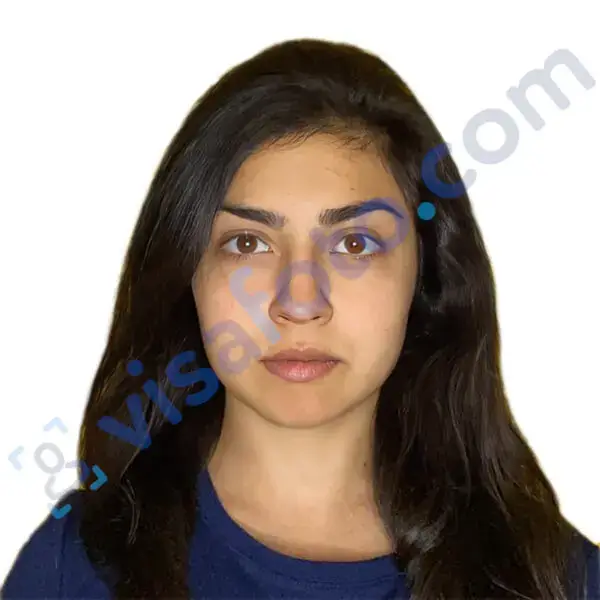
First, take a simple selfie with your smartphone or camera against any background. Second, upload the image, select the United States and the visa type, and receive a professionally processed photo within seconds.
Your original photo can look like this:

Visafoto automatically applies the correct size, cropping, background, and compliance checks according to official U.S. Department of State requirements.
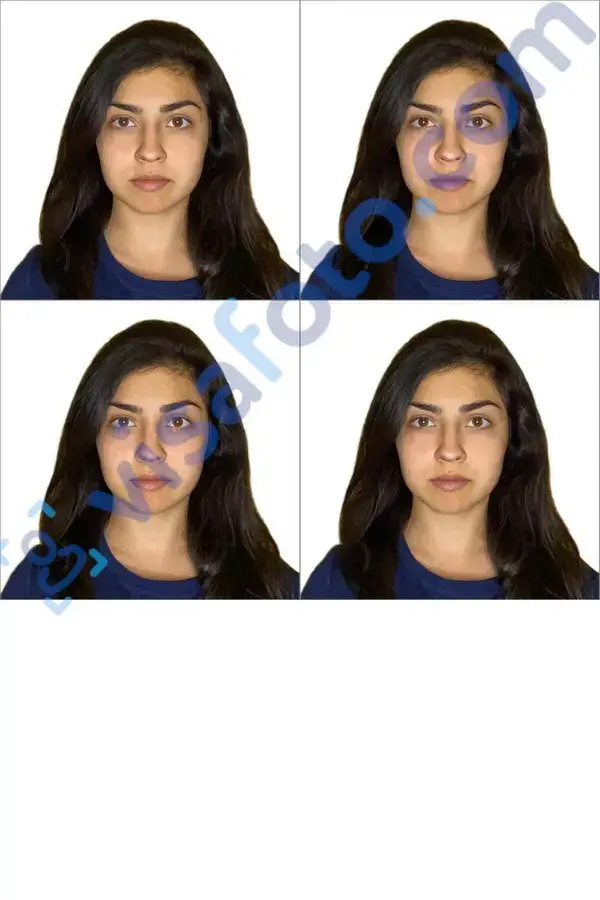
The 24/7 customer support is available if assistance is needed. Visafoto also offers a 100% money-back guarantee if the photo is not accepted by a government authority.
Does a U.S. visa denial affect future applications?
A prior U.S. visa refusal does not automatically prevent future approval, but it remains part of the applicant’s immigration record and must be addressed transparently. Each new application is reviewed on its own merits, based on current circumstances, while consular officers still consider the reasons for any earlier refusals.
U.S. visa decisions are generally confidential and are not routinely shared with other countries, although applicants may be asked to disclose past refusals on foreign visa forms. Full honesty is essential: all previous U.S. visa refusals must be declared accurately. Failure to do so can result in a new refusal on more serious grounds, even if the applicant would otherwise qualify.
When legal advice may be necessary
Some cases require professional guidance rather than self-preparation. Applications involving legal inadmissibility often require careful analysis to determine whether a waiver is available and under what conditions it may be granted. Prior overstays, unauthorized employment, or entry bans can significantly complicate reapplication and should be assessed before submitting a new case.
A complex immigration history also increases risk. Multiple refusals, mixed visa categories, or inconsistent past records may trigger closer scrutiny and limit reapplication options. In such situations, professional advice can help clarify realistic outcomes and prevent further refusals based on procedural or legal errors.
Countries with the highest U.S. visa rejection rates
Many applicants research which countries have the highest U.S. visa rejection ratio to understand global trends, but visa decisions are always made on a case-by-case basis and depend on individual circumstances. Still, official and aggregated data show meaningful patterns in refusal rates across nationalities. Refusal statistics are published by the U.S. Department of State’s Bureau of Consular Affairs and can be found on the official site at https://travel.state.gov.
According to publicly available data for recent years, refusals vary widely by country:
- Countries with extremely high refusal rates: North Korea and the Federated States of Micronesia have historically shown refusal rates of about 100%, largely because routine visa issuance is not typical for those nationalities. Liberia, Laos, and several other nations also report very high refusal shares above 70% in some statistics.
- High refusal rates (top five): In the most recent breakdowns, Liberia (~78%), Afghanistan (~49%), Iran (~53%), Pakistan (~40%), and Russia (~39%) are among the countries with the highest visa refusal rates reported.
- Notably high refusal rates in specific regions: For 2023, Uzbekistan’s B-1/B-2 refusal rate was reported at about 60%, one of the highest in Central Asia, with neighboring countries also showing elevated rates.
FAQ
Can a U.S. visa be revoked after it was already issued?
Yes, in some cases that can happen. Recent reports show that visas may be canceled if new information emerges (such as undisclosed legal issues or security concerns) even if the holder has complied with all rules since issuance.
Am I guaranteed entry into the U.S. with a valid visa?
No. A valid visa does not guarantee entry to the United States. U.S. Customs and Border Protection (CBP) officers at the port of entry have final authority. They can deny entry for reasons such as suspected misrepresentation, criminal history, or intent to overstay, even if the visa itself is valid.
Can a U.S. visa refusal affect my ability to use ESTA later?
A B1/B2 visa refusal under INA section 214(b) requires disclosure on the ESTA application, as the form explicitly asks if you have ever been denied a U.S. visa. Answering "yes" triggers a manual review by U.S. Customs and Border Protection (CBP), often leading to ESTA denial due to concerns over immigrant intent not overcome in the prior visa process.
Why was I refused quickly with almost no questions?
Short interview refusals often indicate that the officer made a decision based on credibility and prior information rather than detailed document review. When answers appear inconsistent with stated purpose or ties to the home country, consular officers may issue a refusal very quickly if the overall application fails to satisfy statutory requirements.
Does U.S. visa screening now include social media?
In some 2025–2026 cases, administrative processing may involve review of social media or requests for supplemental information forms (e.g., DS-5535), especially if additional vetting is required. This can lengthen processing time, and there is no guaranteed way to expedite it.
Is there any appeal process after a non-immigrant visa refusal?
No, for non-immigrant visas like tourist, business, student, and exchange visas, there is no formal appeal process after a refusal. The only option is to address why the refusal occurred and reapply with changes.