USA Visa Fees: Questions and Answers
Planning a trip to the United States? In this guide, we’ll break down the latest U.S. visa fees and explain how to pay for your application step by step.
Table of contents
- U.S. nonimmigrant visa application fees
- U.S. Visa Bond Program Explained
- U.S. immigrant visa application fees (2025 Update)
- U.S. visa fees for minors
- How to pay the U.S. visa fee online?
- How to pay the U.S. visa fee in cash?
- U.S. visa photo price
- Additional fees I need to pay
- For how long the paid U.S. visa fee is valid?
- Is it possible to get a refund for the US visa fee?
- U.S. visa photo online converter
- FAQ
U.S. Nonimmigrant Visa Application Fees
As of 2026, the application fee for most nonimmigrant U.S. visas is $185. This includes the B1/B2 visa, commonly issued for tourism and business travel, as well as the category C transit visa.
However, certain nonimmigrant visa categories include additional charges on top of the standard application fee.
For instance, student and exchange visitor visas require payment of the SEVIS (Student and Exchange Visitor Information System) fee, which funds the database tracking international students in the U.S.:
- For an F-1 student visa, the SEVIS fee is $350.
- For J-1 visas (used for Au Pair, Work and Travel, internships, etc.), the SEVIS fee is typically $220, but can vary between $35 and $220 depending on the specific exchange program category.
Petition-based visas for temporary nonimmigrant workers - such as H, L, O, P, and R categories - now carry an application fee of $205 as of 2026. This includes visas for religious workers, athletes, artists, and other sponsored professionals.
Read more: American P visa for athletes, artists, and cultural figures
Additionally, U.S. employers filing Form I-129 to sponsor these workers must pay a mandatory $600 Asylum Program Fee. This fee, introduced in 2024, supports the U.S. asylum system and is charged per petition. Nonprofit petitioners are charged a reduced rate of $300, and small employers (25 or fewer employees) may also qualify for fee reductions in certain cases.
The base filing fee for a petition to hire an H-1B worker (Form I-129) is $780, which is generally paid by the sponsoring employer. Additional charges may include a $500 fraud prevention fee and a $1,500 ACWIA training fee (or $750 for small employers), depending on the employer’s size and situation.
U.S. Visa Bond Program Explained
The U.S. Visa Bond Program became permanent on August 3, 2026. Under the new rule, certain applicants for B-1, B-2, and combined B-1/B-2 visitor visas from designated countries may be required to provide a refundable financial bond of $10,000, $15,000, or $20,000 before their visa can be issued. The program currently applies to nationals of 50 countries, including Zimbabwe, Nigeria, Bangladesh, and several other countries in Africa, Asia, Oceania, and Latin America.
The visa bond is separate from the regular visa application fee. It is not charged to every U.S. visa applicant, and the amount is determined by a consular officer. Applicants who are required to post a bond receive official payment instructions during the visa process.
For a detailed explanation of who is subject to the U.S. Visa Bond Program, how the payment works, when the bond is refunded, and what can cause it to be forfeited, see our complete guide to the U.S. Visa Bond Program .
U.S. Immigrant Visa Application Fees
In 2026, immigrant visa application fees vary depending on the visa category and petition form. These fees are generally higher than standard nonimmigrant visa costs and are required for those seeking permanent residence in the United States.
The fiancé and spouse visa categories (K-1 and K-3) carry a Department of State application fee of $265. Family-based immigrant visas, including those based on Form I-130, I-600, or I-800, require a payment of $325. Applicants selected for the Diversity Visa (DV) Lottery must pay a processing fee of $330. Employment-based immigrant visas, filed via Form I-140, come with a base fee of $345.
Related: Form I-130: Step-by-Step Guide
Additional Fee Changes
Following regulatory changes effective in July 2025, the U.S. government has introduced revised filing fees for several immigrant-related forms and procedures:
- Form I-130 (Family Sponsorship): $625 when filed online, $675 by paper.
- Form I-140 (Immigrant Petition for Workers): $715, with an optional $2,800 premium processing fee.
- USCIS Immigrant Fee: Ranges from $220 to $325, required after visa issuance to produce and mail the Green Card.
2026 Immigrant Visa Cost Summary
| Visa Type | Application Fee | Additional Fees |
|---|---|---|
| K-1/K-3 Fiancé or Spouse Visa | $265 | Adjustment of Status (~$1,440) |
| Family-Based Visa (Form I-130) | $625 (online) / $675 (paper) | USCIS Immigrant Fee ($220–$325) |
| Diversity Visa (DV Program) | $330 | USCIS Immigrant Fee ($220–$325) |
| Employment-Based Visa (Form I-140) | $715 | Premium Processing ($2,800 optional) |
U.S. Visa Fees for Minors
In most cases, minors do not have a separate fee category when applying for a U.S. visa. The visa application process and costs are generally the same for children as for adults. For example, in 2026, the standard application fee for a B-1/B-2 tourist visa is $185, regardless of the applicant's age. There are no child-specific discounts for nonimmigrant visa types, and the full fee must be paid at the time of application.
For U.S. visa and immigration purposes, a minor is defined as an unmarried individual under the age of 21. Once a child turns 21, they are no longer considered a dependent minor - even if they are still financially reliant on their parents. This definition applies to both nonimmigrant and immigrant visa categories.
The only fee variations for minors typically arise based on the type of visa, not the applicant’s age. For instance, if a child is applying for a student (F-1) or exchange (J-1) visa, the SEVIS fee may still be required in addition to the visa fee, depending on the program. Also, children selected for the Diversity Visa program must pay the same $330 processing fee as adult applicants.
Parents or guardians should also consider additional costs associated with minor visa applications, such as document translations, notarized consent forms, and visa photos that meet official U.S. standards.
How to Pay the U.S. Visa Fee Online?
For immigrant visas, online fee payments are available through the CEAC platform. Sign in to your account to access your application and pay for it.
Every country has its own visa payment options, so confirm with your local U.S. diplomatic mission the available steps, including online bank payments through local banks.
How to Pay the U.S. Visa Fee in Cash?
As a rule, U.S. diplomatic missions worldwide have their own payment methods in each country of operation. These embassies and consulates cooperate with national banks to accept visa fee payments, usually in local currency, based on the exchange rate set by the U.S. embassy in that jurisdiction. You can find out how to pay the U.S. visa application on the website of your country's consulate.
US Visa Photo Price
As we’re not talking about one specific country, giving a range of US visa photo prices is difficult. The prices for photo studio services can vary even in one town, and they serve different service qualities, too.
As a rule, having your photo printed even at the same photo shops is way cheaper - twice as cheap on average - when you already have a ready photo file.
You can push the cost further down if you already have a good-quality printer.
Here is where Visafoto can help you save money. With $9 US dollars only, you can get your photo converted to US visa photo parameters. You will get an image suitable both for the online application form and for the embassy interview.
For How Long the Paid U.S. Visa Fee is Valid?
The visa application fee receipt is valid for one year from the date of the receipt or based on visa guidance from the embassy.
Is it Possible to Get a Refund for the U.S. Visa Fee?
In general, U.S. visa application fees are non-refundable. This includes the standard nonimmigrant visa fee (such as the $185 charge for B-1/B-2 visas), as well as immigrant visa fees. Once paid, the fee cannot be refunded - even if your visa application is denied or you decide not to attend your interview.
Keep in mind that any optional service fees - such as for visa appointment rescheduling, document delivery, or premium processing, are also non-refundable.
U.S. Visa Photo Online Converter
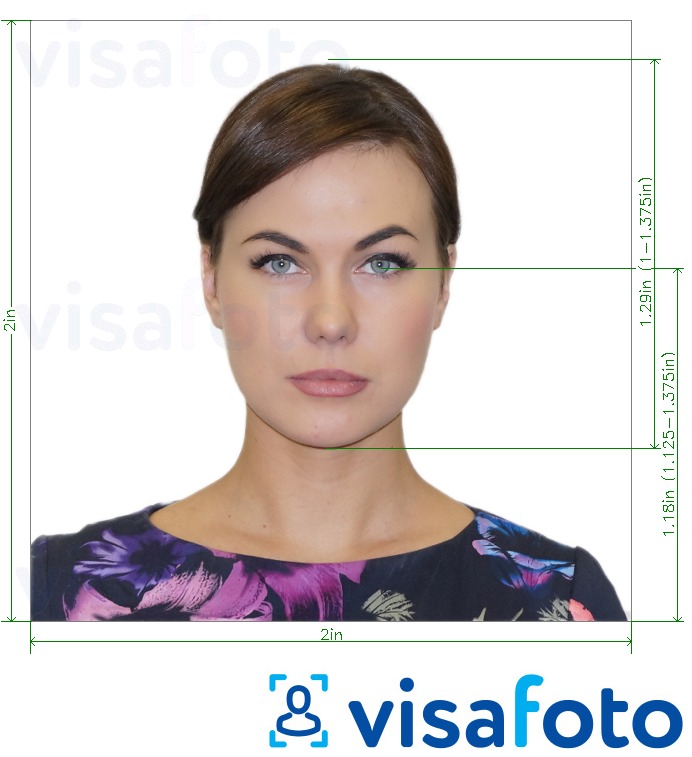
American visa photos have to follow specific requirements to be accepted. To avoid wasting time and resources, we recommend you trust the editing of your photo to a professional tool that guarantees that your photo will fully satisfy the parameters up to the subtlest details and be accepted by the embassy or consulate.
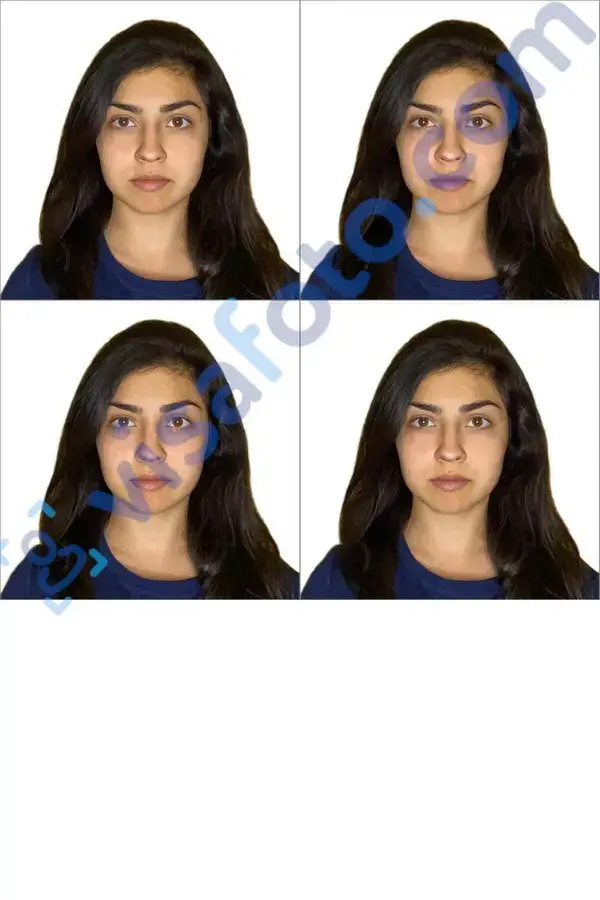
Visafoto has been processing US visa pictures since 2013, and it’s so easy to use! Just upload a portrait (or even a selfie) of you taken in decent lighting, and properly posed: look straight to the camera and keep a neutral expression. Visafoto will take care of the rest.
Take an image with a smartphone or camera against any background, upload it here and instantly get a professional photo for your visa, passport, or ID.
Source

Result
Chat with us
First, take a photo of yours under daylight like this one:
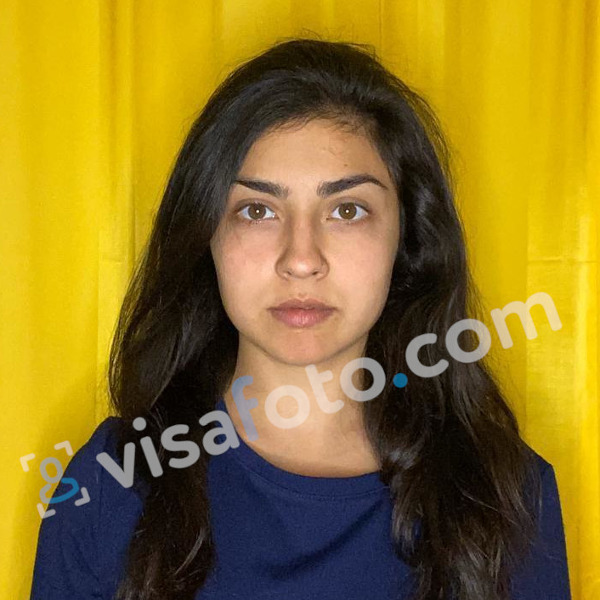
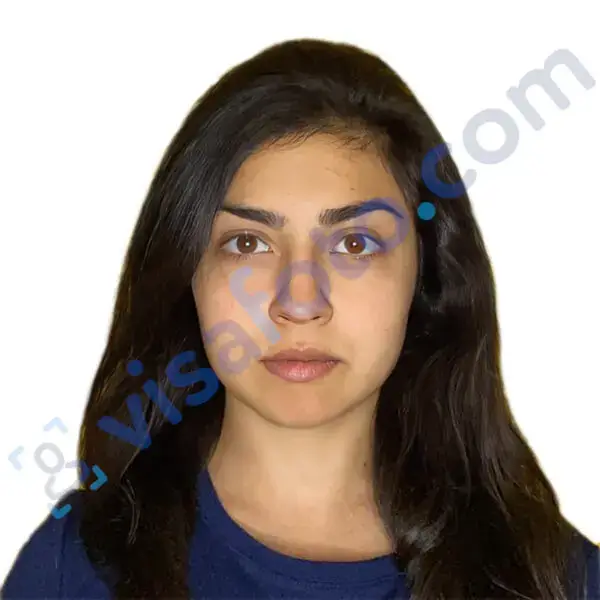
You will get two files from Visafoto: a digital photo for electronic applications and a template ready for printing.
FAQ
Does the MRV fee need to be paid in U.S. dollars only?
Yes, the Machine Readable Visa (MRV) application fee must be paid in U.S. dollars at U.S. embassies or consulates. Local currency equivalents are accepted where available, but exchange rates fluctuate—check the specific embassy website for payment methods like bank deposit or credit card.
Are there reciprocity fees for certain nationalities?
Yes, some countries face additional "reciprocity fees" on top of the base MRV due to unequal treatment of U.S. citizens abroad. For example, certain Brazilian or Indian nationals pay extra for B1/B2 visas—check travel.state.gov's reciprocity table by nationality.
What's the fee for visa renewal without interview?
Renewals eligible for interview waivers still require the full MRV fee ($185+), payable upfront. No discounts apply, but processing is faster. Confirm eligibility via the embassy's renewal portal.
Has the Visa Integrity Fee been implemented?
No, the proposed $250 Visa Integrity Fee for nonimmigrant visas has not been implemented as of February 2026. Legislated in H.R. 1 (2025), it requires further agency coordination. It does not appear on current Department of State fee schedules.
Can I get a refund on the Visa Integrity Fee?
If implemented, yes - it's designed as refundable for compliant travelers who depart within 5 days of visa expiration or legally extend status. Details would be specified in final regulations.
Do expedited visa appointments have extra fees?
Some U.S. consulates charge $50-100 for expedited interview slots, separate from the MRV fee. Availability varies by location - request via email after paying the base application fee.
Last update: August 2026