Vietnam Visa for US Citizens: Requirements and Application Steps

Before traveling to Vietnam with a US passport, it’s important to understand the current visa system and what is expected from applicants. This guide summarizes the key requirements for US citizens, explains the application steps, and highlights the simplest ways to obtain lawful entry.

Table of contents
- Does a US Passport Holder Need a Visa for Vietnam?
- Vietnam Visa Types for US Citizens
- How to Apply for a Vietnam e-Visa From the US
- Documents Required for a Tourist Visa to Vietnam
- Vietnam Visa Photo Requirements
- Get Your Vietnam Visa Photo Online!
- Vietnam Visa-on-Arrival for US Citizens: Rules
- How Long Can You Stay in Vietnam With a US Passport?
- Vietnam Visa Fees for US Citizens
- How Long Does it Take to Get a Visa for Vietnam From the US?
- Extending or Renewing a Vietnam Visa In-Country
- FAQ
Do US Citizens Need a Visa for Vietnam?
Yes. Most US citizens need a visa before traveling to Vietnam. For tourism, short business trips, or visiting friends and family, the Vietnam e-visa is usually the easiest option. It is available online and may be issued for up to 90 days with either single or multiple entry.
US passport holders do not have a general visa-free entry program for mainland Vietnam. Apply for an e-visa before departure through the official Vietnam National Electronic Visa System.
When can a US citizen visit Vietnam without a visa?
Visa-free travel to Vietnam is limited to specific situations. The main tourist exception is a stay of 30 days or less on Phú Quốc Island only. To use this exemption, travelers must meet the applicable arrival and onward-travel conditions and must not continue to mainland Vietnam. If your itinerary includes Ho Chi Minh City, Hanoi, another mainland destination, or an uncertain domestic connection, obtain an e-visa before traveling.
Other limited exemptions may apply to holders of a valid APEC Business Travel Card or to eligible overseas Vietnamese and qualifying family members who hold a Vietnam visa-exemption certificate. These exceptions have separate requirements, so most US travelers should plan to apply for an e-visa.
Visa-on-arrival is not the standard tourist option for US citizens. It generally requires a pre-arranged approval or sponsorship letter and is only available in restricted circumstances. For most visitors, applying for a Vietnam e-visa in advance is simpler and more predictable.
Vietnam Visa Types for US Citizens
US citizens can apply for different Vietnam visa types depending on the purpose and length of their stay. For most vacations, short visits, and short business trips, a Vietnam e-visa is the simplest choice. Longer stays, employment, study, investment, and family residence usually require sponsorship and a visa arranged through the appropriate Vietnamese authorities.
| Visa option | Best for | Typical validity | What US travelers should know |
|---|---|---|---|
| Vietnam e-visa | Tourism, short business visits, and visiting relatives | Up to 90 days; single or multiple entry | Apply online before travel through the official e-visa portal. This is the best option for most US tourists. |
| Tourist visa (DL) | Leisure travel and sightseeing | Depends on the visa issued | For a stay of up to 90 days, an e-visa is normally the most practical tourist visa route. |
| Business visa (DN) | Meetings, commercial activities, and longer business assignments | Up to 12 months, depending on the category and approval | Usually requires an inviting or sponsoring Vietnamese organization. It does not automatically authorize employment in Vietnam. |
| Work visa (LD) | Employment with a Vietnamese employer | Up to 2 years | Requires employer sponsorship and may also require a work permit or work-permit exemption. |
| Investor visa (DT1–DT4) | Qualifying foreign investors | From 1 to 10 years, depending on the investment category | Available only to travelers who meet Vietnam’s investment requirements. |
| Student or internship visa (DH) | Study, training, or internships | Up to 12 months | Normally arranged with support from the school, university, or training organization. |
| Dependent visa (TT) | Eligible family members of certain visa holders | Up to 12 months | Available to qualifying spouses, children, and other eligible dependents under Vietnamese immigration rules. |
Which Vietnam visa should a US citizen choose?
Choose an e-visa if you are visiting Vietnam for tourism or a short business trip and will stay no longer than 90 days. Select multiple entry if you plan to leave Vietnam—for example, to visit Cambodia, Laos, or Thailand—and return during the same visa validity period. For work, study, investment, or a stay longer than 90 days, contact the relevant Vietnamese embassy, immigration authority, or sponsoring organization before making travel plans.
Apply for an e-visa only through the official Vietnam National Electronic Visa System. The official portal issues e-visas for up to 90 days and offers both single-entry and multiple-entry options.
How to Apply for a Vietnam e-Visa From the US
Applying for a Vietnamese visa from the United States is completed online before departure. US citizens can apply for a single-entry or multiple-entry e-visa valid for up to 90 days. Use only the official government e-visa website; private visa agencies may charge additional service fees.
Vietnam e-visa application steps for US citizens
- Open the official Vietnam National Electronic Visa System and select “Apply now.”
- Enter your personal details exactly as they appear in your US passport. Include all given and middle names, and check your passport number, date of birth, nationality, and sex carefully.
- Choose your requested arrival and departure dates, entry type (single or multiple entry), and the exact entry and exit checkpoints you plan to use.
- Upload a clear image of your passport biographical page and a recent digital portrait photo that meets the portal’s requirements.
- Provide your first accommodation address in Vietnam and the purpose of your visit.
- Pay the non-refundable government fee online and save your registration code. You will need this code to check your application status.
- Check the result directly on the official portal. Once approved, download and print the complete e-visa PDF to carry with your passport when you travel.
Important: an e-visa normally covers the exact dates approved, even if you enter Vietnam later than planned. Review the approved document before flying. A wrong passport number, name, date, entry point, or visa validity period can lead to denied boarding or entry.
How do you upload a passport photo for a Vietnam e-visa?
In the “Images” section of the online application, upload your recent portrait photo and a clear image of your passport information page. The portal may read data from the passport image automatically, but you should compare every field with your physical passport and correct any errors before submitting the form. Use a sharp, color JPG/JPEG file with your full face clearly visible and no glare, shadows, or obstructions.
Documents Required for a Vietnam Tourist Visa for US Citizens
Before starting a Vietnam e-visa application, prepare the following documents and travel information. Having everything ready helps prevent mistakes, delays, and the need to submit a new application.
- A valid US passport: it should generally have at least six months of validity from your planned arrival in Vietnam and at least two blank pages.
- A clear copy of the passport biographical page: upload a color image that shows the entire page, including the machine-readable lines at the bottom. Avoid cropped corners, glare, blur, or reflections.
- A recent digital Vietnam visa photo: submit a color JPG/JPEG portrait with a plain, light background and your face clearly visible.
- Your travel details: requested arrival and departure dates, the exact border checkpoint for entry and exit, the purpose of travel, and your first hotel or host address in Vietnam.
- A payment card: the e-visa fee is paid online and is generally non-refundable, including if the application is refused or contains an error.
If you are entering Vietnam by air, check the latest requirements before departure. The Vietnamese immigration authorities may also ask non-Vietnamese passport holders to complete an online pre-arrival declaration. This declaration is separate from the e-visa and does not replace it.
Vietnam Visa Photo Requirements
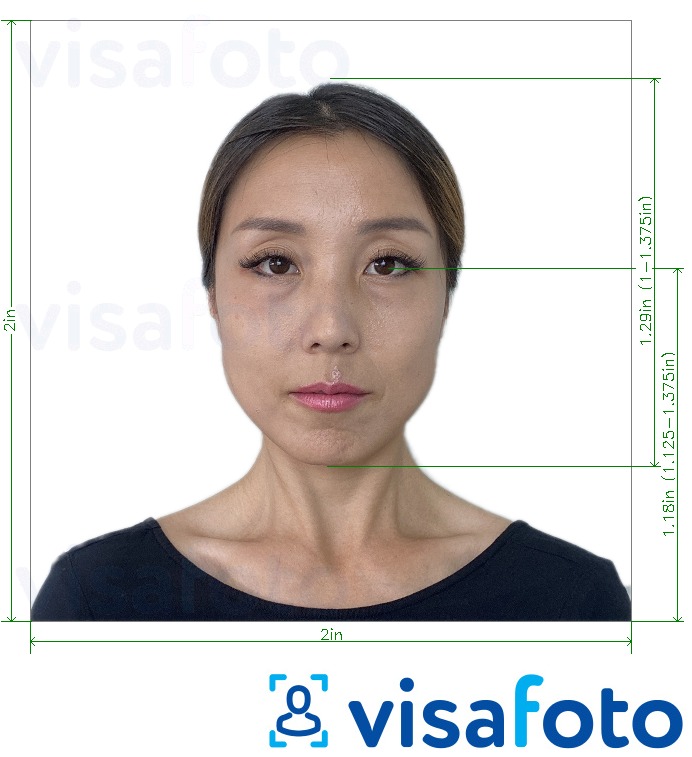
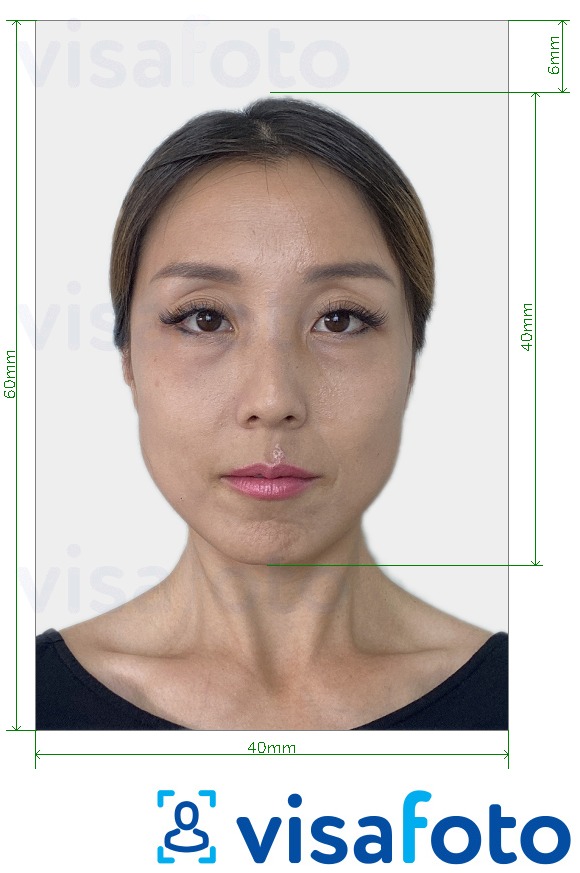
A compliant photo is essential for a successful Vietnam e-visa application. The online system requires a recent digital portrait, while a printed 4 × 6 cm Vietnam visa photo may also be needed for certain embassy or visa-on-arrival applications. For an e-visa, use the current upload instructions shown on the official portal.
Vietnam e-visa photo rules
- Use a recent color photo, ideally taken within the last six months.
- Upload the image in JPG or JPEG format; keep the file within the size limit displayed in the application portal.
- Use a plain white or light-colored background without patterns, objects, or other people.
- Face the camera directly with your head straight, eyes open, and a natural, neutral expression.
- Make sure your full face is visible, evenly lit, and in sharp focus. Do not use filters, beauty retouching, heavy shadows, or a low-resolution image.
- Do not wear sunglasses, tinted glasses, headphones, or a hat. Religious headwear may be acceptable if it does not obscure your facial features.
- Do not crop the top of the head, chin, or sides of the face. Leave a small amount of clear space around the head and shoulders.
Among common Vietnam e-visa photo problems are: a selfie taken too close to the camera, a dark or patterned background, glare on glasses, hair covering the eyes, an old photo, or an image cropped too tightly. If the uploaded photo is unclear, replace it before paying the application fee.
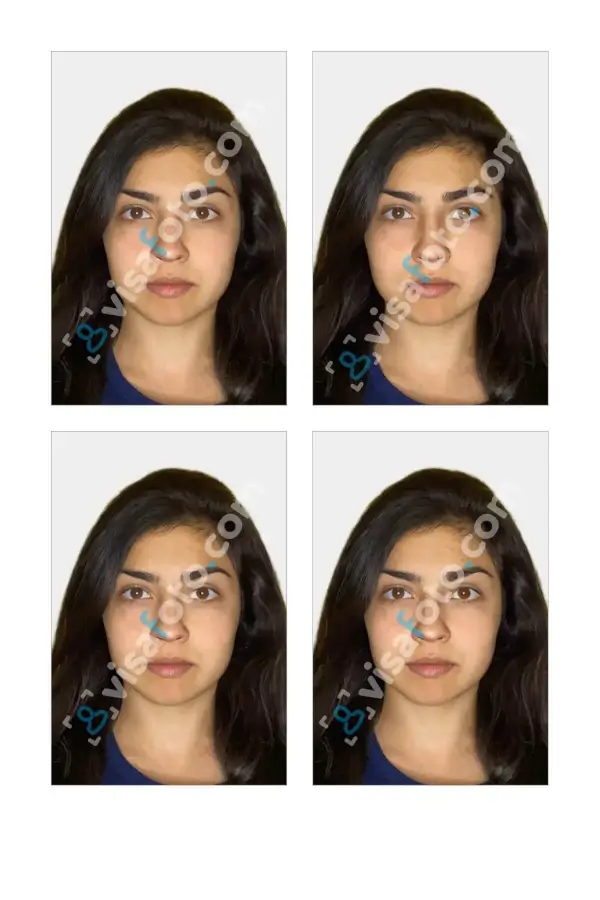
Here is a photo example:
Get Your Vietnam Visa Photo Online!
Say goodbye to photo studios for your visa photo needs. Here, you’ll find out how to capture a professional Vietnam visa photo in minutes with Visafoto online photo tool. Follow these two simple steps:
- Take your photo in natural daylight.
- Upload it below to the Visafoto tool.
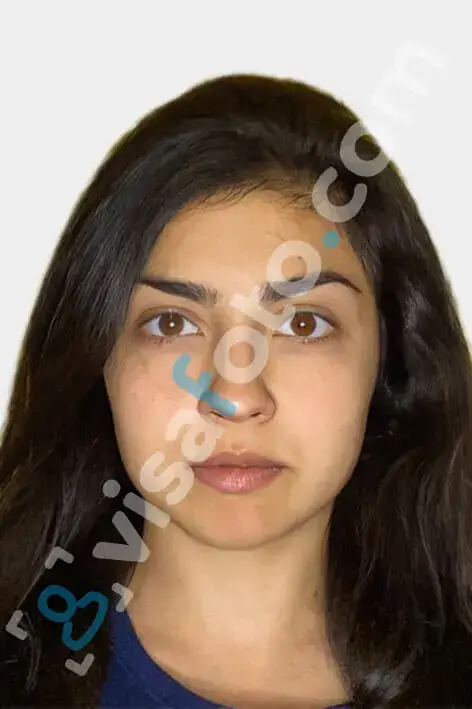
Visafoto handles the rest, automatically adjusting background, size, and head position to ensure compliance with official requirements. You'll receive a digital copy ideal for online submissions and a version ready for printing.
Here is an example of a photo you can upload to Visafoto:
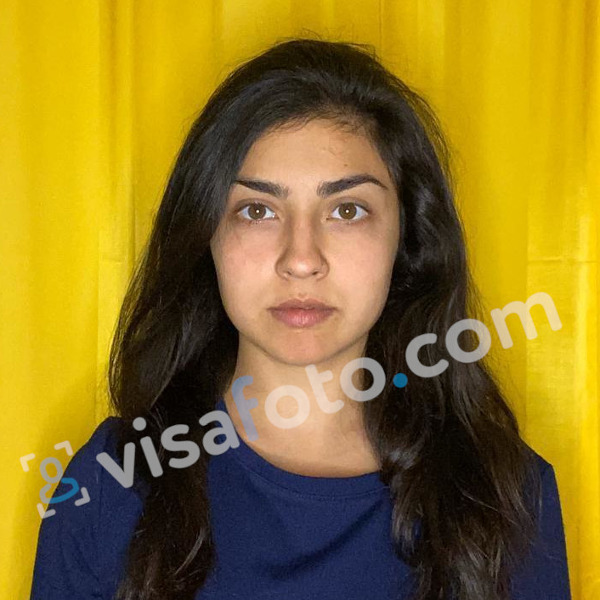
Visafoto boasts a 99.7% acceptance rate and has helped customers get more than 1,000,000 photos accepted by government authorities. If your photo doesn't meet Vietnam visa standards, you'll receive a full refund. Our tech support team is available 24/7 for any assistance.
Vietnam Visa on Arrival for US Citizens: Rules and Requirements
Vietnam visa on arrival (VoA) is not a walk-in tourist visa. A US citizen cannot normally arrive at a Vietnamese airport and purchase a visa without arranging authorization in advance. For most tourism and short visits, applying for a Vietnam e-visa before departure is the simpler and more predictable option.
Visa on arrival may be available in limited cases when the traveler has a valid pre-arranged visa approval or sponsorship authorization from Vietnamese immigration authorities. It is generally issued at designated international airports, not at land borders or seaports. The authorization must be arranged before travel; an airline may deny boarding if you cannot show the required documents.
Who should consider Vietnam visa on arrival?
VoA may be relevant to travelers who cannot use the e-visa system, need a visa category that requires sponsorship, or have been instructed by a Vietnamese employer, school, host, or immigration representative to collect a visa at the airport. It is not usually the best route for a standard US tourist trip of 90 days or less.
Vietnam visa-on-arrival requirements for US citizens
- A valid US passport with sufficient validity for travel and available blank pages.
- A printed visa approval or entry authorization letter issued or arranged before departure through the appropriate Vietnamese authority or sponsor.
- Arrival at the airport named in the authorization. Do not assume the document can be used at a different airport, land crossing, or seaport.
- A completed arrival visa form and any supporting documents specified in your approval letter.
- Passport photographs and payment for applicable government fees, if required by the visa-issuance instructions. Confirm the current amount, payment method, and photo requirements before departing.
What happens at the airport?
After landing, follow the instructions in your approval letter and go to the visa-on-arrival or landing-visa counter before immigration. Present your passport, authorization letter, form, photos, and any required payment. Once the visa has been issued in your passport, continue to the immigration desk for entry inspection. Processing times can vary, so allow extra time after landing.
Do not rely on an unsolicited “guaranteed visa on arrival” offer from an agency. Confirm that any approval document is valid for your passport, visa type, arrival date, and airport. If you are eligible for an e-visa, apply through the official Vietnam National Electronic Visa System instead.
How Long Can You Stay in Vietnam With a US Passport?
For most US visitors, a Vietnam e-visa allows a stay of up to 90 days. It can be issued for either single entry or multiple entry. The visa is normally valid only for the exact start and end dates shown on the approved e-visa, so entering later does not extend the expiration date.
- Single-entry e-visa: valid for one entry into Vietnam during the approved visa period, for a maximum of 90 days.
- Multiple-entry e-visa: allows you to leave and re-enter Vietnam during the approved validity period, for a maximum of 90 days in total. It does not create a new 90-day stay each time you return.
- Phú Quốc visa exemption: eligible US travelers may stay on Phú Quốc Island only for up to 30 days without a visa, provided all exemption conditions are met.
- Work, business, student, investor, and dependent visas: the permitted stay depends on the visa category, sponsorship, and immigration approval.
If you need to stay in Vietnam for more than 90 days, arrange the appropriate sponsored visa or residence status before travel. Vietnam does not normally allow e-visas to be renewed or extended while you remain in the country. Overstaying—even by one day—may result in fines, delayed departure, and future immigration problems.
Vietnam Visa Fees for US Citizens
How much is a Vietnam visa for a US passport holder? The official government fee for a Vietnam e-visa depends on the number of entries. These fees are paid online during the application and are generally non-refundable, including if the application is refused or submitted with an error.
| Visa option | Official government fee | Notes |
|---|---|---|
| Single-entry Vietnam e-visa | US$25 | Valid for up to 90 days. |
| Multiple-entry Vietnam e-visa | US$50 | Valid for up to 90 days; useful if you will leave and return during the same visa period. |
| Visa on arrival or sponsored visa | Varies | Costs may include government issuance fees and separate charges from an agency, employer, school, or other sponsor. |
| Embassy or consular visa | Varies | Fees depend on the visa type, number of entries, processing method, and the embassy or consulate handling the application. |
Apply for an e-visa through the official Vietnam National Electronic Visa System. A private website may add its own service or rush-processing fee on top of the government fee.
How Long Does It Take to Get a Vietnam Visa From the US?
Vietnam e-visas are usually processed within 3 to 5 working days after the Immigration Department receives a complete application and payment. Processing may take longer during Vietnamese public holidays, high-demand periods, or when an application needs correction.
- Vietnam e-visa: usually 3–5 working days. Apply at least two to four weeks before departure when possible, especially around Tết and other public holidays.
- Visa on arrival: processing depends on the sponsor or immigration authorization process. There is no universal approval time, so do not book travel until you have the required authorization.
- Embassy or sponsored visa: timing varies by visa category, sponsor, embassy or consulate, and any additional documents required.
Do not rely only on an email notification. Use your registration code to check the application result on the official e-visa portal, then download and print the approved PDF. The US Embassy cannot speed up e-visa processing or correct an e-visa after submission.
Air arrivals: travelers entering Vietnam by air on a non-Vietnamese passport must complete the online pre-arrival declaration no earlier than three days before arrival. This is separate from the e-visa requirement.
Extending or Renewing a Vietnam Visa In-Country
Vietnam e-visas cannot normally be extended or renewed while you are in Vietnam. If you entered on an e-visa, you must leave Vietnam on or before the expiration date shown on your approved e-visa. Do not assume that a travel agency can obtain an in-country e-visa extension for a tourist visit.
The same practical rule applies to most visa-exempt visits, including the Phú Quốc-only exemption: if you need more time or want to travel to mainland Vietnam, arrange the appropriate visa and follow the applicable entry requirements. Leaving Vietnam and applying for a new visa may be necessary, but a new visa never guarantees re-entry.
Can other Vietnam visa types be extended?
Some travelers holding sponsored visas or residence documents—such as work, investment, business, family, or study-related visas—may be eligible to extend, renew, or change their immigration status. This is not automatic. The available option depends on the visa category, the purpose of stay, the sponsoring organization, and approval by Vietnamese immigration authorities.
For example, an employer may help a qualifying employee renew a work-related visa or temporary residence card, while a school may support an eligible student application. Contact your Vietnamese sponsor, the Vietnam Immigration Department, or the Vietnamese embassy or consulate that handles your case well before your current permission expires.
What to do before your Vietnam visa expires
- Check the expiration date on your e-visa, visa sticker, residence card, or entry stamp. Your permitted stay may be shorter than you expect.
- If you hold an e-visa, arrange to leave Vietnam before the approved end date.
- If you hold a sponsored visa, ask your employer, school, family sponsor, or authorized immigration representative whether an extension or new status is available for your situation.
- Prepare the documents requested for your specific category. These may include your passport, current visa or residence document, sponsor paperwork, temporary-residence registration, photos, and immigration forms.
- Submit any application before your current stay expires and wait for written approval before assuming you may remain in Vietnam.
Do not overstay. Staying beyond the authorized date can result in fines, delays obtaining exit authorization, missed flights, and possible difficulty with future Vietnam visa applications. A medical emergency does not automatically extend a visa. If an emergency could prevent departure, contact Vietnamese immigration authorities and the US Embassy or Consulate as soon as possible.
FAQ
Can US passport holders get Visa-on-Arrival in Vietnam?
US citizens may be able to receive a Vietnam visa on arrival only in limited, pre-arranged circumstances. You cannot normally fly to Vietnam and buy an ordinary tourist visa at the airport. Before departure, you need valid authorization or sponsorship arranged through the appropriate Vietnamese immigration process. Visa on arrival is generally issued at designated international airports, not at land borders or seaports.
For most US tourists and short-term visitors, the e-visa is the simpler option. If you have an approval letter for visa on arrival, follow its instructions exactly and confirm the arrival airport, required forms, photo requirements, payment method, and applicable fees before you fly.
Do you need passport photos to enter Vietnam?
For a Vietnam e-visa, you need to upload a recent digital portrait photo in JPG or JPEG format as part of the online application. You should also carry a printed copy of your approved e-visa, but you do not normally need printed passport photos at the border when entering on an e-visa.
Printed photos may be required for an embassy application, a sponsored visa, or visa-on-arrival processing. Check the instructions for your specific visa category before traveling.
Can I extend my Vietnam visa while in Vietnam?
Vietnam e-visas cannot normally be extended or renewed from inside Vietnam. If you entered on an e-visa, leave Vietnam on or before the expiration date on the approved document. Do not rely on an agency’s promise of a routine tourist e-visa extension.
Some sponsored visa categories, such as work, investment, study, business, or family-related visas, may have extension or residence options. Eligibility depends on your visa type, sponsor, and Vietnamese immigration approval. Contact your sponsor or the relevant immigration authority before your current permission expires.
Do children need separate visas for Vietnam?
Yes. Every US citizen child, including an infant, needs their own valid US passport and their own Vietnam entry permission, such as an e-visa, unless they qualify for a specific visa exemption. US children cannot be added to a parent’s US passport.
If a child is traveling with one parent or another adult, carry documents that show the adult’s relationship or authority to travel with the child. Airlines or border authorities may also request a consent letter from a non-traveling parent or guardian.
What if my Vietnam e-visa travel dates change after approval?
An approved e-visa cannot normally be amended. If a material detail is wrong—such as the passport number, full name, visa dates, or entry checkpoint—the safest option is usually to apply for a new e-visa. Government fees are generally non-refundable.
You may enter after the e-visa start date, as long as you arrive before it expires and all other details match your trip. However, you cannot enter before the approved start date, and entering late does not move the expiration date. You must leave Vietnam by the end date on the approved e-visa.
Do US citizens need to complete a pre-arrival declaration for Vietnam?
Yes, travelers entering Vietnam by air on a non-Vietnamese passport must complete the online pre-arrival declaration no earlier than three days before arrival. This declaration is separate from the e-visa and does not replace it. Save the confirmation or QR code and make sure the passport, flight, and accommodation details match your travel documents.
Is travel insurance required for Vietnam?
Travel insurance is not generally required for entry to Vietnam, but it is strongly recommended. Choose a policy that includes emergency medical treatment, medical evacuation, trip cancellation, and coverage for any activities you plan to do, such as motorcycling, diving, or trekking.
Last update: September 2026