China Visa For Indian Citizens
China has emerged as a major global power in recent years, and its economy continues to grow rapidly. For Indian citizens looking to explore this fascinating country, obtaining a Chinese visa is a necessary and important step. This article will explore some essential questions in Chinese visa applications for Indians.

Table of contents
- Do Indians need a visa for China?
- China visa policy for Indian citizens
- Can Indians transit to China visa-free?
- How to get a China visa from India? Step-by-step instructions
- China tourists visa requirements for Indian citizens (documentation and rules)
- China business visa requirements for Indian citizens (documentation and rules)
- China visa photo specifications
- China visa photo online maker
- How much does the China visa cost for Indian citizens?
- How long can an Indian citizen stay in China?
Do Indians need a visa for China?
Yes, Indian citizens need a visa to travel to China. This is a requirement for all Indian passport holders, regardless of the purpose or length of their stay in China.
Indian citizens are not eligible for visas on arrival, except in limited 72/144-hour transit scenarios at specific airports with confirmed onward tickets.
China visa policy for Indian citizens
The China visa policy for Indian citizens requires that all Indian passport holders obtain a visa before traveling. Indian citizens are not eligible for Chinese visas on arrival.
Different types of visas are available depending on the purpose of the trip, such as tourism, business, or study. The duration of the visa can also vary, from a single entry for a short stay to a multiple-entry visa for longer stays or frequent travel to China.
The application process for a Chinese visa usually involves submitting the required documents and paying the applicable fee to the Chinese embassy or consulate in India or through a visa processing agency.
Can Indians transit to China visa-free?
Indian citizens are generally not eligible for visa-free transit through mainland China. However, limited Transit Without Visa (TWOV) options exist under strict conditions. These include 72-hour or 144-hour transit exemptions at more than 60 designated airports and cities (for example, Beijing PEK and Shanghai PVG). Travelers must hold confirmed onward tickets to a third country within the permitted timeframe and remain within the designated transit area.
Key TWOV eligibility rules
- 72-hour TWOV: Available at several major hubs. Passengers must depart within 72 hours on a confirmed flight to a third country.
- 144-hour TWOV: Available in a wider range of cities, including Guangzhou and Chengdu. Travelers may stay in approved hotels within the designated region and must receive a transit permit upon arrival.
- A valid passport with at least six months of remaining validity is required. The transit policy does not apply to overland or sea entry, and the final destination must be a third country, not China.
Restrictions and verification
Transit exemptions do not apply to routes where China is the final destination. Airlines verify eligibility before boarding, and travelers may be denied boarding if their documents do not meet the requirements. It is advisable to confirm current rules with the relevant Chinese consulate, visa center, or airline before departure.
How to get a China visa from India? Step-by-step instructions
Indian citizens must apply for a Chinese visa through the Chinese Visa Application Service Center (CVASC). Applications are handled by CVASC offices in cities such as New Delhi, Mumbai, and Kolkata. In most cases, applicants must appear in person to submit documents and provide biometrics.
- Book an appointment: Register on the official CVASC website: https://www.visaforchina.cn/globle/. Select the nearest visa center (for example, New Delhi, Mumbai, Kolkata, Chennai, or Bangalore), complete the basic registration, and reserve an appointment slot.
- Complete the online application form: Fill out the visa application using the COVA system at https://cova.mfa.gov.cn. Upload a digital photo that meets the required specifications and print the confirmation page with the barcode.
- Prepare the required documents: Typical documents include a passport with at least six months of validity and two blank pages, a printed photo, travel itinerary, accommodation information, proof of financial means, and documents supporting the purpose of travel (for example, an invitation letter for certain visa categories).
- Attend the appointment: Bring all required documents and copies to the visa center. Applicants usually submit fingerprints as part of the biometric process. After submission, the application status can typically be checked online through the visa center’s tracking system.
- Pay the visa fee and collect the passport: Visa fees are paid at the visa center according to the current schedule and visa type. Once processing is completed, the passport can be collected at the center or returned according to the available delivery options.
Additional tips
- Visa fees are generally non-refundable, even if the application is refused.
- The application process typically requires an in-person visit because biometric data must be collected.
- Check the official website of the Chinese Embassy in India for the latest requirements: https://in.china-embassy.gov.cn.
China tourists visa requirements for Indian citizens (documentation and rules)
The L visa (tourist visa) allows Indian citizens to travel to mainland China for tourism, sightseeing, or private visits. The permitted length of stay and the number of entries are determined by the visa issued by the Chinese authorities.
Required documents
Applicants generally submit the following documents at a Chinese Visa Application Service Center (CVASC). Both originals and photocopies may be required, and documents may need to be in English or Chinese.
- Application form: A completed visa application submitted through the COVA system, along with the printed confirmation page containing the barcode.
- Passport: The original passport with at least six months of remaining validity and at least two blank pages, plus copies of the identification pages.
- Photographs: Recent color passport photographs that meet the Chinese visa photo requirements.
- Previous passports: If available, applicants may be asked to present previous passports as proof of travel history.
- Travel itinerary: Documents showing planned travel arrangements, such as flight reservations and hotel bookings covering the intended stay in China.
- Financial documents: Evidence of sufficient funds for the trip, such as recent bank statements or other financial records.
- Employment or status documents: Proof of employment, business registration, or other documents confirming the applicant’s professional or residential status.
- Additional documents (if required): In some cases, an invitation letter from a host in China or a travel agency may be requested.
Key rules and updates
Tourist visa applications are generally submitted through the Chinese Visa Application Service Center rather than directly at the embassy. Applicants are advised to apply well before the planned travel date and confirm the latest requirements with the visa center or the Chinese embassy website.
China business visa requirements for Indian citizens (documentation and rules)
The M visa (business visa) allows Indian citizens to travel to mainland China for commercial activities such as business meetings, negotiations, trade fairs, or conferences. It does not permit employment in China. The number of entries and the permitted duration of stay are determined by the visa issued by the Chinese authorities.
Required documents
Applications are normally submitted through the Chinese Visa Application Service Center (CVASC). Originals and photocopies may be required, and documents may need to be provided in English or Chinese.
- Application form: A completed visa application submitted through the COVA system, together with the printed confirmation page containing the barcode.
- Passport: The original passport with at least six months of remaining validity and at least two blank pages, plus copies of the identification pages.
- Photographs: Recent color passport photographs that meet the Chinese visa photo requirements.
- Previous passports: If available, applicants may be asked to provide previous passports as proof of travel history.
- Invitation letter: A formal invitation from a company or organization in China. The letter typically includes the inviter’s details, the purpose of the visit, and the planned dates of travel.
- Letter from the Indian company: A cover letter from the applicant’s employer in India describing the purpose of the visit and confirming the applicant’s position.
- Financial or business documents: Documents confirming the applicant’s professional status or business activity, such as company registration papers, bank statements, or other supporting records.
- Additional documents (if required): Depending on the purpose of travel, applicants may need to provide supporting documents such as invitations to trade events or conferences.
Key rules and tips
Business visa applications are generally submitted through the Chinese Visa Application Service Center rather than directly at the embassy. Applicants should ensure that all invitation and supporting documents are complete and verifiable. It is advisable to apply well beforehand.
China visa photo specifications
The photo used to apply for your Chinese visa must fulfill the following requirements:
- It must be a color picture taken recently within the last 6 months.
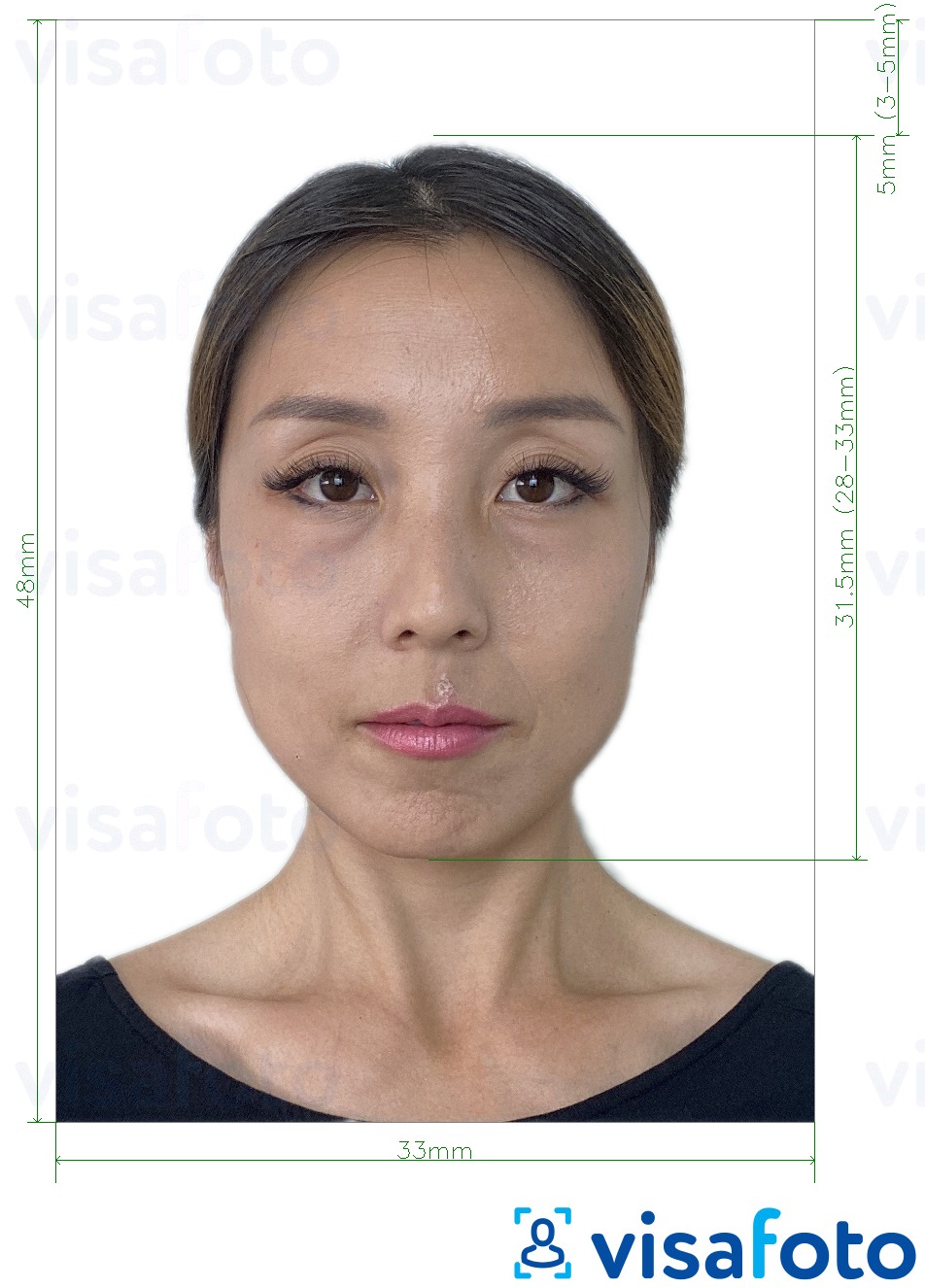
- The Chinese visa photo size must be 48mm in height and 33mm in width, with a width of the head of 15mm to 22mm and a height of 20mm to 33mm.
- The digital photo dimensions for electronic Chinese visa application must be from 354x472 to 420x560 pixels;
- The applicant has to be easily identifiable from the photo;
- Facial features should be complete and visible, with the head centered in the photo;
- Eyeglasses are allowed except thick-rimmed, tinted, or glare glasses;
- Hat or other head wears are only permitted due to religious reasons, but any facial features should not be obscured;
- There should be no damage or impurities on the photo, no permeation or shadow over the face;
- The photo should be in a natural tone but not over or under-exposed, red-eyed, or distorted;
- The background should be in white or off-white and with no edge frame
- The photo should be printed on glossy finish photo paper, not matte finish paper or plain paper, and should be stainless, scratchless, or without any crease.
Here is an example of a Chinese visa photo:
China visa photo online maker
Using Visafoto, an online photo editor that has been adjusting photographs for various documents worldwide since 2013, you can easily make a fully compliant Chinese visa application photo online. It will make sure your photo fulfills all the requirements needed.
Just take a picture of yourself following the guidelines stated above. Don’t worry about the size, background, positions, and proportions: Visafoto will handle the technicalities.
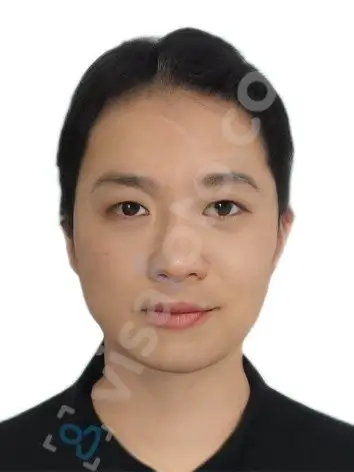
Take an image with a smartphone or camera against any background, upload it here, and instantly get a professional photo for your visa, passport, or ID.
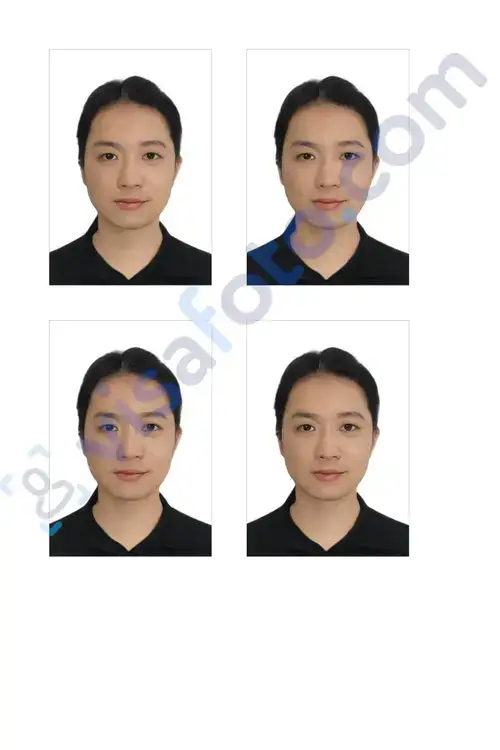
Visafoto also provides a template ready for printing, so you do not need to worry about formatting your photo for this purpose. With a high-quality color printer and photo paper fitting requirements, you can print a photo without leaving the comfort of your home.
Source

Result
First, take a photo under light like this one:

You will receive two versions of the photo: digital for electronic filing, and a printable template.
How much does the China visa cost for Indian citizens in 2026?
China visa fees vary depending on the visa type, number of entries, validity period, and processing speed (standard or express). Fees are usually paid at the Chinese Visa Application Service Center (CVASC) in Indian rupees using cash, demand draft, or card. Visa fees are generally non-refundable regardless of the application result. Rates may change periodically, so applicants should confirm the latest information on the official CVASC website.
Current fee structure
- L (Tourist) / M (Business) — Single entry: approximately ₹8,300–₹10,585 (standard processing); express service about +₹1,800.
- L / M — Double entry: approximately ₹10,400–₹12,400 (standard processing); express service about +₹1,800.
- L / M — Multiple entry (6 months validity): approximately ₹13,000–₹15,000 (standard processing); express service about +₹1,800.
- L / M — Multiple entry (12 months validity): approximately ₹16,000–₹18,000 (standard processing); express service about +₹1,800.
- Group visa (L): approximately ₹6,000–₹7,000 per person; express processing is typically not available.
Additional charges and notes
- ICWF surcharge: approximately ₹300.
- Postal return of passport (if requested): approximately ₹150–₹500.
- Visa fees are normally not refunded if an application is refused.
- Applicants should check the official website for the most current rates and rules: https://www.visaforchina.cn.
How long can an Indian citizen stay in China?
Chinese visas issued to Indian citizens do not follow a single standard validity rule. The permitted length of stay and the visa validity depend on the visa category and the decision of the issuing authorities. Tourist (L) visas often allow a stay of about 30 days per entry, while business (M) visas may allow a stay of 30 to 60 days per entry. Multiple-entry visas may permit several visits during the validity period, but each stay is limited to the number of days indicated on the visa.
Stay duration by visa type
- L visa (Tourist): usually allows about 30 days per entry. Typical visa validity is around 3 months, with single or double entry options.
- M visa (Business): commonly allows a stay of about 30–60 days per entry. Visa validity may range from about 3 to 12 months and can be issued for single or multiple entries.
- X1 / X2 visa (Student): the permitted stay may range from roughly 30 to 180 days depending on the program. Long-term study visas can lead to residence permits, while short-term study visas allow limited stays. Multiple entries may be possible depending on the visa issued.
Extension and overstay rules
- Visa extensions may sometimes be requested at the local Public Security Bureau (PSB) in China. For tourist or business visas, extensions may be granted for up to about 30 additional days, although approval is not guaranteed.
- Overstaying the authorized stay may result in fines of about CNY 500 per day.
- Serious overstays can lead to additional penalties, including possible detention or deportation.
- Multiple-entry visas are usually issued to applicants with a strong travel history and supporting documents.
- Travelers should always check the exact duration of stay printed on the visa after it is issued.
Extension and overstay rules
Visa extensions may sometimes be requested at the local Public Security Bureau (PSB) in China before the authorized stay expires. Approval is not guaranteed and depends on the circumstances and the type of visa. Overstaying the permitted period can result
Last update: March 2026