US Visa Bond Program Explained. Rules, Costs, Countries, and Payment Process

If you’re planning to apply for a U.S. visitor visa, you may need to budget for more than the standard visa application fee. Since August 3, 2026, the U.S. Department of State has operated a permanent Visa Bond Program, requiring certain applicants for B-1 and B-2 visas to post a refundable bond of $10,000, $15,000, or $20,000 before a visa can be issued. The program was established under the State Department’s final rule, which took effect on August 3, 2026.
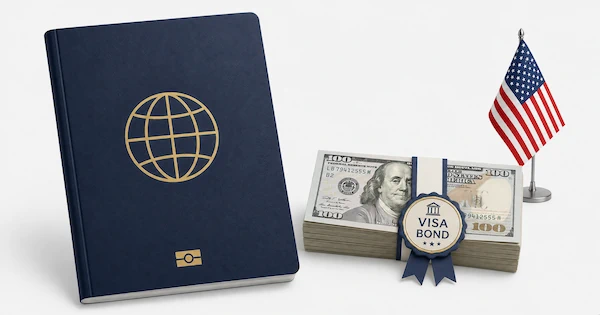
This guide explains who has to pay the bond, which countries are covered, how the payment process works, when the money is refunded, and what can cause the bond to be forfeited.
Table of contents
- What Is the US Visa Bond Program?
- Who Has to Pay a US Visa Bond?
- How Much Does a US Visitor Visa Cost?
- How to Apply for a US Visitor Visa
- How to Pay a US Visa Bond
- Is the US Visa Bond Refundable?
- When Can You Lose Your US Visa Bond?
- FAQ
What Is the US Visa Bond Program?
The U.S. Visa Bond Program requires certain B-1/B-2 visitor visa applicants to post a refundable financial guarantee before their visa can be issued.
Unlike the standard nonrefundable U.S. visa application fee, the visa bond serves as a security deposit. It is designed to reduce visa overstays and encourage visitors to comply with the conditions of their stay in the United States.
The program was first introduced as a pilot in 2025. On August 3, 2026, it became a permanent part of U.S. visa policy. At the same time, the government increased the bond amounts from the pilot’s $5,000–$15,000 range to $10,000–$20,000 and updated several program rules.
It is important to understand that a visa bond does not replace the normal U.S. visa application process. Applicants must still:
- complete the DS-160 online application form;
- pay the standard visa application fee;
- submit a compliant U.S. visa photo;
- attend a visa interview if required;
- provide documents showing the purpose of travel and ties to their home country.
A consular officer first determines whether the applicant qualifies for a visa. If the applicant is subject to the Visa Bond Program, the officer will specify the required bond amount and provide official payment instructions.
The visa bond currently applies only to selected nationals applying for visitor visas. Student visas, employment-based visas, immigrant visas, and most other nonimmigrant visa categories are not currently included in the program.
The program focuses on applicants from countries with higher overstay rates or challenges related to information sharing, identity verification, or travel document security.
Who Has to Pay a US Visa Bond?
The visa bond requirement applies only if all of the following conditions are met:
- you are applying for a B-1, B-2, or combined B-1/B-2 visitor visa;
- you are a citizen of a country currently covered by the U.S. Visa Bond Program;
- you otherwise qualify for the requested visa; and
- no national interest or humanitarian waiver has been granted.
If this is the case, the consular officer will determine the bond amount as part of the visa application process.
The Visa Bond Program is based on nationality, not on where you submit your application.
US Visa Bond: List of Countries
As of 2026, the Visa Bond Program applies to nationals of 50 countries. The list has expanded several times since the program was first introduced in 2025.
As of August 2026, the U.S. Visa Bond Program applies to nationals of 50 countries. The State Department may update this list over time, so applicants should always check the latest requirements before applying for a U.S. visitor visa.
- Africa: Algeria, Angola, Benin, Botswana, Burundi, Cabo Verde, Central African Republic, Côte d’Ivoire, Djibouti, Ethiopia, Gabon, Guinea, Guinea-Bissau, Lesotho, Malawi, Mauritania, Mauritius, Mozambique, Namibia, Nigeria, São Tomé and Príncipe, Senegal, Seychelles, Tanzania, Togo, Tunisia, Uganda, Zambia, and Zimbabwe.
- Asia: Bangladesh, Bhutan, Cambodia, Kyrgyz Republic, Mongolia, Nepal, Tajikistan, and Turkmenistan.
- Latin America and the Caribbean: Antigua and Barbuda, Cuba, Dominica, Grenada, Nicaragua, and Venezuela.
- Oceania: Fiji, Papua New Guinea, Tonga, Tuvalu, and Vanuatu.
- Europe: Georgia.
The countries above joined the program at different times between August 2025 and April 2026. However, the State Department may add new countries with advance notice or remove countries from the program. For that reason, it’s a good idea to check the latest eligibility requirements before applying for a U.S. visitor visa.
If your country is on this list, you may be required to post a refundable U.S. visa bond when applying for a B-1, B-2, or B-1/B-2 visitor visa, provided you meet the other conditions of the program.
Tip: Being on the list does not mean your visa application will be denied. It means that, if you qualify for a visitor visa, you may also need to post a visa bond before your visa can be issued.
How Much Does a US Visitor Visa Cost?
If you’re applying for a U.S. visitor visa, it’s important to understand that the visa application fee and the visa bond are two separate payments.
The visa application fee is required from almost all applicants and is nonrefundable, even if your visa application is denied. The visa bond, on the other hand, applies only to certain applicants covered by the U.S. Visa Bond Program and is generally refundable if all bond conditions are met.
| Payment | Amount | Refundable? |
|---|---|---|
| B-1/B-2 visa application fee | $185 | No |
| U.S. visa bond (if required) | $10,000, $15,000, or $20,000 | Generally yes, if all bond conditions are met |
If you’re unsure how much you’ll pay in total, remember that applicants subject to the Visa Bond Program must pay both the regular visa application fee and the required visa bond.
USA Visa Fees: Questions and Answers
How to Apply for a US Visitor Visa
Whether or not you’re required to post a visa bond, the application process for a U.S. visitor visa remains largely the same.
Step 1. Complete Form DS-160
Begin by completing the DS-160 Online Nonimmigrant Visa Application. You’ll need to provide your personal information, passport details, travel plans, employment history, and the purpose of your trip.
Before submitting the form, you’ll also need to upload a compliant digital U.S. visa photo.
DS-160 Form Instructions. How to Complete Your U.S. Visa Application
Step 2. Prepare Your US Visa Photo
Your DS-160 application requires a recent digital photo that meets official U.S. visa photo requirements. If the uploaded photo doesn’t comply with the specifications, you may be asked to submit a new one, which can delay your application.
Instead of visiting a photo studio, you can take a picture with your smartphone and upload it to Visafoto.
Visafoto automatically:
- crops your photo to the correct size;
- replaces the background if needed;
- adjusts lighting and image quality;
- checks head size and positioning;
- creates a compliant digital photo ready for your DS-160 application.
Every order includes a printable version in case you need a physical copy later. If your photo is rejected by U.S. authorities, we’ll refund 100% of your payment.
Step 3. Pay the Visa Application Fee
Once you’ve completed the DS-160, pay the required $185 nonrefundable visa application fee using the payment methods available in your country.
Keep your payment confirmation, as you’ll need it to schedule your visa interview.
Step 4. Schedule and Attend Your Visa Interview
Most applicants are required to attend an interview at a U.S. embassy or consulate. Bring your passport, DS-160 confirmation page, appointment confirmation, and any supporting documents that demonstrate the purpose of your trip and your ties to your home country.
Step 5. Wait for the Visa Decision
The consular officer will first determine whether you qualify for a visitor visa.
If you’re not covered by the Visa Bond Program, your application will continue through the normal visa issuance process.
If you are covered, the officer will inform you of the required bond amount and provide instructions on how to pay it. The visa cannot be issued until the bond has been successfully posted and any remaining administrative processing has been completed.
How to Pay a US Visa Bond
If a consular officer determines that you’re subject to the U.S. Visa Bond Program, you’ll receive official instructions after your visa interview.
Do not attempt to pay the bond before receiving official instructions, and never use third-party payment services claiming they can process a U.S. visa bond.
Is the US Visa Bond Refundable?
Yes. The visa bond is generally refundable if the traveler complies with all bond conditions.
For example, the bond may be canceled if:
- you leave the United States before your authorized stay expires;
- your visa expires without being used;
- you’re refused entry at the U.S. border;
- your visa is ultimately not issued after the bond has been posted; or
- you receive an approved extension or change of status and comply with all applicable rules.
Refunds are generally issued to the person who paid the bond. They are made in U.S. dollars, and no interest is paid.
Processing times may vary depending on the individual case.
When Can You Lose Your US Visa Bond?
The bond may be forfeited if you substantially violate the conditions of your stay in the United States.
Examples include:
- remaining in the U.S. beyond your authorized stay;
- working without authorization;
- committing another serious violation of your immigration status;
- failing to depart after a denied extension or change-of-status request; or
- filing certain immigration protection applications specified under the program rules.
If the Department of Homeland Security determines that the bond has been breached, the bond may be forfeited and the obligor will receive written notice.
If you’re covered by the Visa Bond Program, it’s especially important to check your I-94 after arriving in the United States and leave the country on or before the “Admit Until” date to avoid jeopardizing your bond.
How Long Can You Stay in the U.S. on a Visitor Visa?
FAQ
Can I pay the visa bond before my interview?
No. Wait until the U.S. embassy or consulate sends you official payment instructions.
Can a family member pay my US visa bond?
Yes. A family member or another eligible person may pay the bond and become the obligor.
How long does it take to get the visa bond refund?
The government has not established a standard processing time, so refunds may vary from case to case.
Can I travel multiple times with a bonded visa?
Possibly. Depending on the visa issued, some bonded visas allow multiple entries and may be valid for up to 12 months.
Does the visa bond apply to US student visas?
No. The current permanent program applies only to selected applicants for B-1 and B-2 visitor visas.
What happens if I never travel after receiving my visa?
If the visa expires without being used, the bond may generally be canceled and refunded according to the program rules.
Do children need a separate visa bond?
Yes. The bond requirement generally applies to each individual visa applicant, including children if they are applying separately for a covered B-1 or B-2 visa.